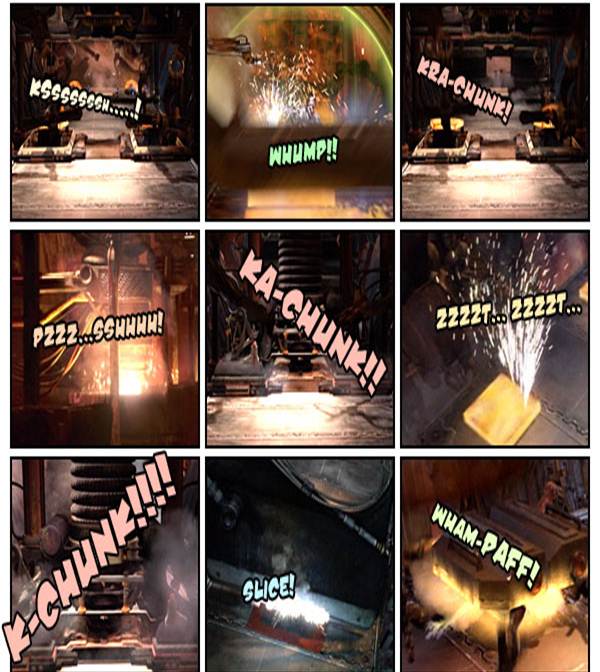
(above, a semi-accurate representation of the Allpak Trojan facility. They discouraged publishing unapproved photographs during the tour, so I stole this from my favorite webcomic.) The program (60 of us with two teacher chaperones) went to a package/print/display factory in Renton. Considering the number of hipsters present (true fact: the teachers requested/encouraged us to wear plaid– we’re not that obvious, usually), the trip was well documented by camera phones, DLSRs and someone was assigned to do video. I hope he edits it to look like one by one each student was lost on the tour and then found to be horribly maimed by the laminator-corrugator.
Yes, it was a factory/two factories. One featured aluminum plates and the other rubber blankets to do imprints on cardboard that they make on site. There are conveyor contraptions, die-cutting devices and lots and lots of corrugated cardboard. It wasn’t as boring as it sounds. It was really eye opening to see people with glum expressions stack and straighten flat-fresh of the press boxes. Think about anything manufactured, and it’ll dawn on you that those things have to be made somewhere. That box your electric toothbrush came in– it might have been touched by people in Renton.
We broke up into groups of 1o students to one TROJANLITHO employee. The tour guide for my group was really enthusiastic about what his company does. (Later I learned that the tour is not standardized. Each group got a unique set of information about the company.) In this day and age, it’s silly to try and be competitive price-wise. Not when you have a company in the United States, bound by wage and safety regulations. So, Mark, the guide, emphasizes when he pitches to a new client that he offers innovation. He showed us a box that is two pieces of cardboard “married by machine” into something that is stable and protected for shipping and then with some punches of tabs and a tug, it’s shelf-ready. You are then saving on materials, tools for unboxing, labor time and it looks neater. Pretty cool. As he was demonstrating this marvel of corrugated engineering, there was an audible “wow.” He also demonstrated something called a “llama” which, held together by industrial strength rubber bands, snapping together to form a narrow pillar from being flat. I was impressed resisted asking the question of where I could get some slightly defected ones for the making of a cheap living room fort. (At the end of the tour, the guide said how important it “to think outside of the box.” We groaned, but I think that it had to be said and I’m glad he said it at the end, like a sad punchline at the end of a long-winded joke, which makes it almost hilarious.)
From a professional standpoint, these inventions of disposable displays are good news. There will always be more need for print design. Even if it’s for cardboard candy-stands, I’m excited for that amount of design real-estate. It’s practically IKEA furniture. Some of them are fairly elaborate and have little shelves that stick out the sides like tree fungi in the rainforest.
(above, a still from Ferngully. I don’t know why that stuck with me. Perhaps it was the most aesthetic thing in the box factory, but still. I want to design one of these displays sometime in my life. And it will be an organic happy carboard design that feels like it grew from the storeroom floor, instead of shipped from Renton, Washington.)
Update 2-26:
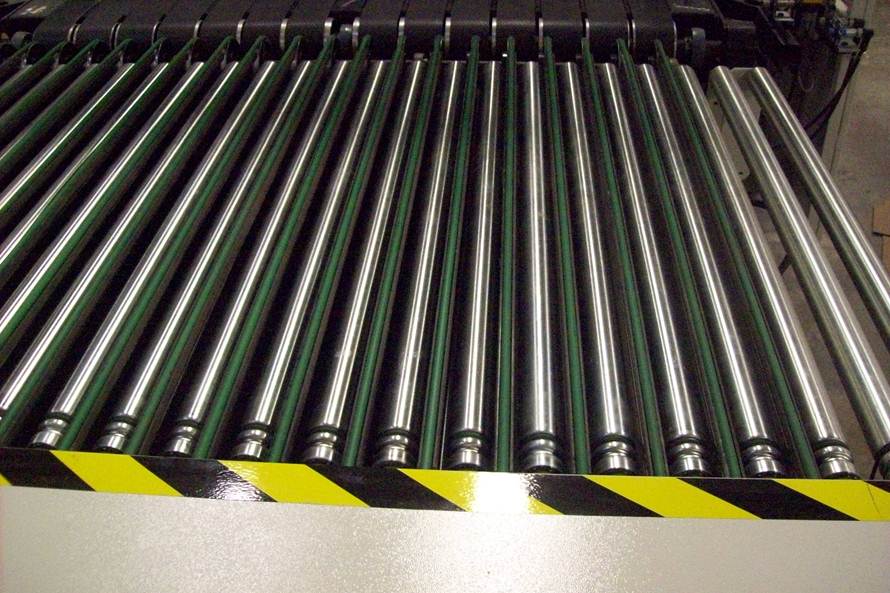
I liked this conveyor belt. The metal rods move an item on the x-axis and the green rubber tracks move a thing on the y-axis.
 Katarina Countiss