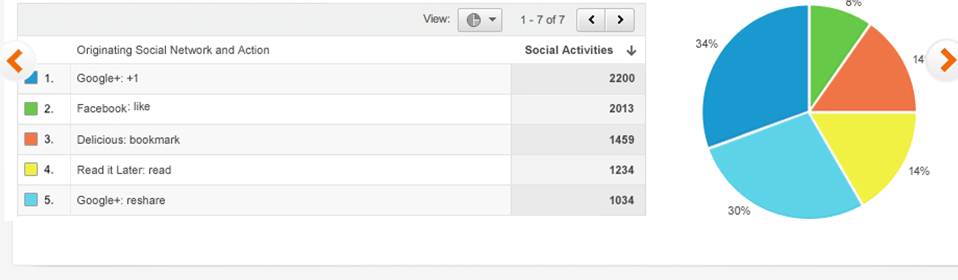
Above: Google Analytics example (it’s free, sign up for your site!)
It sounds intimidating, but metrics just refers to measuring stuff and getting that from your website just takes a little bit of code that you plant like a wire in an FBI agent’s jacket. Once inserted, it remains unnoticed by the user. (Google analytics is a free way to get this code and then proceed to track the information it collects.) This will get demographics, information about when, how and where people are coming in and out of your website and from where. This is a great way to see if people are not going through a process you’re trying to get them to go through, like the task flow for purchasing something. We’ve all been there where it is way too many clicks to get to a payment plan and you can get this thing somewhere else, so you do.
I like this because you can start to see patterns. You can give your audience something they want based on what they have liked in the past (if you produce stuff regularly.) That’s the kicker. Tim showed us his site metrics, but it reflected mostly the students going to it for syllabus information.
A site like the one you are currently looking at (Katablog) is regularly producing but producing different content. I might be able to deduce that my readers are more interested in what I’ve painted recently, rather than what I’ve learned about typography. Or that they like ones with video. Perhaps it’s a novelty factor and it fluctuates. It’s a feedback loop of adjustment and measurement and then some more adjustment.
 Kismet Arts Tangent
Leave a comment