The Right Use of Power is about the heart of ethics.
Barstow, Cedar. The Right Use of Power: The Heart of Ethics. Many Realities Press, 2015.
I think this is a really important book for program designers, especially when you have a population—say, students, patients, or a community—where you’re providing services.
There is a power dynamic in play. Participants in a program are often in a down-power position, while administrators and faculty delivering the services are in an up-power position. This can get complicated because your stakeholders may also be empowered and contribute to decision-making in the program.
I’ve noticed this especially with data collection and being a participant in programs myself. The opportunities to shape your experiences are often very underutilized or under-leveraged. What happens instead is that you do a survey with very little shaping of the conversation.
Because of that, I believe these two books together work really well—creating more agency in teams and communities while acknowledging the mechanical issues of hierarchy and leadership.
Social Work, Voice, and Program Design
Glicken, Morley D. Real World Clinical Social Work: Find Your Voice and Find Your Way. Routledge, 2011.
Find Your Voice (from a social work perspective) is similar. When I talk about arts organizations, I am really talking about a lot of social work.
Any team or community can benefit from a deeper understanding of social dynamics and the needs of their constituents, which often have a social-emotional component.
For me, my theoretical orientation was one of the reasons I sought this out. Even if you are not a Master of Social Work, having an idea of why you are doing what you’re doing—and what strategy you’re taking from a social or psychological approach—really matters.
I’m very driven by the idea of behavior change. But behavior change comes with a variety of approaches, and if those are used inconsistently, it’s like a bunch of darts being thrown randomly.
I also appreciate how this book describes the challenges of being a social worker—or really, a nonprofit worker—and being aware that there are trade-offs to doing work for people. Finding your setting is key. There are many settings where this kind of work happens, and finding alignment between your mission and your framework is crucial.
Relationship Housekeeping and Keystone Conversations
Another book I recommend is How to Work with (Almost) Anyone.
Bungay Stanier, Michael. How to Work with (Almost) Anyone: Five Questions for Building the Best Possible Relationships. Box of Crayons Press, 2017.
I really appreciated this book because it talks about your best possible relationship and five key questions to have in a keystone conversation—questions that help guide and anchor you when there are troubled waters.
I think of this as relationship housekeeping, and I consider it really important. I’ve had problems with teams in the past where we couldn’t agree on something, and having shared reference points—and self-knowledge—to rely on makes a difference.
These five questions are essentially about:
- Knowing your preferences
- Knowing your best qualities
- Understanding what the dream of the best possible relationship looks like
- Naming what you’re striving toward together
- Reflecting on when you’ve been burned in the past and what you learned
You uncover truths that are not easy to talk about, not easy to face, and not easy to uncover. But that difficulty can lead to really rich outcomes. You get lost, you see things you wouldn’t normally see, and you move through the wilderness of organizational culture.
When you’re passionate about something and want to create change, you inevitably push against people and find boundaries. It can get charged and emotionally draining, which is why this kind of grounding framework is so useful.
Tracking Pain, Momentum, and Strategy
The book on pain tracking was one I really enjoyed.
Barrett, Deborah. Paintracking: Your Personal Guide to Living Well with Chronic Pain. Paperback ed., Feb. 21, 2012.
Part of what resonated with me was its approach to accepting chronic pain—changing your attitude about it and deciding, “I’m going to manage this.” It emphasizes finding people with different practices and interventions that can actually work.
The book describes ways of becoming more organized in your strategy: analyzing what you’ve tried, what has helped, and what hasn’t. There’s even a nice idea of having a kind of resume—or CV—of specialists you’ve worked with in managing symptoms.
I found that really hopeful. It takes as a given that you’re going to need specialists with orientations that understand your particular set of issues.
I’m still thinking about how this relates to my own challenges—especially maintaining momentum on projects. I wonder whether tracking projects, or tracking myself through projects, could help me find a sense of pacing: when to push, when to rest, and how to develop a more diverse portfolio.
I find this framework intriguing for developing strategy—getting a clearer picture of what the real problem is. I’m looking forward to experimenting with more types of tracking and interventions.
I also think this framework could be really useful for analyzing creative blocks, understanding where a team is over time, and figuring out how best to work with people who have different strengths.
Making Ensembles and Understanding Roles
The last book in Kat’s Reads is Ensemble Theatre Making: A Practical Guide.
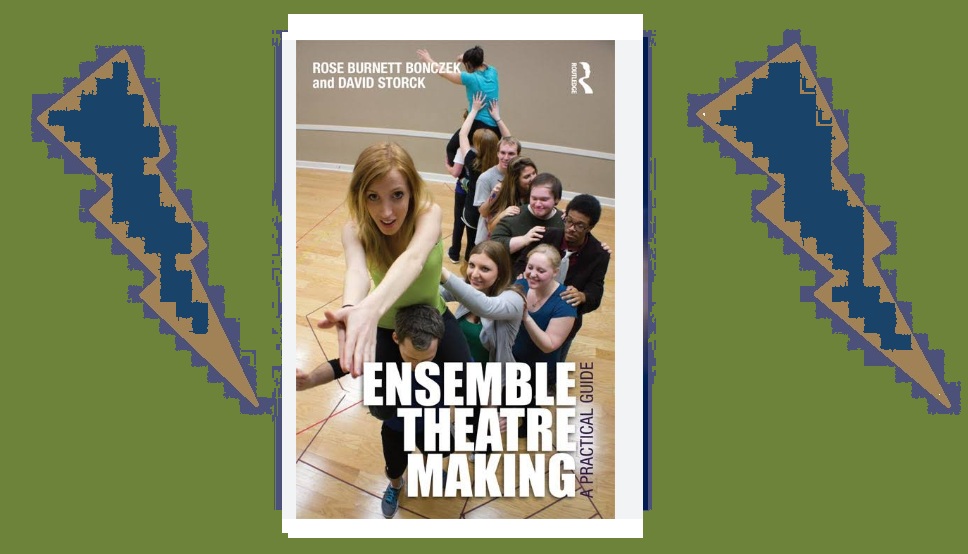
Bonczek, Rose Burnett, and David Storck. Ensemble Theatre Making: A Practical Guide. Routledge, 2013.
I really appreciated this book because it describes group dynamics using archetypes and looks at what happens when certain people drain the group rather than contribute to it.
Reading this was very inspiring for me as a leader. I realized I didn’t fully understand how to support different roles in an ensemble. I’m looking forward to revisiting its ideas around auditions, analyzing people’s strengths, and categorizing roles—so that when I’m creating a team, I know what I’m actually looking for.
It’s not about finding the same person over and over again. It’s about alignment—bringing together people with diverse skills and orientations, and thinking seriously about job sculpting.
This came up for me in volunteer work I did this year, where leadership wasn’t clearly delineated. I’m fairly sure every volunteer who applied was accepted. Maybe part of the solution is framing the first shift as an onstage moment or a tryout—an opportunity to see whether you like the style of work or management.
I think it’s important to be able to say that some volunteers are not a good fit—not as a value judgment, but as a way of protecting everyone’s time and energy.
This connects to issues I’ve had in previous art collectives: role confusion, uncertainty about what kind of contributor you are, what kind of leader you are, and how leaders and contributors can work together toward real accomplishment.
That means being clear about agenda, time-boxing, time commitment, and expectations—so sessions aren’t draining, but instead build momentum and stay aligned with why people joined the ensemble in the first place.
I really appreciated how this book names group dynamics, describes archetypes by behavior, and even talks about gray areas—people who aren’t “problem archetypes” but have tendencies that might need to be addressed more directly.
Leadership, to me, is about understanding who your team is and aligning people with shared objectives. It may not be an overnight transformation, but there are ways to coach people into working with others in ways that honor their strengths.
Closing
That was Kat’s Reads.
I hope this set of books gives a sense of my interest in developing strategies that help teams and communities work better—more ethically, more sustainably, and with greater clarity.
 Katarina Countiss