Skip to content

Kismet Arts Tangent

Art Collective

    • Kismet Arts Tangent
    • About
    • Blog
    • Contact
    • Donate

recent posts

  • Photo shoot with Kayleigh Shawn
  • Testimonials
  • Fractures Poem
  • Poetry
  • Pixel art products

  • Instagram
  • Darwin Series

    May 18, 2011

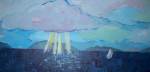
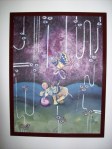
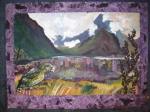
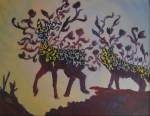
    Lately, I have been scoping out locations for some of my paintings. I am excited about people seeing the collection of paintings I have been working on. It’s called “Darwin.” I enjoy showing the beauty in nature, the sense we’re all connected by the Earth, love and sadness. I am also looking forward to feedback. What pieces would you think I need to make this collection more adhesive to the theme?

    sharing options:

    • Share
    • Share on Tumblr (Opens in new window) Tumblr
    • Print (Opens in new window) Print
    • Share on LinkedIn (Opens in new window) LinkedIn
    • Share on X (Opens in new window) X
    • Share on Reddit (Opens in new window) Reddit
    • Share on Pinterest (Opens in new window) Pinterest
    • Share on Facebook (Opens in new window) Facebook
    • Email a link to a friend (Opens in new window) Email
    Like Loading…
  • Lemurs, Skuctopodes and Daisies

    May 17, 2011

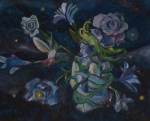
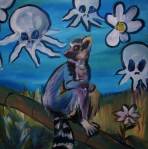
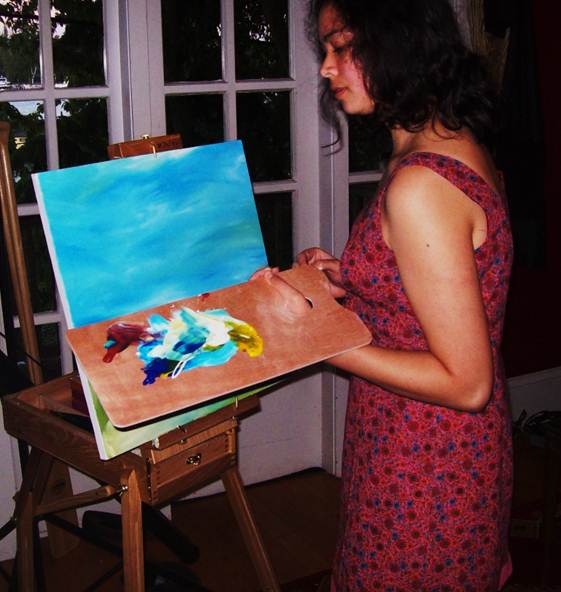
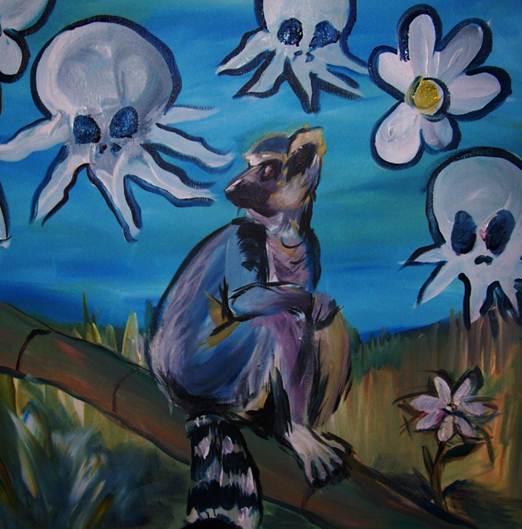
    Project Amalgam: I asked friends what I should paint tonight and the first responses were skull, lemur, daisy and octopodes. So, here we are. A big shout out to those nice people who contributed to my super artistic moments, painting on a wooden easel, with a wooden palate, with new paintbrushes looking through a paned window out onto the porch and Portage Bay as the sun set.

    sharing options:

    • Share
    • Share on Tumblr (Opens in new window) Tumblr
    • Print (Opens in new window) Print
    • Share on LinkedIn (Opens in new window) LinkedIn
    • Share on X (Opens in new window) X
    • Share on Reddit (Opens in new window) Reddit
    • Share on Pinterest (Opens in new window) Pinterest
    • Share on Facebook (Opens in new window) Facebook
    • Email a link to a friend (Opens in new window) Email
    Like Loading…
  • The God Delusion

    May 16, 2011

    The God Delusion by Richard Dawkins

    Summary: Dawkins makes the textbook for atheists, covering the distinction between aitheist, pantheist, deist and theist. Dawkins gives the definition of a dualist. He describes evolution and religion’s marginal role in the history of life. He describes reigion as smoething reinforced by positive psychology, religion, a virus exploiting love. At the end of the book, he gives the readers all the good reasons to love science and appreciate the notion that there  is no god.

    Review: Excellent book. It never stops making sense. I hold this book to its reputation. It really is the atheist’s first book. If you have thought about not believing in the supernatural and whatnot, it is a perfect welcome into the realm of sanity and the awe of science. It begs the question “are there limits of human understanding?”

    Rating: 9 useless eye-halves (read the book to get this reference)

    Favorite part: “Why is god considered an explanation for anything? Its not—it’s a failure to explain, a shruge of the shoulders, an ‘I dunno’ dressed up in spirituality and ritual.” –Jerry Coyne, p.161

    “That it will never come again
    is what makes life so sweet.” –Emily Dickenson

    Wine-pairing: The Writing Life by Annie Dillard. She makes the world sound wonderful and writing about it part of the process to capture the awe in the life all around us, the beauty in nature, pensive moments and the importance of creativity.

    sharing options:

    • Share
    • Share on Tumblr (Opens in new window) Tumblr
    • Print (Opens in new window) Print
    • Share on LinkedIn (Opens in new window) LinkedIn
    • Share on X (Opens in new window) X
    • Share on Reddit (Opens in new window) Reddit
    • Share on Pinterest (Opens in new window) Pinterest
    • Share on Facebook (Opens in new window) Facebook
    • Email a link to a friend (Opens in new window) Email
    Like Loading…
  • The Wind-up Bird Chronicle

    May 16, 2011

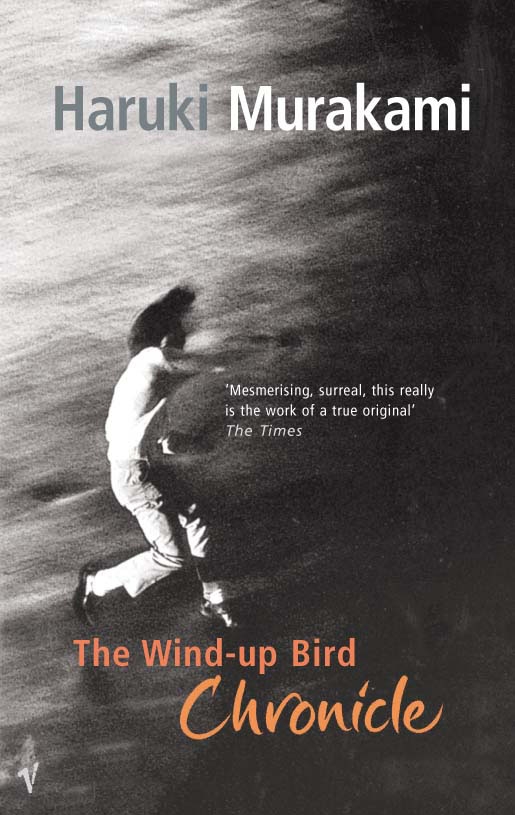
    The Wind-up Bird Chronicles by Haruki Murakami (1998)

    Summary: A man’s wife leaves him suddenly and he stays at their home waiting for her to come back, waiting for a sign, waiting for an absolution of any kind. More weird things happen to him, he meets strange characters. They come to him in dreams, near the train station and while looking for his cat.

    Review: You’ll suffer with these characters, feel redemption, exhaustion and puzzlement. The way Murakami describes the girls in his stories are fascinating and true. The psychology of the post-modern woman is filled with crises relating to identity, loss and love.

    Rating: 8 birdcalls that sound like the world winding up

    Favorite part: “Everybody’s born with some different thing at the core of their existence. And that thing, whatever it is becomes like a heat source that runs each person from the inside.” –p.322

    Wine-pairing: The Unbearable Lightness of Being by Mila Kundera (1984). The author describes the reasons for wanting many lovers in such a poetic and relatable way, the reader wants to forgive their ex’s for all their mistakes because he/she never saw the reasoning for it before.

    sharing options:

    • Share
    • Share on Tumblr (Opens in new window) Tumblr
    • Print (Opens in new window) Print
    • Share on LinkedIn (Opens in new window) LinkedIn
    • Share on X (Opens in new window) X
    • Share on Reddit (Opens in new window) Reddit
    • Share on Pinterest (Opens in new window) Pinterest
    • Share on Facebook (Opens in new window) Facebook
    • Email a link to a friend (Opens in new window) Email
    Like Loading…
  • The Year of the Flood/ Oryx and Crake

    May 15, 2011

    The Year of the Flood/Oryx and Crake by Margaret Atwood

    Summary: Two books, two sides of the same world events. The Year of the Flood tells the tale of the post-pandemic world where a small nature cult survives by moving from safe house to safe house and sustaining themselves by growing everything they eat. The main character recalls to the days when she worked at a strip club, she longs for her high school sweetheart and finds strength in herself to lead the cult to safety and comfort in troubled times. This book interweaves several narratives of the members of the cult and how their lives have traveled the path to end up together in solace traveling together to find the place they can call home.

    Oryx and Crake gives context to the pandemic through the eyes of a scientist’s best friend. He was in the middle of all the calamity and explains how he ended up being one of the few humans left and not only that, but left in charge of a group of a new race of humanoid creatures.

    Review: Importantly, read The Year of the Flood before Oryx and Crake. This story will at times make the reader feel that tranquil post-apocalyptic quiet that feels like when you arrived at a place a party was supposed to happen, but you were the only one that didn’t know about its cancellation, so there you are with a bunch of balloons alone in a park. The prose is exquisite, the stories unique and so human and Atwood takes you somewhere into a possible future where you can entertain ideas of what you would do in their situation.

    Rating (1-10): 9 gaze out of a broken window

    Favorite part: “Every hollow space invites invasion.”

     “In any case, time is not a thing that passes, said Pilar, it’s a sea on which you learn to float.” – The Year of the Flood p.101

    “How poetent was that word. With.” P.314 Oryx and Crake

    Wine-pairing: “The Cold Heaven” by W.B. Yeats. In Atwood’s novels, there are hints at allegory and myth, especially one that pertains to the ejection from society. Similar threads are woven into most of Yeat’s work, but I think especially this lyrical poem is worth using as a lovely reminder/bookmark in these two novels.

    sharing options:

    • Share
    • Share on Tumblr (Opens in new window) Tumblr
    • Print (Opens in new window) Print
    • Share on LinkedIn (Opens in new window) LinkedIn
    • Share on X (Opens in new window) X
    • Share on Reddit (Opens in new window) Reddit
    • Share on Pinterest (Opens in new window) Pinterest
    • Share on Facebook (Opens in new window) Facebook
    • Email a link to a friend (Opens in new window) Email
    Like Loading…
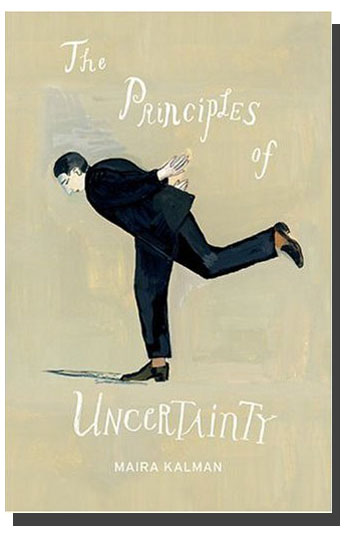
  • The Principles of Uncertainty

    May 15, 2011

    The Principles of Uncertainty by Moira Kalman

    Summary: A painted book, journaling a year’s worth of experiences, from pastries to hats, friends and strangers, random bus tickets and names from the Russian novels, this book explores the spontaneity and art in everyday life.

    Review: Beautiful book. Where words leave off, pictures take over, painted with such strokes the story seems vivid and recent, you almost expect your hands to be stained with acrylic flipping through the colorful pages. It’s inspiring, poetic and real. I would love to see more of these kinds of books with the same popularity. It would be reassuring to me that at least the sheep of mass opinion are of good opinion. Heh. That might sound pretentious, but liking one of these arty books is a risk for looking so avant-garde that it can’t be possibly genuine.

    Rating (1-10): 10 hand-painted sentences

    Favorite part: “I think of her bed construction that says ‘art is the guarantee of sanity.’ I really hope that is true. I think Nature is the guarantee of Sanity. Or maybe love. Or both. Or not.”

    Wine-pairing: I don’t think it’s enough just to admire these kinds of works. Visual Chronicles:The No-fear Guide to Creating Art Journals, Creative Manifestos, & Altered Books, Linda Woods (2006). It’s a gift to capture the present in all its random, collaged glory. Souvenirs of your existence are all around you. A picture is worth a thousand words, what is a movie stub worth or a postage stamp? Get inspired.

    sharing options:

    • Share
    • Share on Tumblr (Opens in new window) Tumblr
    • Print (Opens in new window) Print
    • Share on LinkedIn (Opens in new window) LinkedIn
    • Share on X (Opens in new window) X
    • Share on Reddit (Opens in new window) Reddit
    • Share on Pinterest (Opens in new window) Pinterest
    • Share on Facebook (Opens in new window) Facebook
    • Email a link to a friend (Opens in new window) Email
    Like Loading…
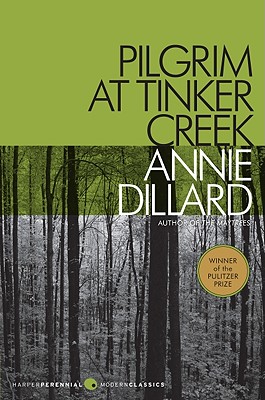
  • Pilgrim at Tinker Creek

    May 15, 2011

    Pilgrim at Tinker Creek by Annie Dillard

    Summary: This series of connected essays meander like a creek in a wood. Dillard poetically describes her observations from a fresh perspective, looking at things with a sharp wonder and sweet contemplation. How do we perceive the visual world? What is the connection between the sea and sacrifice? She encourages the reader to “spend the afternoon. You can’t take it with you.” She makes the connections between the natural world and the pleasures of humanity’s gift to create stories that live on long after the storyteller’s corporal self.

    Review: Nothing I have ever read weaves small bits of biology and literature into such an iridescent fabric as Annie Dillard’s prose. She alludes to great Greek philosophers while watching lily pads drift downstream. She is nostalgic and yet present at every moment, watching the tinier processes of egg cells multiplying, or the way a mountain looks beautiful and foreign like a long lost friend. I wish I knew someone who was as fascinated by her world as she is.

    Rating (1-10): 10 smooth stones covered in soft moss on the north side

    Favorite part: “If you analyze a molecule of chlorophyll itself, what you get is one hundred thirty-six atoms of hydrogen, carbon, oxygen, and nitrogen arranged in an exact and complex relationship around a central ring. At the ring’s center is a sing atom of magnesium. Now: If you remove the atom of magnesium and in its exact place put an atom of iron, you get a molecule of hemoglobin.” –p.128

    Wine-pairing: The Greatest Show on Earth by Richard Dawkins. He examines evolution and the beauty of everything fitting together. The color pictures of orchids and their fellow puzzle-piece fitting pollinators is irrefutably special and the explanation behind it draws as much awe.

    sharing options:

    • Share
    • Share on Tumblr (Opens in new window) Tumblr
    • Print (Opens in new window) Print
    • Share on LinkedIn (Opens in new window) LinkedIn
    • Share on X (Opens in new window) X
    • Share on Reddit (Opens in new window) Reddit
    • Share on Pinterest (Opens in new window) Pinterest
    • Share on Facebook (Opens in new window) Facebook
    • Email a link to a friend (Opens in new window) Email
    Like Loading…
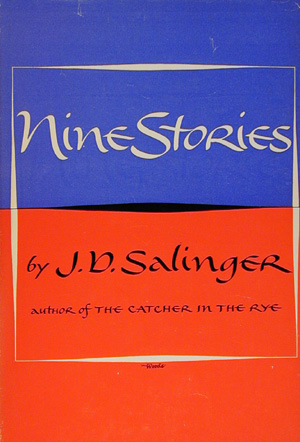
  • Nine Stories

    May 15, 2011

    Nine Stories and Franny and Zooey by J.D. Salinger

    Summary: Not to confuse, but Franny and Zooey goes in the very same vein as the short stories in Nine Stories and so, why not just put them in one book already? These are stories of love, family and phone calls. These stories detail the absence of love, the alienation of family and the emptiness of the telephone, the voice at the end may be your mother or your sister to whom you were so close, but now you’re just a seed on the waves of an ocean, going nowhere and slowly at that, as you sit in a musky apartment in New York, surrounded by unorganized stacks of your books.

    Review: I like the implied suicide that hangs off of the last word at the end of a story. I enjoy the unreliable narrator that tells only a slice of what’s going on, filling in the blanks, and adding more tragic details of my own as I interpret the character’s motivations. I have a soft spot for these characters Salinger dreams up. They are overgrown child prodigies, shooting stars burnt out young, with nothing but the past to take joy in and such little amounts of joy. Watching the rest of their peers catch and surpass them, the young bright pupils become has-beens, forgotten by society that took such initial pride, I think everyone feels a little marginalized sometimes. I relate to these stories, the unexplainable familiarity and distance that one can feel towards family and the pace of life for someone who doesn’t really have a career or a family of their own to take care of, but doesn’t party either. It is meditative and borders on suicide on a month to month basis.

    Rating (1-10): 9 stories

    Favorite part: “The fact is always obvious much too late, but the singular difference between happiness and joy is that happiness is a solid and joy is a liquid.” –Nine Stories p.155

    “We are, all four of us, blood relatives, and we speak a kind of esoteric, family language, a sort of semantic geometry in which the shortest distance between any two points is a fullish circle.” Franny and Zooey p.49

    Wine-pairing: The Bell Jar by Sylvia Plath. Excellent character development. The writing makes you feel quiet when she is lonely, addled when she is manic and following her dreams in the big city makes you want to go back to a time when you could live in New York City, when the rent was reasonable and all the residents were quirky and perhaps mentally ill.
    sharing options:

    • Share
    • Share on Tumblr (Opens in new window) Tumblr
    • Print (Opens in new window) Print
    • Share on LinkedIn (Opens in new window) LinkedIn
    • Share on X (Opens in new window) X
    • Share on Reddit (Opens in new window) Reddit
    • Share on Pinterest (Opens in new window) Pinterest
    • Share on Facebook (Opens in new window) Facebook
    • Email a link to a friend (Opens in new window) Email
    Like Loading…
Previous Page Next Page

Blog at WordPress.com.


Loading Comments...
 

    • Subscribe Subscribed
      • Kismet Arts Tangent
      • Join 104 other subscribers
      • Already have a WordPress.com account? Log in now.
      • Kismet Arts Tangent
      • Subscribe Subscribed
      • Sign up
      • Log in
      • Report this content
      • View site in Reader
      • Manage subscriptions
      • Collapse this bar
    %d