Skip to content

Kismet Arts Tangent

Art Collective

    • Kismet Arts Tangent
    • About
    • Blog
    • Contact
    • Donate

recent posts

  • Photo shoot with Kayleigh Shawn
  • Testimonials
  • Fractures Poem
  • Poetry
  • Pixel art products

  • Instagram
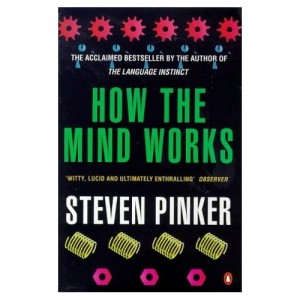
  • How the Mind Works

    May 15, 2011

    How the Mind Works by Stephen Pinker

    Summary: Pinker explains culture– music, art, fashion– and how they were born from our minds and our evolutionary need to interact with each other.

    Review: Amazing. I particularly adored the way he described music’s appeal with a strong basis in Western (European) music theory. He described the cycle of fashion, how it is important to be different than your peers, the cycle of haut-couture going from jewels to minimalistic to jewels again, always trying to be ahead of everyone else, appropriating stuff that is out of style.

    Rating(1-10): 8 paintings of inviting landscapes with trees easy to climb and indications of fertile soil

    Favorite part: “If you give a species an elementary understanding of mechanics, biology and psychology, the world becomes a machine, a jungle, and a society.”

    Wine-pairing: The author sings praises of this song: “Ev’ry Time We Say Good-Bye” by Cole Porter. I won’t raise your expectations higher than that.

    sharing options:

    • Share
    • Share on Tumblr (Opens in new window) Tumblr
    • Print (Opens in new window) Print
    • Share on LinkedIn (Opens in new window) LinkedIn
    • Share on X (Opens in new window) X
    • Share on Reddit (Opens in new window) Reddit
    • Share on Pinterest (Opens in new window) Pinterest
    • Share on Facebook (Opens in new window) Facebook
    • Email a link to a friend (Opens in new window) Email
    Like Loading…
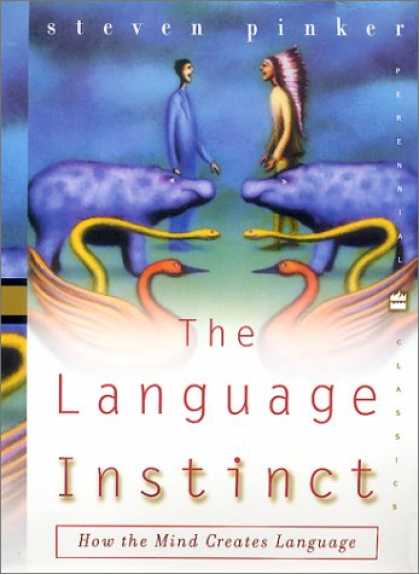
  • The Language Instinct

    May 14, 2011

    The Language Instinct by Stephen Pinker (2007)

    Summary: This book describes how a parent can have bad grammar while the offspring has excellent grammar. It goes over how “by modulating the sounds we make when we exhale,” language changes and transforms over generations to fit the groups needs and is reinforced by use. Syntax is very important when no other clues are given and how sarcasm is so imbedded in some phrase, we might not be fully aware of it as we’re talking.

    Review: A linguistical fantasy. Every turn of the page is some interesting fact about a phrase we’ve taken for granted. For example, did you know that “data” is a plural noun? Or that “slim chance” and “fat chance” mean the same thing? I am sure that it makes sense and you could claim to know that, but to really appreciate the idiosyncrasies of language, I think it needs a second look.

    Rating (1=regretful read…10=My New Favorite Book): 7 oronyms

    Favorite part: Words depend on context. For fun, here are some sentences that sound similar but mean differently.

    “The good can decay many ways.
    The good candy cane came anyways.

    The stuffy nose can lead to problems.
    The stuff he knows can lead to problems.”

    Wine-pairing: A Clockwork Orange by William S. Burroughs (1962). He creates a language to color his ultraviolent world, mixed with Cockney, Russian and mischief. After a while reading it, you fall into thinking with his words as paprika mixed in with the rest of your typical lingo.

    sharing options:

    • Share
    • Share on Tumblr (Opens in new window) Tumblr
    • Print (Opens in new window) Print
    • Share on LinkedIn (Opens in new window) LinkedIn
    • Share on X (Opens in new window) X
    • Share on Reddit (Opens in new window) Reddit
    • Share on Pinterest (Opens in new window) Pinterest
    • Share on Facebook (Opens in new window) Facebook
    • Email a link to a friend (Opens in new window) Email
    Like Loading…
  • A Wild Sheep Chase

    May 14, 2011

    A Wild Sheep Chase by Haruki Murakami (1982)

    Summary: A man looks for answers as more questions pop up. He will do it for the money, for his life, but it all seems uncanny. What is the meaning of the hotel name? Why has his friend been out of touch for so long? What is it about the photograph with the sheep? What is it about her ears that is just so lovely?

    Review: Murakami weaves a fantastic story filled with allusion, foreshadowing and mystery. It feels like what he says, when someone rifles through another person’s history. It’s a very quirky setting that finds its way through a maze that appears as a cross between coincidence and destiny and I am in love with that kind of surrealism. A page-turner for sure. With Murakami’s novels, you always wonder how it will tie together at the end, or if it, with flair, manages to trick you.

    Rating (1=regretful read…10=My New Favorite Book): 7 pairs of the prettiest ears you’ll ever encounter

    Favorite part: “Speaking frankly and speaking the truth are two different things entirely. Honesty is truth as prow is to stern. Honesty appears first and truth appears last. The interval between varies in direct proportion to the size of ship. With anything of size, truth takes a long time in coming. Sometimes it only manifests itself posthumously, therefore, should I import you with no truth at this juncture, that is no fault of mine. Nor yours.” p.125 The main character inquires a person on his journey about something and gets this response. (I am vague because the beauty of this book is in the details that unfold at a pace that keeps the reader intrigued.)

    Wine-pairing: Look at a painting of by Mark Ryden, any one will do. It is random and yet, filled with symbols and soft light that you’ll want to think there is more meaning in life than you thought before.

    sharing options:

    • Share
    • Share on Tumblr (Opens in new window) Tumblr
    • Print (Opens in new window) Print
    • Share on LinkedIn (Opens in new window) LinkedIn
    • Share on X (Opens in new window) X
    • Share on Reddit (Opens in new window) Reddit
    • Share on Pinterest (Opens in new window) Pinterest
    • Share on Facebook (Opens in new window) Facebook
    • Email a link to a friend (Opens in new window) Email
    Like Loading…
  • Nabokov’s Quartet

    May 14, 2011

    Nabokov’s Quartet by Vladimir Nabokov (1966)

    Summary: Four short stories by Nabokov. A man rides a train. A man hears a crackle. A man feels nostalgia. A man and a woman drift apart in a soft and melancholic way.

    Review: Words cannot express human emotions, except when they are wielded by Nabokov. He uses such poetic metaphors that they reach the heart of the issue and tear at one’s own heartstrings, making the reader feel paranoid when a character thinks someone is following him, making the reader feel vulnerable when a character thinks he is “but a piece of scenery.”

    Rating(1-10): 9 sets of train wheels beating out the rhythm “abattoir…abattoir…abattoir…”

    Favorite part: “This twinned twinkle was delightful but not completely satisfying; or rather it only sharpened my appetite for other tidbits of light and shade, and I walked on in a state of raw awareness that seemed to transform the whole of my being into one  big eyeball rolling in the world’s socket.” p.75

    Wine-pairing: Nine Stories by J.D. Salinger (1953). You’ll fall for these characters, prodigal children grown up, lonely, reaching out and offing themselves.

    sharing options:

    • Share
    • Share on Tumblr (Opens in new window) Tumblr
    • Print (Opens in new window) Print
    • Share on LinkedIn (Opens in new window) LinkedIn
    • Share on X (Opens in new window) X
    • Share on Reddit (Opens in new window) Reddit
    • Share on Pinterest (Opens in new window) Pinterest
    • Share on Facebook (Opens in new window) Facebook
    • Email a link to a friend (Opens in new window) Email
    Like Loading…
  • All Customers Are Irrational

    May 12, 2011

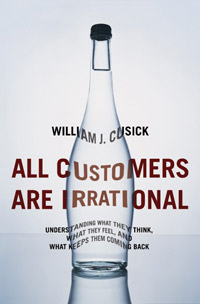
    All Customers Are Irrational by William J. Cusick

    Summary: This book might be the most boring way to cover the same information that’s in a Communication 101 class. Priming, Framing, and Customer Testing, you want your customer to look at you (your company) and feel important and cared for. He addresses the new importance of customer service due to the way that complaints about companies can be spread over the internet. Yay, Consumer-Power!

    Review: Terrible prose. Written by a guy who might have been schooled in business, but knows nothing about eloquence or good anecdotal writing. It’s a small book that one could seriously read in 5 hours or skim with the eye for content in 2. I skimmed. There were way too many bolded headings as if he thought he was actually being helpful. There was a certain lacking in the relevance to what I do, but I was hoping for some insight that is applicable to personal branding and blogging.

    Favorite parts:  Towards the end of the book, Cusick says that when a customer first signs up or whathaveyou, you should have a good “onboarding” process, to make them feel connected and cared about and trusting of the new thing they just signed up for.

    Rating (1=regretful read…10=My New Favorite Book): 1.5 customer questionaires

    Wine-pairing:  http://www.ted.com/talks/barry_schwartz_on_the_paradox_of_choice.html I think this TED talk is better worth the time than this book. If you want to learn about how consumers are beyond simple facts about a product, look towards yourself or your friends and analyze their brand loyalties, imagine how it drives them late at night, and how they (you) are never really satisfied.

    sharing options:

    • Share
    • Share on Tumblr (Opens in new window) Tumblr
    • Print (Opens in new window) Print
    • Share on LinkedIn (Opens in new window) LinkedIn
    • Share on X (Opens in new window) X
    • Share on Reddit (Opens in new window) Reddit
    • Share on Pinterest (Opens in new window) Pinterest
    • Share on Facebook (Opens in new window) Facebook
    • Email a link to a friend (Opens in new window) Email
    Like Loading…
  • The Unincorporated Man

    May 10, 2011

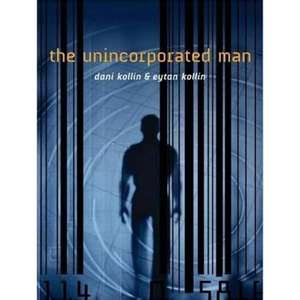
    The Unincorporated Man by Dani Kollin & Eytan Kollin (2009)

    Summary: A cross between Heinlein’s Stranger in a Strange Land, Time Enough for Love and Edward Bellamy’s Looking Backward, The Unincorporated Man follows the story of Justin Cord and what he catalyzes in a society three hundred years in the future. This future has flying cars, skyscrapers within skyscrapers and recreational use of nanotechnology. The authors propose an economic system where everyone has shares in themselves and each other, the government a mandatory five percent of all citizens. Justin Cord makes friends, influences people and has a good lawyer. Life is good in 2320… right?

    Review: I love this genre. Science-fiction is a really great way to discuss something radical but not too far from the truth. There was a lot of merit in the system the authors proposed. Though it was a system propelled by greed, it raised the standard of living for everyone and with technology working in conjunction towards this goal, no one worried about death or starvation. People were invested in each other’s success, literally. Thinking about my own debt, school loans, credit card bills, etc. I felt that it wasn’t too far-fetched to say that I am not completely my own person. I subscribe to the notion that we haven’t risen so much out of slavery. Only that it has transformed and it will again.

    Favorite parts:  “The greatest failure of any bureaucracy is not an inability to act. This they do in many little ways and in many big ways. What destroys most bureaucracies is an inability to think.” p.348

    Rating (1=regretful read…10=My New Favorite Book): 7 chrome-plated space-elevators

    Wine-pairing: Collapse: How Societies Choose to Fail or Succeed (also titled Collapse: How Societies Choose to Fail or Survive) is a 2005 book by Jared M. Diamond. The Unincorporated Man refers to a time “Pre-GC” or before the Grand Collapse. In the Kollin’s dystopic future, the thing that is today’s societies ultimate downfall is Virtual Reality. Jared Diamond describes how some great societies have lost all they have worked so hard to build. Science fiction is often a thin veil for very valid concerns for current cultural climates.

    sharing options:

    • Share
    • Share on Tumblr (Opens in new window) Tumblr
    • Print (Opens in new window) Print
    • Share on LinkedIn (Opens in new window) LinkedIn
    • Share on X (Opens in new window) X
    • Share on Reddit (Opens in new window) Reddit
    • Share on Pinterest (Opens in new window) Pinterest
    • Share on Facebook (Opens in new window) Facebook
    • Email a link to a friend (Opens in new window) Email
    Like Loading…
  • Hitch-22

    May 5, 2011

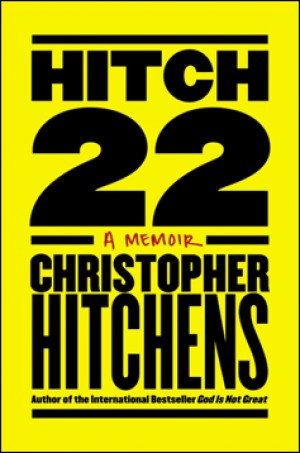
    Hitch-22 by Christopher Hitchens (2010)

    Summary: Perhaps the last English gentleman, Hitchens describes his life in all its political detail. He describes his affiliations to socialism, patriotism, authority and his views on Trotsky. His own family remains a small footnote, his children missing a portion of fatherly love. His political life is rife with influential friends. The photographs inserted in the middle reflect his priorities to be where the action is, from Iraq to Nicaragua, Uganda, Iran and the United States.

    Review: I had a hard time following along, mostly because I don’t have the mind to remember eighteen different Middle Eastern names in one chapter. I have a hard time remembering if *opens book to a random page* “Menachem” is a place or a person. I liked reading about his social life, about to whom the Hitch-man looked up and befriended, lifelong friendships, their witty puerile jokes. It is refreshing to read a memoir as rich as this one, so full of adventure and wit, it makes me aspire to such a life for myself. I try to remind myself that this book represents a bygone era, the sixante-huitards long out of commission, the black panthers, a cultural relic. Hitchens speaks of a United States that is more relevant to Jack Kerouac’s On the Road than to post-9/11 politics. Through his friendship with Salman Rushdie, Hitchens highlights some religion vs. free speech issues that are important to me. At the end of every memoir, I have to remind myself that it is not a self-help book. There was was one person I’d want to learn from, it may as well be a witty, well-read Saxon-American secular humanist. The prose is excellent. Read it just to get a taste of what language can be, how rich and perfectly wordy.

    Favorite parts: What is your motto? “Allons travailles!” (This more imperative version of “Get on with it!” is annexed from Emile Zola, through E.M. Forster somewhat overextended it by enjoining is to “get on with your own work, and behave as if you were immortal.”)-p.335 where he gives his own answers to the Proust Questionnaire. I like personal slogans. It’s insightful to the priorities of the person.

    Rating (1=regretful read…10=My New Favorite Book): 6 faded photographs of the Author as a Young Man

    Wine-pairing:God Is Not Great: How Religion Poisons Everything (2007) by Christopher Hitchens. I enjoyed this book because it emphasizes how rules of religion arbitrary at best and cruel and evil at worst, important to keep in mind when reflecting on “religious freedom.”
    sharing options:

    • Share
    • Share on Tumblr (Opens in new window) Tumblr
    • Print (Opens in new window) Print
    • Share on LinkedIn (Opens in new window) LinkedIn
    • Share on X (Opens in new window) X
    • Share on Reddit (Opens in new window) Reddit
    • Share on Pinterest (Opens in new window) Pinterest
    • Share on Facebook (Opens in new window) Facebook
    • Email a link to a friend (Opens in new window) Email
    Like Loading…
  • Edmonds

    May 3, 2011

    We went on a trip. On a dock in a little town in Washington State, there was a scene so beautiful, we were convinced it was fake. The way the waves looked closest to the boardwalk, there was some digital flatness in the waves. Almost convinced it was real, I made this painting to remind myself that most things are representations, and what beautiful ones at that.

    sharing options:

    • Share
    • Share on Tumblr (Opens in new window) Tumblr
    • Print (Opens in new window) Print
    • Share on LinkedIn (Opens in new window) LinkedIn
    • Share on X (Opens in new window) X
    • Share on Reddit (Opens in new window) Reddit
    • Share on Pinterest (Opens in new window) Pinterest
    • Share on Facebook (Opens in new window) Facebook
    • Email a link to a friend (Opens in new window) Email
    Like Loading…
Previous Page Next Page

Blog at WordPress.com.


Loading Comments...
 

    • Subscribe Subscribed
      • Kismet Arts Tangent
      • Join 104 other subscribers
      • Already have a WordPress.com account? Log in now.
      • Kismet Arts Tangent
      • Subscribe Subscribed
      • Sign up
      • Log in
      • Report this content
      • View site in Reader
      • Manage subscriptions
      • Collapse this bar
    %d