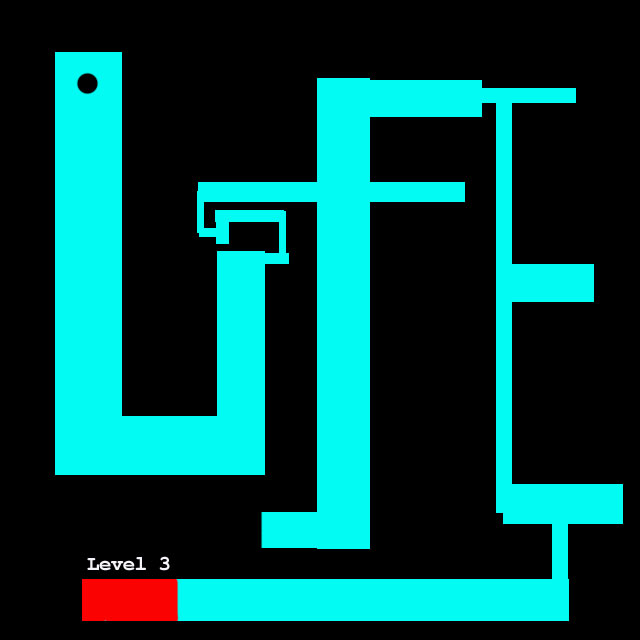
• game of life maze level 3
    Game of Life Maze-Level 3


    In an email I sent to a friend recently:

    I hope you find “meaning.” …I think it goes back to that idea that maybe life is a game. You have to decide for yourself what the winning conditions are, and harder yet, the little power-ups and special items to unlock that will encourage you along the way.

    Lately, I’ve been thinking about motivaton, the theory of games, and the meaning of life. I subscribe to the notion that we are alone in the universe (no god), and worse, we die alone (Donnie Darko’s epiphany). What that means is that we must live life by our own rules. What does that mean? Everything is trivial. It’s all an arbitrary circumstance that we find ourselves in and it’s a matter of priority as to what we do to pass the time.

    I have a weird urge,  like an OCD kid, I must do x after accomplishing y. Why? Because that leads to z and we all love z. It doesn’t matter what the variables are, but our actions are influenced by our values, which in turn are affected by our environment which is arbitrarily evolved into (for me at least) into a consumer-driven-capitalist-information-technological society. Where my ideas might eventually feed me. So, that’s why I do the things I do.

    That’s why I want to share this idea of Life as a Game. It’s not a new theory, but it has been coming up. I recently watched this ted talk about it by Jane McGonigal. When I was younger, I wrote a blog post about how my mother explained to me that credibility was like lives in Sonic the Hedhog. That one day (soon, if I kept my behaviour up) I would run out of lives, and that’s like GAME OVER. It was a very salient analogy.

    Some people don’t have that feeling when they do something wrong like they lost a life, a bit of credit. I can see the huge appeal of games because they visualize something that is going on in our existence. However, games aggrandize the player. You aren’t someone who got a high score on their math test, you are someone who saved Middle Earth using a magic bo-staff.

    It helps me to remind myself of the grander game I am playing. It’s the trope: find happiness. I use tools I’ve found useful. Interestingly enough, all I can list are communciation devices: this blog, my art, jokes. Truly, I am  playing a game that requires other people to like and share my ideas. This is the culture game.

    The first step I would recommend in starting this game (because it is highly subjective) is to think about what tools you use, what tools you like using, tools you have found useful, etc. Then think about what these tools are best at doing. Extrapolate as to what game you are playing. After that, it’s up to you to find better tools and allies to help you achieve success. Winning (read: excelling at) the game you are playing will make you happy. The other stuff that will make you happy are bonus points for sure: the ideas of family, friends, charity, global connections, whatever, are good too. Collecting good deeds as if they are meaningless trinkets can be a dangerous game. Just ask Demetri Martin.

    Having the right rules makes the game worth playing. This reminds me of a moral philosophy lecture where the teacher talked about Kant, reason and the good life. Kant advocated a kind of universalism, a philosophy that if used by everyone, would bring about the ultimate good life. (Kant talks about how cruelty and unfairness would be solved if everyone operated using categorical imperatives— very much over my head in terms of what I can discuss coherently.)

    This is the interesting part. There are two kinds of universalism, embedded and abstract. What I would call the difference between feeling and knowing. Many people feel that one should not steal. They have an internal moral compass. Other’s don’t feel it, but they know what would happen if everyone stole and that would be bad for society. Essentially, there are many rules that people don’t have embedded into their being. It’s an abstract concept that they learn and then follow.

    I think it’s easier to describe everything from an abstract perspective because frankly, I’m tired of this idea of “common sense.” It’s unspoken condensate from old wives tales and proverbs that have lost their bite. Sometimes I feel disconnected from the world. I think that autistic people feel similarly (autism can be very mild in some individuals).From what I’ve read about Asperger’s and autism in general, is that there is some kind of context filter missing. When autistic people interact, there’s less feeling. That’s why sometimes, an aspie needs to be told about emotions because they lack the ability to read between the lines. They rely on if-then algorithms that they have memorized, perhaps all to much like the classic “when a woman says she is ‘okay’ it means she is not.” (Not to be a sexist or anything.)

    Life is nothing but algorithms (article). My conclusion is that highly motivated people learned how to program themselves. Highly motivated people have seen what they needed to get done and how they can design an atmosphere and a mindset to do it. They have rules they follow to achieve their ends and systematically streamlined their processes to be more efficient. They are in the programmer stage. (article) There are many articles about people making their own worlds, or at least their own niche. (This guy is the “kinetic king.”) So, what is the meaning of life? I’m not sure. But, it’s probably the shape of a magic mushroom or something. Whatever you need to keep going.
  • The Amazon Wish List– I heard of the Amazon Wish List and appreciate its specificity to which you assign want. There’s also some magical confidence that your friends are technologically savvy enough to see it and understand that it’s the thought that counts and the thought to get it right is the thought that counts the most.

    So, yes. For people that are thoughtful and highly pragmatic, I’ve gone this route. Inspired by the first item, I began to realize that it was necessary to keep track of the things that I am 80% certain will make me a better person. (Meh, that’s how consumerism works. They target your sense of self. Your identity intertwined with a product.)

    Aside from the Amazon Wish List proper, I will also list these things here in this post. (and update it when the mood strikes me.) With some commentary. Because the interesting thing is not the desired items but the greater question: What inspires desire?

    by Peter Hall (Paperback)

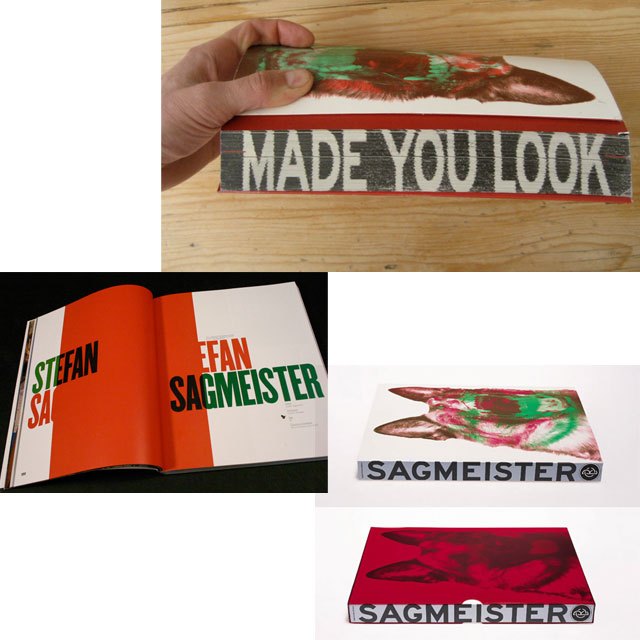
    This article talks about how the infamous design superstar Stefan Sagmeister has had a small company (Sagmeister Inc.) all to himself, until this fancy Jessica Walsh (“designer and long-time Computer Arts collaborator Jessica Walsh”) is all awesome and stuff and whatever. All the things it takes to make it in the graphic design industry and if I could describe it in a blog post, well, let’s just say, I would be buying this stuff instead of writing about it. Anyway, she got this book from her boyfriend while she was in RISD (Rhode Island School of Design–very nice.) So, now she and Sagmeister have their names on a studio together–though he is twice her age and that’s been made apparent in the nude photographs they took to publicize their new development.

    So, yes. I want this book. Perhaps, it has dazzling powers to make me an incredible designer and persuade the design superstars of the world that I am worthy of changing all of their company business cards (no wait, that’s the RISD education at work). No matter, the book looks pretty.


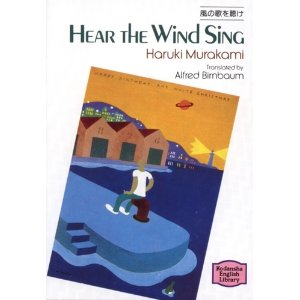
    hear the wind sing book cover haruki murakami
    Hear the Wind Sing by Haruki Murakami


    by Haruki Murakami (Paperback)
    I have read everything (I thought by Haruki Murakami, but it might just be my imagination because I read everything the Seattle Public Library listed. (I follow Haruki Murakami on facebook and he posted a quote from a book I had not read before– imagine my shock.) I am ready for more. Here’s the list of the desired.

    Pinball, 1973

    Birthday Stories

    Vintage Murakami

    Murakami Diary 2009

    Sanshiro by Natsume Soseki, Jay Rubin and Haruki Murakami (Feb 23, 2010)

    Haruki Murakami and the Music of Words by Jay Rubin (Feb 22, 2005)

    Rashomon and Seventeen Other Stories (Penguin Classics) by Ryunosuke Akutagawa, Jay Rubin and Haruki Murakami (Mar 3, 2009)

    Farewell My Lovely [Japanese Edition] by Raymond Chandler and Haruki Murakami (2011)

  • Screen shot of lopera shmopera site
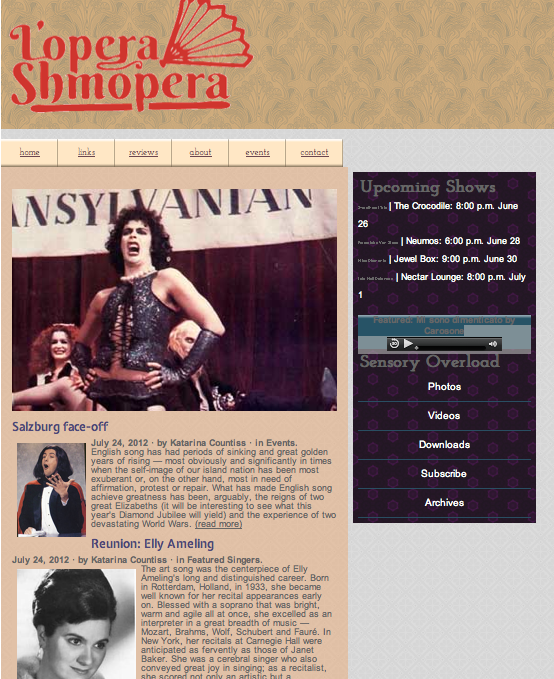
    Screen shot of L’opera Shmopera site

    Last monday, the class was instructed by Erik Fadiman on jquery slideshows and audio in html 5. I was a bit defeated by all the code that seemed to melt between my fingers. I still can’t fathom how there is not really an undo button.

    So, what happened? I had made a foundation of code that was like quicksand. Firstly, it was quick, indeed. When I started coding, I was making tags where I should have been making classes, headers when I should have been making tags… you get the idea. What’s worse is that when I was trying to streamline my code, I was deleting rules left and right (with my unsystematic way of naming things, it seemed like everything was obsolete). And like an ocean with my back turned, I made a monster. A website that gave out errors like a happy-go-lucky pamphleteer. I felt utterly doomed. How do you debug something like that? And, so when I started to input the jquery slideshow code, I was way in over my head. So, I did what any newb web designer would do. I started over… but not really.

    This is the fun part. My instructor keeps giving us these files that have all of the code that we’re supposed to have already in it. So, I took my image file with me and moved my rootsite, to so-to-speak live in a tent built by someone else’s code. I think that’s as the biz put it “black hat.” Am I using that correctly?

    I restyled some of the boxes, imput my own images and background patterns, googlefonts, media, etc. At this point you can see the skeleton that I put my meat on to when you make the window smaller because I didn’t restyle the rest of the modes– tablet and phone. See what I did here. I’m flabbergasted at my emotional response to what I’ve done. The thing with code is that when coders provide it for you, they are “open sourcing” it. They abide by this new kind of model where you share what you know and build on other people’s work. As Wikipedia says, “In production and development, open source is a philosophy or pragmatic methodology.”

    Lately, I’ve been a little frustrated with the web design bootcamp. I added over states using different background images, only a week later to learn about CSS sprites. The week after that, I learned that file size can be an issue and I should cut back on some things (ooh… perhaps the CSS sprites). That and also, what coders do anyway is google tutorials with the thing they want to do (that has the code attached) so it becomes a copy-paste job. So, when is copy-paste too much? My instructor provided a website with connected js (javascript), css, and media queries. All I have to do is style it to my liking and now, I have a site with bells and whistles and I didn’t have to adjust long complicated strings of code. Does that mean that I am a supporter of the open source movement or a jerk?

    What I am learning about learning when it comes to technology that it’s best to have a temporary file. What I mean is that things keep changing and it feels like I have to keep up.  I have to admit to myself that all the “books” are written with disappearing ink (that’s a thing actually) and now I am wondering why did I learn that other thing?

    It’s about history. It’s about this grand tradition of coders and how every coder started with basic html. It’s worth knowing how much hard work has been streamlined by the Open Source movement. The fact that students like me don’t have to invent the wheel every time. But, it makes me curious about the grand scheme of things. I feel like I’ve learned a lot in this Web Design Bootcamp. However, it raises as many questions about ethics. When is it too much copy-paste work? Who’s going to know? Does it matter? If I am not going to be a developer, just a graphic designer with a crutch is it okay? At this point, developing feels more like those player pianos. The ones where the keys light up and I press them and with enough practice, I can learn the song, but not with sheet music. Not with music theory. With muscle memory. Just following.

    Then, I think it becomes more like cooking. Does the fact that I use Betty Crocker’s recipe to the letter somehow defeat the fact that my pie is delicious? But, what about my integrity as a chef/ designer/ coder? I don’t know these answers, but food for thought.

    (Earlier Post Relating to This Project)

    Update 7-31-12: An excerpt from a conversation with Erik Fadiman

    KC: quick question: as reflected in my last blog post (http://katarinacountiss.com/2012/07/25/web-design-process-bells-and-whistles/), is it a proper approach to have a template and merely plug in the right data and re-stylize rather than link up new media queries/js etc. every time?
    EF: both are good ways of working and a matter of preference. Most professionals use some sort of ‘framework’ to speed up development time. but every project is different so you need to be able to adapt a framework and or build your own.
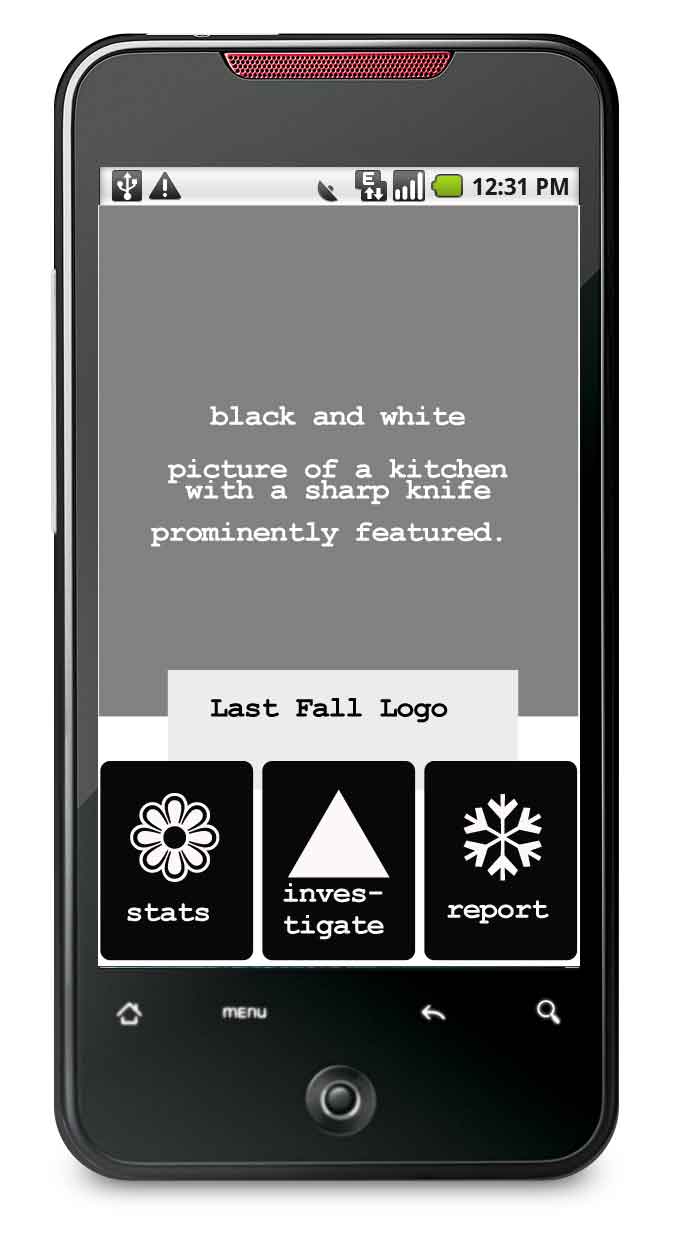
  • Using tips from this article entitled “‎10 simple ways to make wireframes more useful”– I added color to keep track of what specific part of the task my user was at– I made these wireframes for my first task flow for the LastFall app. The user wants to enter information (a.k.a. an accident report). As the user fills in the appropriate information, the corresponding buttons go grey as an indicator that they no longer need to be filled. The buttons go from black to red when they are actively being used. I think the buttons are a little on the big side, but I was also thinking that in the area where the logo lives, there can be a dropdown menu that includes settings for sizes.
    I think this would be a fun learning app for kids. They can see where and how often they get hurt. I wonder if that will affect their development. How are apps used for cognitive behaviorism? (That’s the approach for changing how a person behave by changing how a person thinks.) I would think that there might be something therapeutic that a person should be doing after an injury, an idea explored in this article about learning fear. I am curious about studies on how apps affect the brain in young children.
  • blue fractal art science for artists launch screen
    science for artists launch screen

    Last summer, I started a blog called Science for Artists. It’s a blog for my favorite excerpts and syntheses of my summer reading. Today, I found a link to this article on my Twitter, NPR’s article ”When Art Meets Science, You’ll Get The Picture” by Nancy Shute. It resurrected feelings I feel about art, science and design and how communication is sometimes obscured when its form becomes too beautiful. Here’s my blogged response.

    I spent some time looking at my blog. This website that I hadn’t updated in six months. I remembered how excited and inspired I was last summer, reading intense texts about the beauty of nature and science. It seems like a different life. Very different from my current one of the office, designing things for mobile and updating my Facebook. I am grateful for my research. When revisited Science for Artists blog, I added more sharing buttons. Some that didn’t exist a year ago. I changed the theme so it would be responsive (that it would change its format slightly to accommodate smaller screen sizes).  I pinned, tweeted, dugg, reddited and facebooked one of the blog posts. It’s fun seeing the numbers of visits rise just from clicking the share buttons on one post. I think there is probably an interesting graph that describes what would happen if I “shared” varying amounts. At what point would my audience be inundated with links to the same blog in a short amount of time?

    In WordPress, there’s an admin section called Appearance. Within that menu there’s a place to upload images for iPad features. I made a cover logo and launch screen image. I love the idea that someone is tucked snugly under a blanket on his couch, with his iPad, reading my favorite book excerpts.

    So, yes. Please check it out. And I am currently looking for more people to post on the site with me. One of the things I keep reading about when I read about blogging is that there are many benefits from multiple users posting to one blog. So, if the “magical junction between science and art” elicits a response from you, send me a message at katarina@countissarts.com

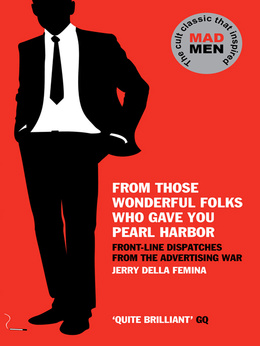
  • From Those Wonderful Folks Who Gave You Pearl Harbor: Front-line Dispatches from the Advertising War by Jerry Della Femina (Book – 2010)


    I don’t know why I picked up this book other than that it was on a few reading lists. This is from a genre of advertising books that make me slightly ill. They are more like memoirs and less like advice books. It’s technically non-fiction, but what can you glean really? I learned more from What Woman Want starring Mel Gibson.

    I don’t think Mad Men are relevant anymore. I appreciate the guys with the balls to sell Volkswagen bugs as “lemons” (a ploy to lure the customer in with understatement) but I can’t relate to the men behind the ads. Their literature reads as arrogant and their experiments unrepeatable.  I don’t recommend these kinds of books for a practical pursuit of advertising industry knowledge. Mad Men prestige has been replaced by that of programming whizzes and social media superstars. See Steve Jobs and Mark Zuckerberg for more relevant mindsets.

    This book is from my Advertising Reading List.

  •  

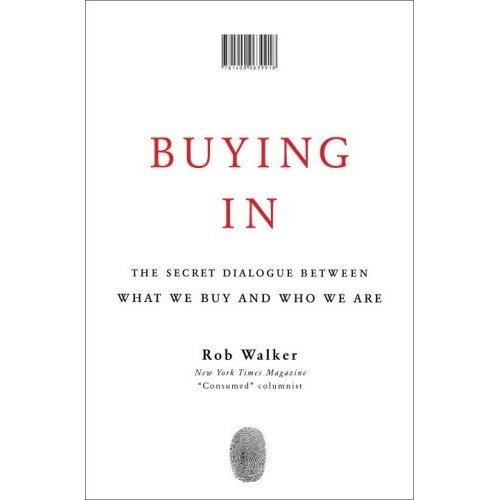
    Buying in: The Secret Dialogue between What We Buy and Who We Are by Rob Walker 

    This book may be recommended if you haven’t a clue about post-modern consumerism. But, I think you do. Especially if you live in the United States, it becomes obvious we are surrounded by brands vying for our attention and get it by going after our need to build identity. They do it for us by creating captivating brand identities that are fun, clear and easy. By ridding us of having to make choices every time we go to the grocery store/apparel store/etc, brands give us a way into a club where we can think a little less. These days, thinking is exhausting. Check out this TED talk about The Paradox of Choice by Barry Shwartz.

    My first class at the University of Washington was US Politics and Media. My professor had us all watch this The Persuaders (a PBS program) on advertising. It’s about marketing campaigns, how they get insights to a very specific demographic and target them. I like how Clotaire Rappaille emphasizes the importance of market research. “Sometimes, a product isn’t expensive enough.”

    A book I’d rather you read: No Logo by Naomi Klein. That book will knock you off your feet. She has the scoop on how our childhood has been sold, our future mortgaged. The brand/consumer dynamic is constantly evolving as we have new technology to evade them and they step it up to find us. Break through the clutter, as they say.


    This book is from my Advertising Reading List.

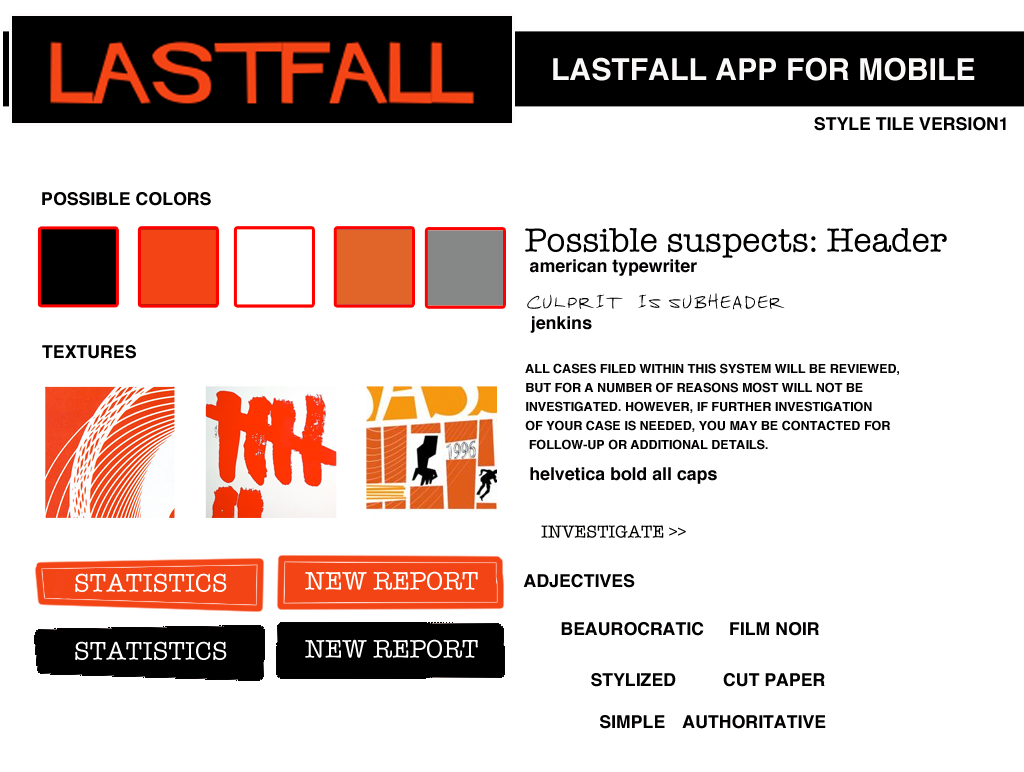
  • style tile for LastFall app textures colors fonts adjectives
    style tile for LastFall

    (This style tile is inspired by the work of Saul Bass, Art Goodman and Dave Nagata. Hitchcock typeface by Matt Terich. Tumblr theme by Matthew Buchanan.)

    When I went to get a tumblr to go with my app (I’m not ready to design my own tumblr themes.) I found one by Matthew Buchanan and I thought it would be perfect for my fake app (fapp for short.) and it helped guide the rest of the style.

    (Earlier Post Relating to This Project)