• It feels like a beginning of a history. I had my first industry interview. It was for a summer internship with a small advertising agency. I recently read a book about advertising that said that times have changed where big firms are no longer economically feasible for most companies. This one is no exception. They have a skeleton staff of four people and hire freelancers depending on the projects they get. (When I read this part, I imagined advertising agencies consisting of minion’s similar to that of the Pirates of the Carribean, walking ghostly designers, just bones and eyewear.)

    I was interviewed by the creative director and a lead designer. I had such a clever answer to the prompt “so, tell me about yourself” that fate would have it that they didn’t ask me that. They had highlighted annotated my resume and commented how they visited my sites and found me to be very proactive. The designer highlighted the words “flexible” and “self-starter” from my resume. I read a resume book that said soft qualifications such as these words that can’t really be measured or even proven are half-wanted/half-unwanted. Since I don’t have that much experience, I thought to put a section of words like this to describe myself to employers. I don’t know if I would recommend this feature for everyone’s resume, but it was received favorably this time.

    They asked me how I worked with others, how I take feedback, how open to change I am and how I can be proactive. I thought these were very valid questions and I appreciated how they asked questions that mattered.

    My schooling definitely prepared me for this experience. They threw around industry words like “collateral” and “deliverables” and talked about mapping to the creative brief.

    I spoke with the principal for some forty minutes and he regaled me with what his company stood for. He said the word “marketing” a few times too many for me to be comfortable. I always imagine direct mail or some archaic annoyance like that when I hear the word “marketing.” My first and only communications job was “marketing” fiber optic cable internet door to door in Kirkland. He clarified that marketing was his way of saying that though he does advertising; his goal is to improve the customer’s sales. He isn’t after fancy design awards but rather serving the client’s needs. When he said it like that, he mentioned how Apple has amazing marketing. I asked him what the percentage of work at his company is creative—I know, “creative” is a nebulous term. He replied gracefully that it can be pretty creative if you consider that coming up with creative solutions often less will be more and it’s the elegance of the solution that will drive how “creative” a project ends up being.

    He told me a sad story about how he pitched to a client an innovative idea that was diminished by compromise and at the end, the opening of the branded restaurant took place and the client sighed and said “We blew it, didn’t we?” Marketing is a huge part of advertising, not just reaching customers but persuading your client that this idea that you cooked up for them and with them is truly worth working toward.
  •  

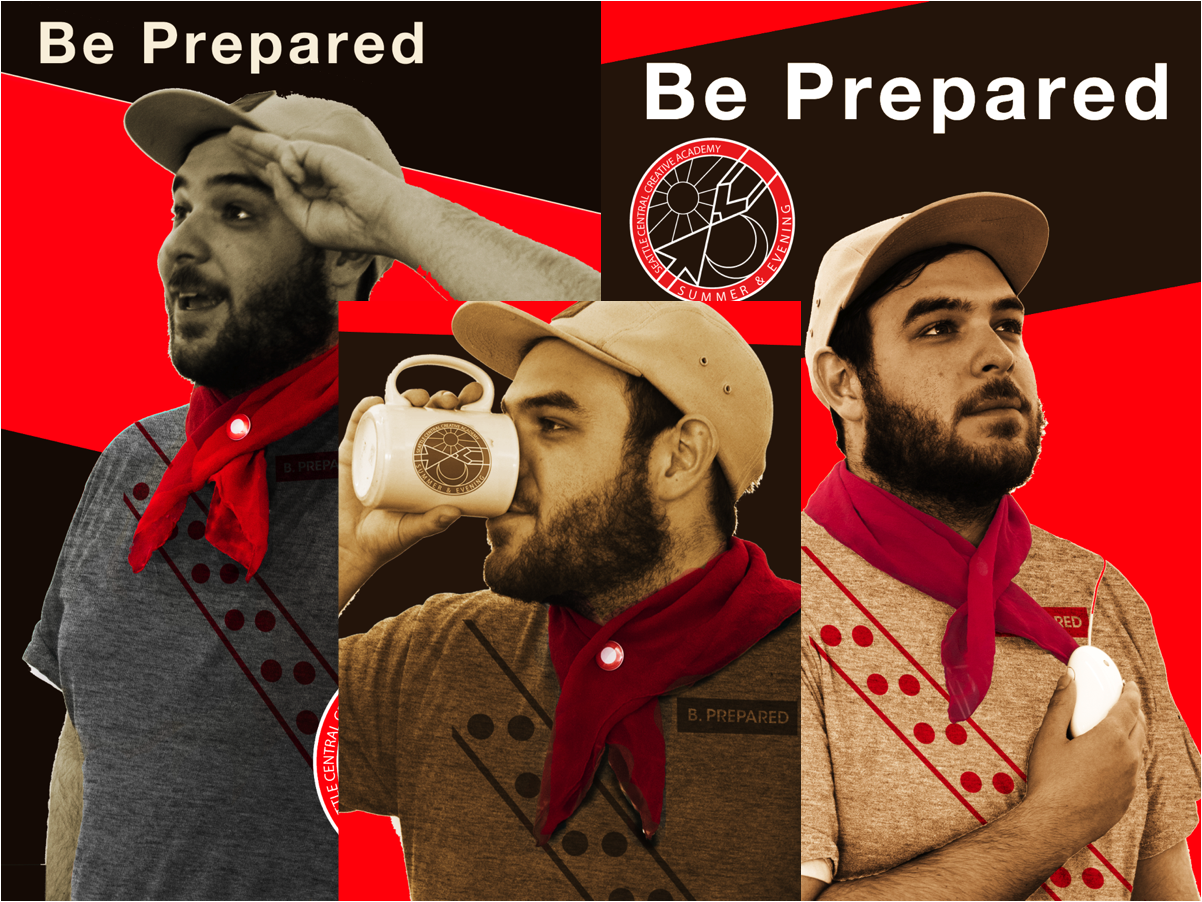
    boy scout shoot Anthony Roma be prepared red scarf
    Anthony Roma as “Boy Scout”

    For today’s New Media project, my team and I are still working on the Boot Scouts idea. In the program’s resourceful fashion, we borrowed another team’s member to be our scout model. He looked rather dashing in the red scarf. The hat is all him and how wonderfully fitting for today’s photos hoot. We wanted the photographer to be a playful juxtaposition of the modern and old fashioned (note the sepia and the color blocking treatment). Our model was very cooperative and understood what we were going for. (Thanks goes to Anthony!)

    (Earlier Post Relating to This Project)

  • This painting is for my dad. I admire how much he travels. He enjoys seeing the world. And he loves my paintings. This is for his birthday present.

    I think I’m getting a little better at these painting videos. I got a suggestion to explore some transitions where one thing transforms into another. I’ll have to do some more planning than I currently have been.

    Music:  Momentums by  Opus Opium. I got the music for this video from http://dig.ccmixter.org/ It is licensed under creative commons.

  • (Above) Before and (Below) After Critique

    My team is designing a campaign for SCCA’s Summer and Evening Program. Though I’ve had my two cents for the other designers on this project on their assignments (we divided the work so that one of us does poster/print ads/web design– I got web design) my work has come out stylistically different than the other material. Our concept is called “Boot Scouts” and our reference for the look and feel is WPA posters, especially by Lester Beall. It’s a good thing that we went for that era because we don’t have a photographer in our team (the other students do for this project). We’ve been using Library of Congress photos.

    The critique: I presented the design on the left to Chris and Jill and it was pretty much a hierarchy lecture. What should I read first? Everything is the same size… yada yada. It’s funny how clear it is to me now, but when I was working on it, it made so much sense to me. It seemed obvious and went with our other material. A sticking point for them was the loss of elegance. All of these elements are jammed in there and there’s too many images. And what’s with the angle?

    So, I cleaned it up a bit. (see the Right screen image) I feel like I’ve done that with a lot of projects. Going crazy collage-style and then stepping back and taking away until I have my design. I don’t know how efficient that is but I think it generates new ideas. It’s kind of like trying out everything at once.

    (Earlier Post Relating to This Project)


  • icon of a modern chair on an orange background

    Design me a chair. What do you need or want from a chair? What is the average user of a chair? Size? Needs? Wants? Comfort? What is the maximum range of variety in these users? What can I design to fulfill most of their needs? This is user-centered design.

    Firstly, we are human. This means that we possess an amazingly complex library of schemas that help us navigate the world. We are cognitive beings. The magic number in cognition is 7. We can hold in our heads 7 bits of information. As a classic example, our telephone numbers (here in the US) is seven digits long. Yes, we have more digits in other numbers, which brings up grouping. We group information (as psychology calls it “chunking”) so that we can remember more of it and more easily. Design knowledge alert: this relates to Gestalt—grouping, proximity, closure. Our brains want to group things by patterns we already know. Typography is helping us group all the time. We can’t take in whole paragraphs without a few periods, commas and capitals in the process.

    Technology has its own way of easing the process through skeuomorphs. These things are the vestigial remnants of technology we already know and putting them in a new context. A camera phone doesn’t have to sound like the clicking of an aperture, but it does because it’s an indication we’re used to.

    Physically, we are human. In fact, we are designing for humans more and more these days with the use of mobile devices. Phones, iPads, Androids, etc. force us to use our meaty fingers to make selections. (FYI: button size should be at least 40×40 pixels.) We need to think about people’s natural movements; how their hand dominance will affect the way they interact with something.

    Blindness doesn’t inhibit you as it once did. Color-blindness is, in fact, more common than you think (10% of us) and we need to design with more than just color-indication if we want to keep our apps user friendly. Check out this website, so you can see how your screen looks to them. I never thought about what if a blind person wanted to look at this site. I haven’t labeled my pictures well enough for their “alt tag” readers can accurately portray what has been depicted. I can’t imagine any blind people have wanted to look at my designs, but I like the idea that if they do, I’m ready with something for them, too.

    I keep thinking of that scene where Amelie (in the movie by the same name), where she leads a blind man down the street, just for a little while describing the idiosyncrasies of life as they pass. What a lovely thing to do for someone else.

  • Jakob Nielsen is the hypocritical guru of usability. Go to his site (useit.com) and you’ll see a list of blue underlined links that relate to his usability genius. His bud Donald Newman created the “desktop” metaphor and continues to emphasize user-centered design, but this website still looks like the 90s. (Good content, though.)

    Let me summarize his list of web heuristics—or to put it in user-friendly term: rules of thumb

    1)      Visibility of system status—check out the status bars. It’s nice to be able to see what your system is up to, mostly the important trait “working” or “not working” and maybe a brief reason why it’s not working or what percentage it’s working, that kind of thing.

    2)       There will be some stuff that is trending and may seem like an industry standard, but it’s not, but often there’s a reason why things are, so don’t ignore what works.

    3)      Speak the user’s language, and use the user’s logic. This might get tricky for words like “submit” which may seem cold and system-y language, but users have adopted it and appreciate the expectations that the little word connotes.

    4)      User control and user freedom. Is there a way give the user more control, a better navigation bar? An exit, an undo button? See to it!

    5)       Consistency and Standards. Your site is a new world, a new system with new signs telling us where to go. If you’re going to implement a visual system to communicate, keep it consistent, otherwise how else can you establish your language? Your identity?

    6)      Error—make room for it, avoid it and fix it. Do this using coherent error messages, undo buttons and confirmation boxes. Test your stuff and if it messes up, redesign!

    7)      Recognition rather than recall. There’s a reason why we have the concept of desktop for PCs. It’s because we recognize how it works and we don’t have to remember specifically that the trash can is a place to put things we don’t want. This is something we already know due to many experiences repeated in different contexts. Make your solution obvious. Use concepts that people are familiar with as a jumping point to get them to do what you want them to.

    8)      Allow users to tailor frequent actions. Doing things on the web, isn’t always fun. It is a chore and we can streamline the process to make it short and efficient. People will use your application for different things. Segment. Let it be chopped up so users can use it for the one (or few things) that relates to their lives.

    9)      Speaking of bells and whistles: Aesthetic and minimalist design. Be efficient with information. Let it speak using hierarchy, relative visibility. More relevant= more visible.

    I think it’s helpful for everyone to translate this list into terms that they can understand (because these “use it” guys may have gotten a little carried away with the multi-syllable words) and who needs that in this day and age where letters do most of our talking? OMG.

  • The last project in Jill’s class involved collaborating with the first-years in the photography program next door. When they got the assignments back, they felt it was necessary to have a meeting about photographer-designer relations. Always in this program, we’re thinking, why didn’t you have this meeting before we started? But, I am beginning to suspect that the instructors adhere to the “learn from your mistakes” where it’s beneficial to go with your instinct first and then check yourself afterward. This, I think, works surprisingly well with artist-types who want to find their own way that works for them rather than the thing we talked about in the meeting. It was interesting to see how relations would have proceeded naturally, rather than what people have been coached to do.

    In this debriefing meeting, or as Jill called it, “post-mortem,” we discussed the points of dialogue that should be covered in the meeting prior to the start of the project.

    1)      When do you need it?

    This question controls everything. Our ambition is tamed by this question. This question forces us to carve away the parts of the piece that we can spare, and make a better end project for that editing. Given all the time in the world, we would plan wonderful photos and take none. That we have so little time puts a fire under us pushing us forward to do something.

    2) What media is it for?

    This is a crucial point in today’s world of multimedia. Print? Device? Which one? Newspaper? 4-color? These factors change the way that this photo will be read. Photographers adjust their output to fit these parameters. When you want to use a photograph to go to different substrates, media, get different versions of that photograph. Copy and paste doesn’t go as far as you think.

    3) Communicate

    Now you are ready to talk details. Visualize the end result together. We are visual people, the photographer and the designer may not have the same vocabulary, but we communicate our ideas in pictures anyways. Bring a tear (pronounced “t-err”, as in tear out a sample you like from a magazine), bring a tear sheet or a mood board. Talk about lighting, your sketches, discuss what terms like dramatic, or hard light, mean to you and get specific.

    Also, be patient. As artists, we don’t know exactly how each piece will turn out, how far we can push it. It’s important to keep your vision in mind as you go. Also, remember that what you envision may seem simple to you as a designer, but setting up a photo that requires a detail such as a focus on a few things may be next to technically impossible with the resources at hand.

    4) Conflict resolution. Frankly, photographers are fed by designers. Photographers are competing with stock photography. Robbie went so far as to say that it’s about the relationships you form and less about the quality of your work (note that good work leads to better relationships).

    5) Get the Image.  In the world of advertising, we do layouts to get the client to approve the idea. It is up to us designers to be leaders. It’s up to us art-directors to approve of the photography on the set. Tom advised to sit in the coffee corner or whathaveyou at the shoot and wait for the photographer to show you the image. Ignore their labor, their elaborate dropcloths, backgrounds and impatient models. Judge the image. Just the image. Note its highlights and shadows and imagine whatever post-production work that is going to be applied. But, when you think you have the shot, take a few more. Give yourself options. Let the photographer give you options.

    However, at the end of the day, you don’t know how far it’s going to go and you have to trust your photographer and learn from their results about who they are as someone you may (or may not) select for future collaborations. That is the serendipity of art. Sometimes you work well, sometimes one of you is strong enough to lift you both up and other times, it’s truly broken. And you have to pick up the pieces and move on.

    (Earlier Post Relating to This Project)

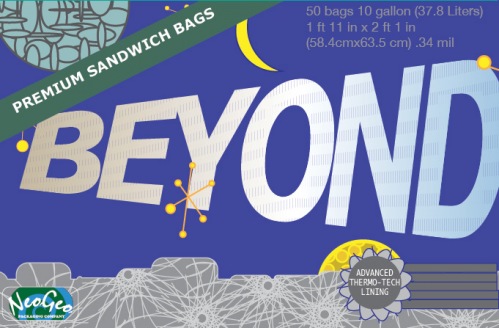
  • Above: My Sandwich Bag Box Design (front)

    During this critique session, Ashlee (one of my classmates) produced a beautiful matchsticks box. It was nostalgically decorated and had “To Build a Fire” by Jack London printed on the back of it. That really enchanted me. That piece of ephemera transported me for a moment to a warm fire with an outdoorsy man. She nailed it with mood and cultural references. Something that retro things do. We live in a culture constantly referencing the recent and distant past. This is not a new phenomenon, but perhaps with the dawn of the internet, it has become easy to mine our history for its artifacts.


    Post-critique on my package:

    Is it a condom box? Someone asked. This product doesn’t scream sandwich bags. Sandwich bags should be the subhead. People chimed in, how about using a sandwich spaceship or at least a sandwich bag in space. The genre needs to be pronounced at first glance, there might not be a second.

    Other tricks I missed: indicate how it opens (this particular package opens from the front and Tom tried to open it from up top.) And add glitz. Packaging is not shy. It’s that caller at the fair “Come get your hotdogs! Get your hotdogs here!” And if you’re that guy, you’d better have some nice hotdogs.

    (Earlier Post Relating to This Project)