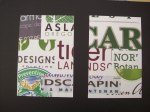
• In class we learned about grids. About how nothing is as complicated as it seems. It’s just a lot of structured order and then some overlapping parts to make it look cool. She said as we looked over magazine layouts, gazing over huge bold headlines something that her teacher once told her. The sweet acknowledgement of passed down wisdom. What she said was this: If you can’t think of what to do, make it bigger. If that’s still not doing it, make it bolder. If you are not quite there yet, make it red. If you’re not going anywhere still, add gold. It’s a joke, sort of, but a trick of the trade that holds truth. So, if you are stuck, make it dynamic using scale and negative space and color and texture.

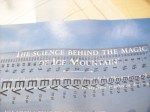
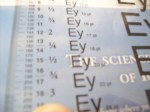
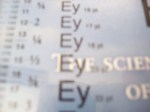
    During an in class assignment, (we were measuring the fonts of headlines and body copy that we found in magazines) I had commented that ol’ school-goers slogan, “When am I going to need this?” But alas, after another student corrected my work (thanks Ashley!) I found out I had no idea what I was doing. She and all her Pub Arts wisdom (some of the students took a year of publishing arts before coming to this program, and I call their confidence, having been familiarized with some of the aspects we are now facing, I call their confidence, the Pub Arts Swagger) she showed me how to use all the parts of the special ruler that separates the men from the boys so to speak.

    It was quite a first day to dive into what is the road map to a lot of my future work– which I imagine is page-layout.

  • “Purely verbal thinking is the prototype of thoughtless thinking, the automatic recourse to connections retrieved from storage. It is useful but sterile.” -Rudolph Arnheim, Visual Thinking

    Visual thinking is superior because like when you draw something, you distill it to its essence, something that takes a quick analysis. Determining what’s necessary to make the object recognizable (and the emotion recognizable, if present) takes a moment of analysis. What’s the most distinguishing feature of a subject? In the first quarter of the graphic arts program, Jill talks about logos and how they can be abstracted and yet point to something real. How can you imply an animal (or a concept in general) without depicting the entire? Its stripes set it apart, if it’s a Zebra, or its big round ears if it’s a mouse. There are executions of metonymy (where a part represents a whole) that are confusing. The ears are too small and spaced in a way that imply “bear” and not “mouse.” This all comes back to the motto Jill often recites in class. Simply, “Scale and position.”

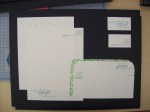
    This mantra defines a space, a feeling and therefore an idea of a world. Is it a place of line quality? Or a world of color blocking? Logos help identify the style of the rest of the identity and extracting clues to the world that it represents helps solve the matter of accessories, whether it is letterhead or a mailer. Take cues from what the logo does. Is it organic, geometric, and brightly colored? That is an element that you have to maintain when you transfer that brand to other platforms.

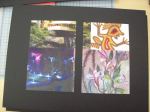
    Many letterhead designs default to a color bar or a line of text centered at the top. Is that helping your design? Most people have seen this done and won’t note it as good design anymore. Is it working as something that conveys a tone and an identity, or is it just informational? That word “informational” is the kiss of death in design. Nothing should be just informational when it comes to your brand. In this marketplace, ideas and design should not only hold information, but meaning.

    Daniel Pink talks about what he calls “the six senses” in his book, A Whole New Mind. He refers to the aspects on which professional success and satisfaction depend on in the world of art and advertising: Design, Story, Symphony, Empathy, Play, and Meaning. These six senses differentiate your product from another, engaging the client/customer/audience in a way that resonates long after the experience.

    Look at your designs. Are they holistic? Do they cling to a strong idea relating to the customer and your vision? Have you told a story, given them dynamic design, something from the heart perhaps? Whatever your method of delivering your message, sometimes after applying a special treatment, ask yourself, if it helps or complicates the design. Can you explain it?

    Some people would argue that talking about art is like dancing about architecture, there is something inherent that is lost in translation from one form to another. Susan Sontag writes about how a dependence on photography and other quick methods to convey something, over time your storytelling ability atrophies. Challenge yourself. Use different mediums to send your message. Try writing it.

    “Writers ask more questions. It’s hard for the writer to work on the assumption that anything can be interesting. Many people experience their lives as if they had cameras, but while they can see it, they can’t say it. When they report on an interesting event, their accounts frequently peter out into the statement ‘I wish I had my camera.’ There is a general breakdown in narrative skills, and few people tell stories well anymore.”

    Do you rely heavily on photography to convey your message? Try illustration or a typographic solution. These offer a fresh insight to the tone and mood that sometimes gets lost in the realism of photography. Imagine that you are telling a story to young children. Make it exciting!

    “Myth is the secret opening through which the inexhaustible energies of the cosmos pour into human manifestation.” -Joseph Campbell

    We are designers, but we also hold the keys to culture, consumerism and the collective unconscious. We have the power to shape people’s memories. The nostalgia of advertising and branding have induced fierce customer loyalty, giving their identity more meaning, giving their sense of community more weight. A brand that a person can stand behind, in terms of aesthetic, meaning, similar goals, is like a reliable friend. Keeping you informed, entertained and above all, inspired.


    *In Daniel Pink’s Book, A Whole New Mind, he lists recommendations of good works that relate to his “six senses.” Here’s a list of symphonies he recommends:

    Beethoven’s 9th

    Mozart’s No.35 “Haffner Symphony”

    Mahler’s 4th Symphony in G major.

    Tchaikovsky’s 1812 Overture (with real canons)

    Haydn’s Symphony No. 94 in G major “Surprise”


  • The making of the video component for Sierra Club’s Best Internship on Earth (aka Outdoor Youth Ambassador)–Please vote here http://content.sierraclub.org/bestinternship/content/katarina-best-intern-earth— 2012:

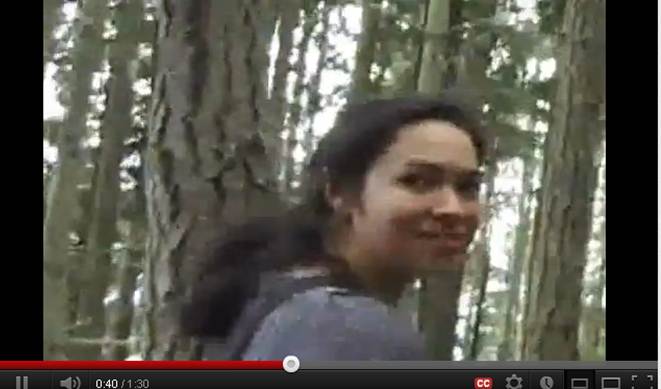
    My friends and I went adventuring last weekend and I documented it and used some of it in this video.

    On Saturday, we went rollerblading at Magnuson park. It was a beautiful day, so to avoid the traffic at Greenlake, we went to Magnuson. It wasn’t crowded at all, but the sidewalks are a little more bumpy.

    On Sunday, we drove out to Deception Pass. We mused why they called it Cranberry Island. There were parts in the trail that led to nowhere and the witty ones of us pointed out that’s why they call it “Deception Pass.” While we were hiking, some of us saw a big splash in the river and a voice yelling help. Minutes later, the water patrol came by and zoomed around the area. I hope there was a rescue involved. We found crabs, snails, algae that popped underneath our shoes. We climbed a log from the beach to the trail that was a ledge above us. We ate sandwiches and snacks that Carolyn had prepared in the morning (thank you!) along side the grassy summit. We looked down and saw the water glimmering with sunshine. The Summit Trail from the Perimeter Trail is only 0.8 miles… straight up—it was quite a work-out! Someone commented that there are more switchbacks on American trails than European ones and I wonder why that is? Something about our queue culture change the way we make paths in the wilderness?

    A lot of footage I got was taken with a Kodak Share camera that my mother bought for me four years ago was not in the video because of some formatting issue. I was glad that I took a lot of footage with both cameras. My housemate Jon lent me his Contour Camera (thank you!) which has a wide angle lense, 720p, and is rather compact (has option to be mounted on a helmet).

    Thank you to everyone in my group. Everyone during the trip pointed out interesting things along the way, such as a defensive Mama crab or weird looking mushrooms. Thank you for filming me and tolerating my pauses along the way. I’m really glad I have all this video-recorded. I’m realizing that picture taking is so ubiquitous, but the art of video taking is definitely underappreciated. With our budding technology market, YouTube memories are a thing as scrapbooking was once.

    Update 3-28-12 (Post-critique):

    No formal critique, but a lot of feedback. Shaky parts, makes people dizzy, the text is hard to read, flaky transitions but otherwise good. Never let YouTube fix your video. They actually have a dialog box that says “your video is shaky; want us to fix that for you?” What you really do is relinquish your precious over to an algorithm that will stretch and rotate your video in the attempt to compensate for the human gait. (All shaky cam is the fault that we have two feet. If I had ten or twenty, I would just roll like a caterpillar– I would still call this blog, Ment Cat!)

    If I were to do this video again, I would plan my shots better. Have a lot of still moments. Definitely set the camera down somewhere and take video like that instead of holding it. I would make less opacity/blend mode choices (though, I think its beautiful, it’s a little too avantgarde for a video for this particular audience).

    The marketing of this video is a whole other story. I like social media, but it always seems like a spammy thing to link to someone else’s corporate-y website where they have to vote on something. It’s probably that people don’t really know what Sierra Club does and the voting page doesn’t really describe anything. If I were to redesign the voting site, I would make it look less commercial and add information about the position and what exactly Sierra Club does. People don’t know they are environmental lobbyists (essentially, correct me if I’m wrong). And other contests like this involve more information about the candidate on their profile instead of the generic “Help me get the Best Internship on Earth this summer. Vote for my video!”

    A vote for my video is a vote for good design.

  • I don’t sketch a lot.  It detracts a lot from the spontaneity of the work. But, I don’t think people want spontaneous design. I think that’s an oxymoron. Design is a mindset. It’s solving a problem, shaping an experience, optimizing environment. It may look spontaneous, and a couple of my teachers would assert that if it looks effortless, that’s good design. And sometimes it is the first thing you scribbled on a page, but many times it isn’t. That’s where sketching comes in.

    Sketching is extracting ideas from your thought process to something more permanent, as we all know the fleeting moment where you realize that you just forgot your fantastic dream that seemed so strange you thought you could never forget it. For me a sketch seems cosmic, like predicting the future. Showing a path of the future (if you believe the Many Worlds theory), it is just showing an option among many. That’s what creation is. We can acknowledge how the world can be any which way, animals with three eyes, or made of light waves, but the creation comes with putting it to paper (or canvas or writing or whatever form really). The creation happens when other people can refer to it as an idea over and over again. Where the fact that other people are thinking that there are 3-eyed animals is no coincidence but something that you suggested to them.

    A good sketch is something that will inspire you to make that suggestion more real. Each rendering that improves with some aspect of refining that idea is a step towards making a sketch a reality, making a suggestion a creation.

    This process is tricky. Jill would say “What do you like about this?” It is a matter of refining your design to the essential elements. She would say “What is working?” Each incarnation of your sketch gives different hints as to its true essence, but also, medium comes into play. When sketching with a pencil, the density of the marks can play with the light-darks of the design and indicate something very subtle but transformative to your design and as it’s being created you might not have thought it could be any other way and that cements a certain route in your process for the rest of the time. Perhaps you try to render that same idea using ink and brushes, the line quality and the saturation pushes to the forefront of priority and in refining that idea you try to maintain those qualities. I told Jill this idea about medium, the difference between sketching with a marker versus a pencil and she said that it didn’t really matter (I don’t know if she was tired and didn’t want to get into it), but of course her stance on computers in the process reflects this notion. I am merely stating that even if you start designing by hand drawing, I would heavily argue that medium changes your approach as you go. Each stroke and flourish look differently depending on the force and material you use in making it. A nice stroke can almost be an accident, a burst of energy and a flick of a wrist can be practiced and perfected over time, but is initially not fully under control. Line quality communicates emotion. Subtly, the line can indicate surety, boldness or more tentative energy.


    “In design dialogue, the wobbliness of the lines often expresses the degree of clarity of architecture thought. One does not sketch with a 6H pencil and a straight edge or make working drawings freehand with a felt pen. The refinement of a project is a step-by-step process of sharpening both the compression and representation of one’s image of the problem.” Nicholas Negroponte, the Architectural Machine


    The other side of the coin: playing to your strengths. I personally dislike the traditional pencil sketches because I don’t see myself as a drawer, someone focused on details, shading, realism, that sort of thing. I am a sketch artist, where each sketch calls out to me, “save me, save me, I am art, too!” and so naturally, I want to render each sketch in something more permanent and finished looking than pencil.

    As for sketching as a process towards a finished piece, I like its quick way of capturing an idea that would take words paragraphs to communicate. How round or lanky something should be, how it fits on the page, that sort of thing. I want to caption each sketch, for position only, FPO. I don’t want people looking at my sketches and thinking that the finished thing will look anything like that, because it won’t. The way I work, the floor plan may be the same, but the details, the smaller shapes will take a life of its own during the creation process. Sketching relates to storyboarding which is different than concept art. Storyboarding is just the structure under the story, angles and directions, a recipe for the first process (in a series between the start and finish of something truly something). Whereas the concept art is the mood board, the inspiration, the home base where you can rest to rekindle the flame of creativity, reminding you why you started in the first place– you had a vision of this thing that would exist with your help.

    Finally as a last tip, the rule of art, is if you feel comfortable doing it, it will show. If you were born with a mouse in your hand and have a firm hold in a process that reminds you of where you are in the finishing of a piece, that will work for you. The thing about painting is: you’re done when you create all the details you want in the painting. And that takes time and between painting the background and the first figure, you might realize that you need to add more of a table or something. Painting and drawing, you literally start from nothing. The lag between idea and art is longer than on the computer where a fonts and images wait eagerly for you to pick them. So, the execution is quick. That sense of time is warped. Working on a computer is fast, so it pressures you to think fast. Whereas painting is a slow endeavor and when you invest time, you want to make it good, so the decision time is longer, more thoughtful. I think that’s what Jill is talking about when she says go to the computer last. Don’t necessarily go to the computer last (there are fonts and research on the computer) but go to the computer speed of decision-making last. Sketching is not about the act, but the time spent not committing to a particular design and trying out (in a way that is quick and efficient) different futures.

    It’s also like trying on shoes. It’s comforting in the decision making process knowing what definitely didn’t work. I’ve had some shoes salespeople who said “try on this one, just to make sure you like the other one better.”

  • Meeting, the Film project (for more on this project, check out last week’s blog post)

    Co-directing this project with Pete, we learned a lot about the value of good vibes on the set. The amount of beer and silliness inherent in the production led to a great experience with friends in an interesting situation. The shots we got had a feeling of authenticity. Those moments of calm ritual, those moments of exuberance were only lightly directed. We had a storyboard/list of shots we wanted to get, but also there were shots inspired by the setting (the fireplace shot is such an addition) and other shots that were moments of interaction.

    Editing

    The first step in the editing process was to eliminate takes that were discontinuous (people weren’t wearing masks mostly) and takes where some people weren’t ready. After that, we took notes on parts in the takes where it is especially potent and must definitely be in the shot. Then, the sequence was arranged chronologically. After snipping this down, we wanted to make sure we weren’t missing any beautiful shots, so we made a track of video reserved for shots that were small and wonderful, moments of power. Whenever a part of the vid “dragged” during editing, we took a snippet from this track and added it as an overlay to that section. There were parts that were clumsy due to overlays and we took them back and breathed a sigh of satisfaction. It’s important to try it and see how it looks. It might seem cool one day and a little hokier in the next day’s editing process.

    This film was edited over the course of 4 work days. Plenty of time to rethink approaches, but not too much actually. I think this amount of time encouraged the decision process to flow with more deliberation. I think a lot of teachers and leaders understand that unwritten law of workflow: work will expand to fill the time before the deadline. Pete and I kept seeing other problems as we solved this storytelling puzzle. There would be lulls and jams that would be bugging our sensibilities, replaced by rhythm and framing issues followed by “is this too complicated?” We looked up information on what tools did what (the video module lessons didn’t stick as much as we wanted to) and found some useful knowledge about blend modes. And so, that’s how it went. Having two people in the editing process seemed valuable. That little bit of agreement giving the other the confidence in that particular decision.

    We were a quite the couple of hipsters when it came time to choose music to further inspire the cuts after we had a 2:40 rough cut. Our ears were graced with a smorgasbord of music that day. We considered choices literal, abstract, environmental and classical. Bizet was a candidate for quite a while, something balletic. I voted for Penderecki (after Pete played me a YouTube). It was so utterly creepy withe sound of bells and wind-caused creaking of metal. I mentioned how lovely Michael Jackson’s “Thriller” started and we considered Charan’s suggestion of Enigma, but Pete was terribly picky. He wanted something almost ironic, I deduced. After a couple of hours, I dictated the time was near to pick a song. At 5:40, I said, that’s when we settle on something. Twenty minutes after the anointed time, Pete showed me Doris Day’s “Que Sera, Sera.” I agreed with him. There was something so joyous in it that it wouldn’t be expected.

    A lot of times when editing alone, you can go on a tangent that leads to a broken place because it’s built on a direction that you hoped would work on the end and it didn’t pan out. It’s best to save versions you can go back to. Especially with video, there are perfect bubbles of finish product that appear and disappear when editing and there’s never a magic elf that will come out of a corner and gently guide your hand away from the project saying “good job. You have met all the criteria of the assignment and produced something new and valuable and complete.” I have to be the magical elf and say “okay, after we trim that clip and change the blend mode on that clip, it’ll be done.” And maybe it will and maybe it won’t.

  • Yoksabet

    View more PowerPoint from basementcat  (view small, low resolution)

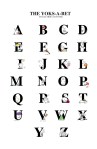
    I created this alphabet poster for my friend and muse, Dan Helton. We created this character named Yoks (short for Yokoso, I often call him, Mr.Yoks). This character is based off of Dan’s stuffed animal who is a baby horse. (Some people say pony, and some days I correct them, but other days I realize that I made the same mistake at first.)

    I made these comics as doodles during my classes and made them into a webcomic last summer. I have made small books and a shirt design or two. I’m starting to make an animation featuring Mr. Yoks. I’ve been toying with the idea of an alphabet. Given my new knowledge of Photoshop (which I think is the most facile program for image manipulation) and the free time of Spring Break, here’s the Yoksabet.

    I started by hand drawing everything with a fountain pen. I had Times New Roman in mind when I was drawing the letterforms. I wanted to integrate the letter with the figure. I think there was some subconscious Geoffrey Tory influence going on. (He argued that letters should reflect the ideal of the human body. However, in this set, the cross-stroke does not” cover the man’s organ of generation to signify that Modesty and Chastity are required before all else, in those who seek acquaintance with well-shaped letters.”)

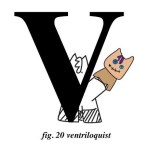
    I was also inspired by an Alpha poster where the theme was birds. She used the “figure no. 13” when describing the birds (to make it obvious for people who couldn’t recognize bird breeds, I think.) I liked the formality of that contrasted with my cute baby horse.

    I scanned in these drawings and made them a template layer in Adobe Illustrator (that means locking the layer and knocking back the opacity) and pen tooled over the top. Mr.Yoks looks a lot friendlier when he’s clean. I added the letters as a separate layer. I copy/pasted all of these elements into a Photoshop document and through “layer via cut” I made each letter and corresponding Yoks their own layer. To integrate the drawing and the letter (there are instances where yoks is in front of the letter, behind it, or both) I changed the opacity on the letter and added a layer mask where the intersection of the drawing and the letter was. (The magnetic lasso was for quick and easy for this, but there are many ways to select the part you don’t want to show.)

    Some parts I added color. There are some parts that I added color in the Illustrator phase and others where I added color in the Photoshop phase. I like adding color in the Photoshop phase because it’s just like a coloring book, it fills the part between the lines (because I pixelated my images. I like working with pixels. Very straightforward. I had some difficulties colorizing in Illustrator because I didn’t want to make everything a closed shape. Most of the elements in the yoks’ drawings are stroke, no fill.)

    And then finally merging the layers to have drawing and letter inextricably together. Then I took those and rearranged them into a poster design.

    As Mr. Yoks would say, “Ta daaa!”

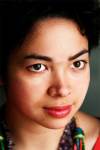
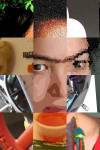
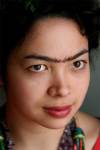
  • This was a fun project. A four-parter: untouched photograph, retouched photograph, found object/ filter utilization, and abstract.


    Some quick fixes to any portrait: brighten up the whites of the eyes and teeth, smooth the skin, eliminate extraneous hair, whether that is flyaways or stubble and use liquefy tool sparingly.


    Filters can be your friend or your friend in appearance. Using too many of them produces interesting affects, but if for the wrong occasion, they can be overdone. (I like the Ocean Ripple filter myself, but when can we really use that to enhance the realism of something. I rarely Photoshop underwater scenes, but there will be a day… and I’ll be waiting.)


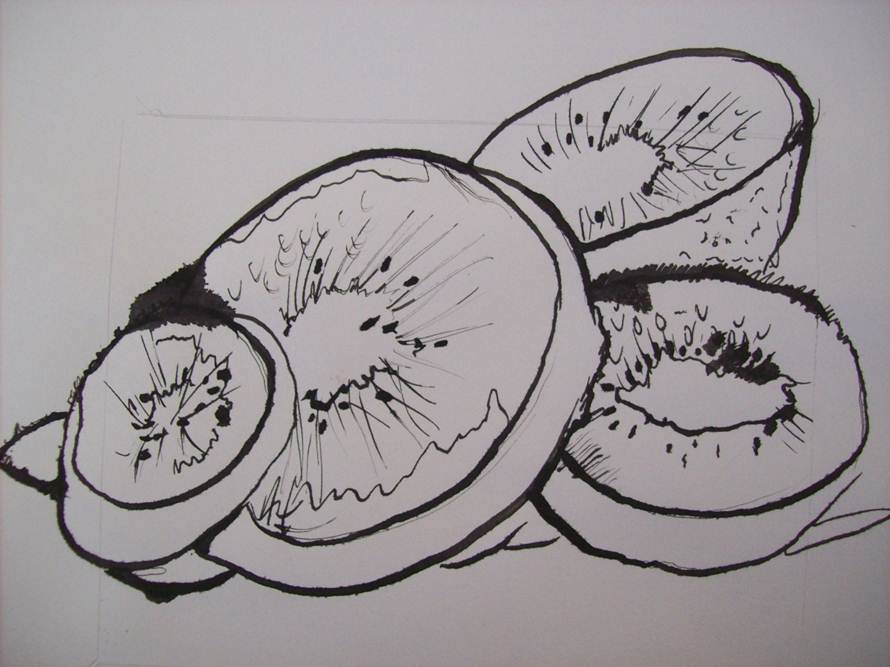
    The found object portion of that photo was a great challenge. The goal was to find compositions that suggest the space you’re replacing. It’s a weird thing to forget (or at least to try to forget for a moment) what you are looking at and look at the shapes they make. I did that with my lunch and I think the other patrons of the sushi restaurant thought I had some sort of disorder where I had to rotate my plate a quarter clockwise five times before I could eat a bite and then I would have to rotate it again.


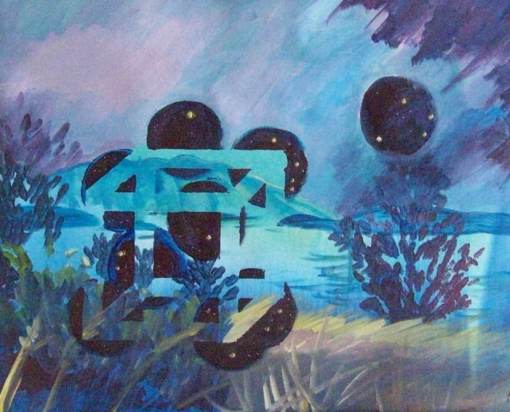
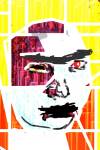
    Abstract art is a whole other world for me. It was very interesting trying to do something where I wasn’t even inspired. I started out with circles for eyes. A bunch of them and added layer effects, bevel, inner glow, outer glow, satin and drop shadow. I initially had a stroke on there as well, but everyone in design knows if you can do without a stroke, do. Strokes are for kids that still can’t color in the lines. Not like me, an arteest, who colors outside the lines and makes les statements. Then I decided I liked that and added color bars with the same layer effects for hair, but down the road I realized I liked that look (it looked like the buildings of Wizard of Oz’s Emerald City– the faraway view) smooth and shiny like crystals. I wanted some painterly-ness to it, so I had a texture layer of brush strokes. I only brushed part of the art board and then copy-pasted until the whole thing was covered (the wonders of technology!). Then at some point I traced my eyes with the pen tool, brushed loosely my nose and mouth. It needed more, so I applied a technique I experimented with in the book cover project where I make a Mondrian-esque layer using the shift key, a round hard brush and the paint bucket for some of the spaces between the black abstract wacked grid I was making. Make that a blend mode (I love “vivid light” now) and you really have something to play with. I messed with the order of the layers, entertained by the various versions of my obscured face. I messed with the order of the layers like they were players on a baseball team and each player had a chance at bat. One of the layers made one of the eyes I took from the original look red and strange, so I kept that mode. And that’s kind of how abstracts are made. Things start to look weird and there becomes a point when you start to like it. It’s a great lesson for creation, because sometimes, you don’t feel like making the thing you must make. Sit down and do it anyway. There’s a moment in the process where the material speaks to you, where your mistakes become charming details and you see things that can be tweaked ever so slightly to create meaning. That’s the fun. When all of it falls into place as if it was magnetized and just needs a little jostling to create order.