• New Media’s First Assignment of the Quarter, due in 3 weeks

    Informational Video 1-3 min. 90 sec, ideal. Program featured: SCCC’s informational technology department, which includes web design, operating systems (cisco) and networking.

    The pitch:

    Project: Information Overload: Information Technology at SCCC

    Description: Journey of students and teachers, connections they make, the tools they use.

    Goals: to demonstrate all the technology at SCCC featuring students and faculty using tools to connect, educate and learn.

    How: Document commute, personal use of computers, classroom, teaching and other actions creating a quick cut montage featuring two or three story-lines in the life of information technology learning.


    Post critique:

    Tim and Doris thought this outline was too simple. My approach is always to have a general outline of what’s going to happen, and then things occur along the way to make it truly unique. It’s true that you cannot rely on chance to make a video good.

    Marc and Chris said that it was a little too much (multiple storylines) and too bland (cut to wires, it’s like a bad commercial for IT). Robbie recommended addressing the issue of technology in a silent way, black and white is effective. Tim and I asserted that the overlays we had planned would make it cool and interesting. I mentioned “visual analogies” and Chris’ face lit up. So, we definitely need to run with that. As a side note: Never call your teachers old as an attempt to say that your idea is too hip. You’re usually wrong and they kind of smugly sit there while you waste your breath on some idea half or over baked.


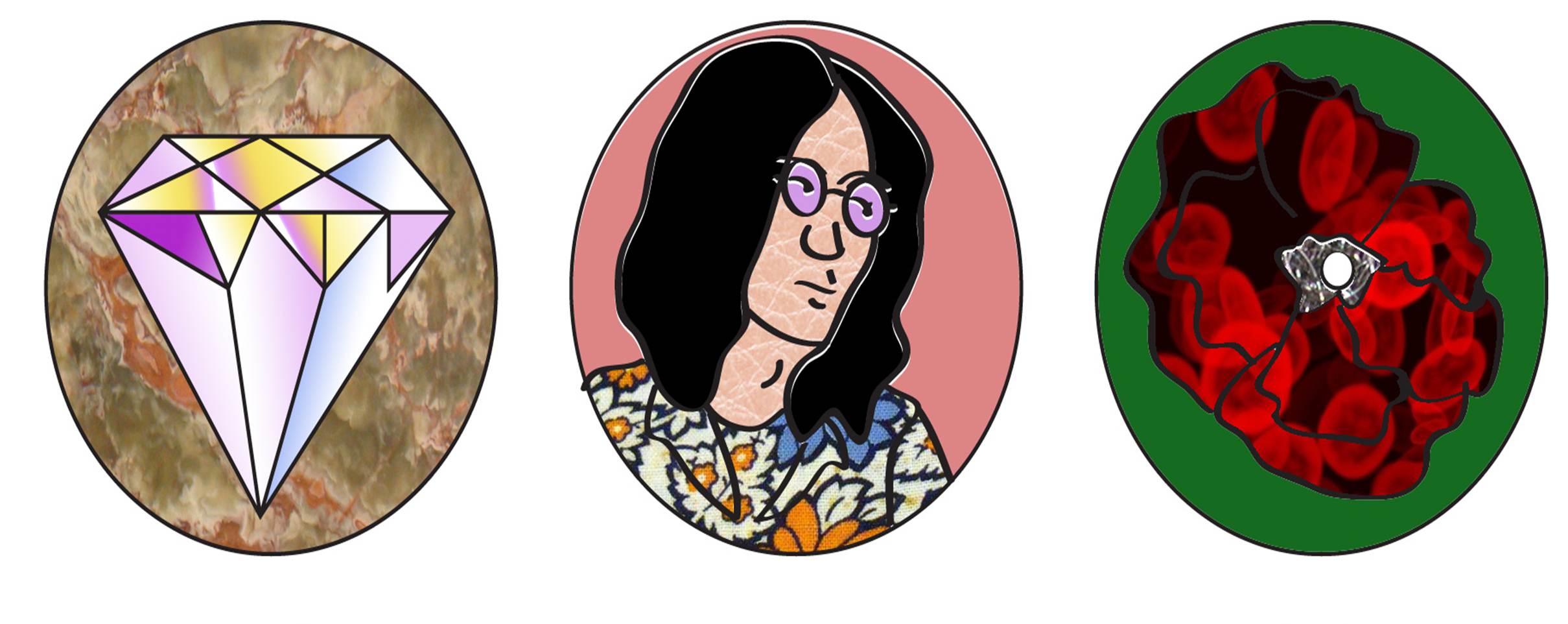
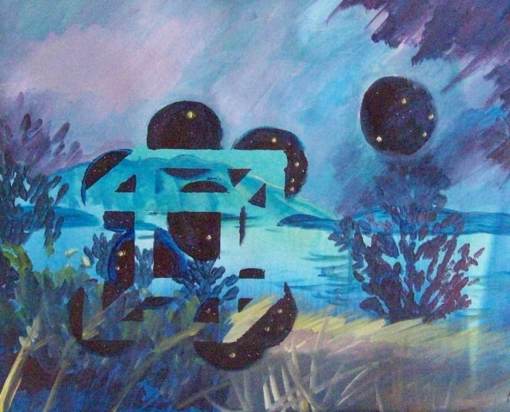
  • (Pictured above: three of the 20 sticker designs– work in progress. This post will be updated as  more of the sticker designs are complete.)
    The working title for these stickers has been called LSD stickers. Some friends and I were talking about the LSD scare with stickers. (Crazed man was giving stickers laced with LSD to children). And while she was telling this anecdote, I was thinking how were these stickers designed? Were they the kind of stickers that everyone would suspect? I thought it would be fun to create some friendly non-LSD stickers, inspired by the era of peace and love and maybe down the line, make them scratch and sniff.
    This would be marketed to kids that like freaking out their parents with what seems to be innocent things. (Once my parents found a hairclip as part of a pirate costume and thought it was a roach clip. I thought that was pretty funny.)

    I made these using Illustrator and Photoshop. I am sure that you can use one program to do both, but each program has a slightly different button/menu/tool that is sometimes easier.

  • User Centered Design (UCD) is where the designer thinks of the user, the main focus being functionality. Tim (the teacher) discussed Information Architecture and research. Every great design molds the user’s experience, streamlining processes and giving order and priority to important information.

    The main theme of today’s class was research. What do you know about the user? Ask people. Today’s in-class assignment was designing the Toshiba Remote Control (for TV/DVD). Our teacher pulled a Hoppe. (Last quarter Hoppe said that he deliberately left off information about the gallery address on the assignment brief as a test, seeing if any student would inquire about this information.) Tim had emphasized most of the class that research was incredibly important and that you should ask people about their experiences and how to improve it when going about designing stuff for them. Tim said that he had a lot of problems with this remote (and that we failed to ask him, supposedly the only person in the class that suffered from this particular remote’s design flaws). I don’t think I’ll ever get used to the smug “you should have asked” mode that some teachers phase into when they point out to their students obvious things that they could have done, but didn’t.

    Redesigning this remote was fun. It reminded me how well I knew my remote as a kid, watching cartoons, the master of flipping the channel during commercials. Now that I watch the computer instead, this remote seemed remote indeed. I imagined an old man watching his DVDs and what he would want from a remote, which buttons needed to be easy to locate when an insomniac grandson walked by to get a glass of milk, or a concerned wife. I got into the mindset of a secretive TV watcher. The kind of remote that would allow such ease to control the play, the pause, the slow-forward, as if you’re trying to absorb the actions on the screen like a magic trick that you want to repeat for your friends, understanding each little gesture –played at regular time, you’d hardly notice.

    During class I was in some kind of daydreaming stupor when the teacher asked about my remote design. Before claiming it, one of my classmates characterized as designed by someone who listens to a lot of music. I think he was referring to its ipod-esque design. That didn’t occur to me at all, when arranging the buttons, but now it all seems clear. I try not to be a hack, but design, good design makes you feel like it’s just a standard, as if there was only one way to go through the maze and Apple found it first.

    I enjoyed moving around these buttons and finding categories in which I could group each, like Little Foot finding more long necks (movie reference), a joy that I am learning comes with the territory. Graphic design is making a puzzle (you take pieces from history and your client’s parameters) and solving it (putting it in border with a logo slapped on to it).

  • The most important thing when approaching a program you aren’t familiar with is to show it who is boss. Today Hoppe ran through the basics of InDesign showing firstly that you must set your preferences in the program to give yourself more control over what you are doing: change the defaults. Set your workspace to [advanced] — welcome to the club.

    The cursor key: .003″

    Kerning/Tracking: 10/1000em

    Rulers: inches

    Keyboard increments: 1pt

    *added 10-4-12 Indesign->Preferences->File Handling->Snippet Import set at original location

    I learned that a slug (when referring to this program) is an extra part in the unprinted area of an art board for information such as your contact or ad specs.

    It’s very informative having a seasoned program veteran to give you the scoop on a program. Manuals won’t tell you how useless some of the components are. Hoppe went down rows of tools describing their function and when he got to the rectangle frame tool and the rectangle tool, he said to use either. Very much like the identical definitions of flammable and inflammable. Hoppe said (in his thinly veiled New Yorker confidence) “Notes tool. Yeah, right. Uh-huh.” A few tools got that response. Stretching, skewing and type on a path styles (such as gravity and staircase) and using several initial caps are now classified as fruit not worth picking. Unless you really, I mean really know what you are doing with these cheesy effects, it’s best to assume they are mirages of buttons to give the illusion of a program with more doodads.

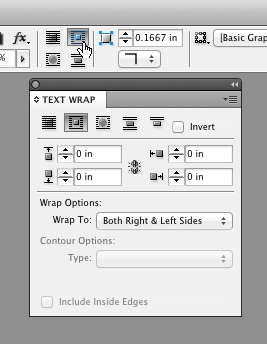
    The best advice I received today is to keep your containers tight with your text (by clicking on the corners of the container– pretty smooth). The second good tidbit is the option return option. This allows you to duplicate guides (this is when your cursor is in the proper axis box and your guide is selected). And another good thing is the magic of linking via text threads. You can play with your layout and your copy is preserved as long as you have one container for the copy to rest in.

    I have to give it to Hoppe. He reminds me of a choreographer, the kind that are telling you to do moves never tried before, because he ends up describing the strangest things to get the point across. I am referring to how he uses weird visual objects to describe what the various icons we need to press. He calls those menu buttons (that indicate drop down menus) cheese graters. We were looking through the text wrap options and he described a square sun with the blinds closed, blinds open, s’more and s’more with no pants on. I think it’s going to be a very long quarter.

  • In class we learned about grids. About how nothing is as complicated as it seems. It’s just a lot of structured order and then some overlapping parts to make it look cool. She said as we looked over magazine layouts, gazing over huge bold headlines something that her teacher once told her. The sweet acknowledgement of passed down wisdom. What she said was this: If you can’t think of what to do, make it bigger. If that’s still not doing it, make it bolder. If you are not quite there yet, make it red. If you’re not going anywhere still, add gold. It’s a joke, sort of, but a trick of the trade that holds truth. So, if you are stuck, make it dynamic using scale and negative space and color and texture.

    During an in class assignment, (we were measuring the fonts of headlines and body copy that we found in magazines) I had commented that ol’ school-goers slogan, “When am I going to need this?” But alas, after another student corrected my work (thanks Ashley!) I found out I had no idea what I was doing. She and all her Pub Arts wisdom (some of the students took a year of publishing arts before coming to this program, and I call their confidence, having been familiarized with some of the aspects we are now facing, I call their confidence, the Pub Arts Swagger) she showed me how to use all the parts of the special ruler that separates the men from the boys so to speak.

    It was quite a first day to dive into what is the road map to a lot of my future work– which I imagine is page-layout.

  • “Purely verbal thinking is the prototype of thoughtless thinking, the automatic recourse to connections retrieved from storage. It is useful but sterile.” -Rudolph Arnheim, Visual Thinking

    Visual thinking is superior because like when you draw something, you distill it to its essence, something that takes a quick analysis. Determining what’s necessary to make the object recognizable (and the emotion recognizable, if present) takes a moment of analysis. What’s the most distinguishing feature of a subject? In the first quarter of the graphic arts program, Jill talks about logos and how they can be abstracted and yet point to something real. How can you imply an animal (or a concept in general) without depicting the entire? Its stripes set it apart, if it’s a Zebra, or its big round ears if it’s a mouse. There are executions of metonymy (where a part represents a whole) that are confusing. The ears are too small and spaced in a way that imply “bear” and not “mouse.” This all comes back to the motto Jill often recites in class. Simply, “Scale and position.”

    This mantra defines a space, a feeling and therefore an idea of a world. Is it a place of line quality? Or a world of color blocking? Logos help identify the style of the rest of the identity and extracting clues to the world that it represents helps solve the matter of accessories, whether it is letterhead or a mailer. Take cues from what the logo does. Is it organic, geometric, and brightly colored? That is an element that you have to maintain when you transfer that brand to other platforms.

    Many letterhead designs default to a color bar or a line of text centered at the top. Is that helping your design? Most people have seen this done and won’t note it as good design anymore. Is it working as something that conveys a tone and an identity, or is it just informational? That word “informational” is the kiss of death in design. Nothing should be just informational when it comes to your brand. In this marketplace, ideas and design should not only hold information, but meaning.

    Daniel Pink talks about what he calls “the six senses” in his book, A Whole New Mind. He refers to the aspects on which professional success and satisfaction depend on in the world of art and advertising: Design, Story, Symphony, Empathy, Play, and Meaning. These six senses differentiate your product from another, engaging the client/customer/audience in a way that resonates long after the experience.

    Look at your designs. Are they holistic? Do they cling to a strong idea relating to the customer and your vision? Have you told a story, given them dynamic design, something from the heart perhaps? Whatever your method of delivering your message, sometimes after applying a special treatment, ask yourself, if it helps or complicates the design. Can you explain it?

    Some people would argue that talking about art is like dancing about architecture, there is something inherent that is lost in translation from one form to another. Susan Sontag writes about how a dependence on photography and other quick methods to convey something, over time your storytelling ability atrophies. Challenge yourself. Use different mediums to send your message. Try writing it.

    “Writers ask more questions. It’s hard for the writer to work on the assumption that anything can be interesting. Many people experience their lives as if they had cameras, but while they can see it, they can’t say it. When they report on an interesting event, their accounts frequently peter out into the statement ‘I wish I had my camera.’ There is a general breakdown in narrative skills, and few people tell stories well anymore.”

    Do you rely heavily on photography to convey your message? Try illustration or a typographic solution. These offer a fresh insight to the tone and mood that sometimes gets lost in the realism of photography. Imagine that you are telling a story to young children. Make it exciting!

    “Myth is the secret opening through which the inexhaustible energies of the cosmos pour into human manifestation.” -Joseph Campbell

    We are designers, but we also hold the keys to culture, consumerism and the collective unconscious. We have the power to shape people’s memories. The nostalgia of advertising and branding have induced fierce customer loyalty, giving their identity more meaning, giving their sense of community more weight. A brand that a person can stand behind, in terms of aesthetic, meaning, similar goals, is like a reliable friend. Keeping you informed, entertained and above all, inspired.


    *In Daniel Pink’s Book, A Whole New Mind, he lists recommendations of good works that relate to his “six senses.” Here’s a list of symphonies he recommends:

    Beethoven’s 9th

    Mozart’s No.35 “Haffner Symphony”

    Mahler’s 4th Symphony in G major.

    Tchaikovsky’s 1812 Overture (with real canons)

    Haydn’s Symphony No. 94 in G major “Surprise”



  • The making of the video component for Sierra Club’s Best Internship on Earth (aka Outdoor Youth Ambassador)–Please vote here http://content.sierraclub.org/bestinternship/content/katarina-best-intern-earth— 2012:

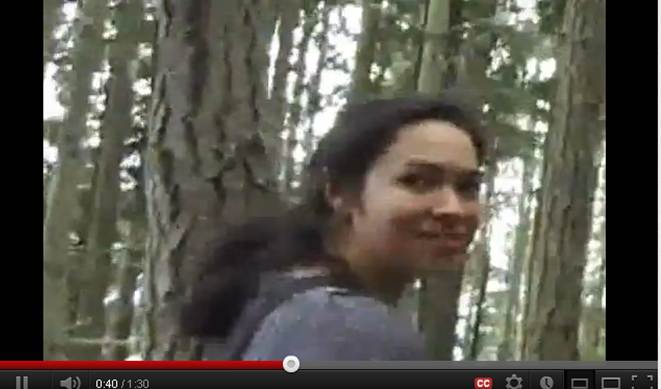
    My friends and I went adventuring last weekend and I documented it and used some of it in this video.

    On Saturday, we went rollerblading at Magnuson park. It was a beautiful day, so to avoid the traffic at Greenlake, we went to Magnuson. It wasn’t crowded at all, but the sidewalks are a little more bumpy.

    On Sunday, we drove out to Deception Pass. We mused why they called it Cranberry Island. There were parts in the trail that led to nowhere and the witty ones of us pointed out that’s why they call it “Deception Pass.” While we were hiking, some of us saw a big splash in the river and a voice yelling help. Minutes later, the water patrol came by and zoomed around the area. I hope there was a rescue involved. We found crabs, snails, algae that popped underneath our shoes. We climbed a log from the beach to the trail that was a ledge above us. We ate sandwiches and snacks that Carolyn had prepared in the morning (thank you!) along side the grassy summit. We looked down and saw the water glimmering with sunshine. The Summit Trail from the Perimeter Trail is only 0.8 miles… straight up—it was quite a work-out! Someone commented that there are more switchbacks on American trails than European ones and I wonder why that is? Something about our queue culture change the way we make paths in the wilderness?

    A lot of footage I got was taken with a Kodak Share camera that my mother bought for me four years ago was not in the video because of some formatting issue. I was glad that I took a lot of footage with both cameras. My housemate Jon lent me his Contour Camera (thank you!) which has a wide angle lense, 720p, and is rather compact (has option to be mounted on a helmet).

    Thank you to everyone in my group. Everyone during the trip pointed out interesting things along the way, such as a defensive Mama crab or weird looking mushrooms. Thank you for filming me and tolerating my pauses along the way. I’m really glad I have all this video-recorded. I’m realizing that picture taking is so ubiquitous, but the art of video taking is definitely underappreciated. With our budding technology market, YouTube memories are a thing as scrapbooking was once.

    Update 3-28-12 (Post-critique):

    No formal critique, but a lot of feedback. Shaky parts, makes people dizzy, the text is hard to read, flaky transitions but otherwise good. Never let YouTube fix your video. They actually have a dialog box that says “your video is shaky; want us to fix that for you?” What you really do is relinquish your precious over to an algorithm that will stretch and rotate your video in the attempt to compensate for the human gait. (All shaky cam is the fault that we have two feet. If I had ten or twenty, I would just roll like a caterpillar– I would still call this blog, Ment Cat!)

    If I were to do this video again, I would plan my shots better. Have a lot of still moments. Definitely set the camera down somewhere and take video like that instead of holding it. I would make less opacity/blend mode choices (though, I think its beautiful, it’s a little too avantgarde for a video for this particular audience).

    The marketing of this video is a whole other story. I like social media, but it always seems like a spammy thing to link to someone else’s corporate-y website where they have to vote on something. It’s probably that people don’t really know what Sierra Club does and the voting page doesn’t really describe anything. If I were to redesign the voting site, I would make it look less commercial and add information about the position and what exactly Sierra Club does. People don’t know they are environmental lobbyists (essentially, correct me if I’m wrong). And other contests like this involve more information about the candidate on their profile instead of the generic “Help me get the Best Internship on Earth this summer. Vote for my video!”

    A vote for my video is a vote for good design.