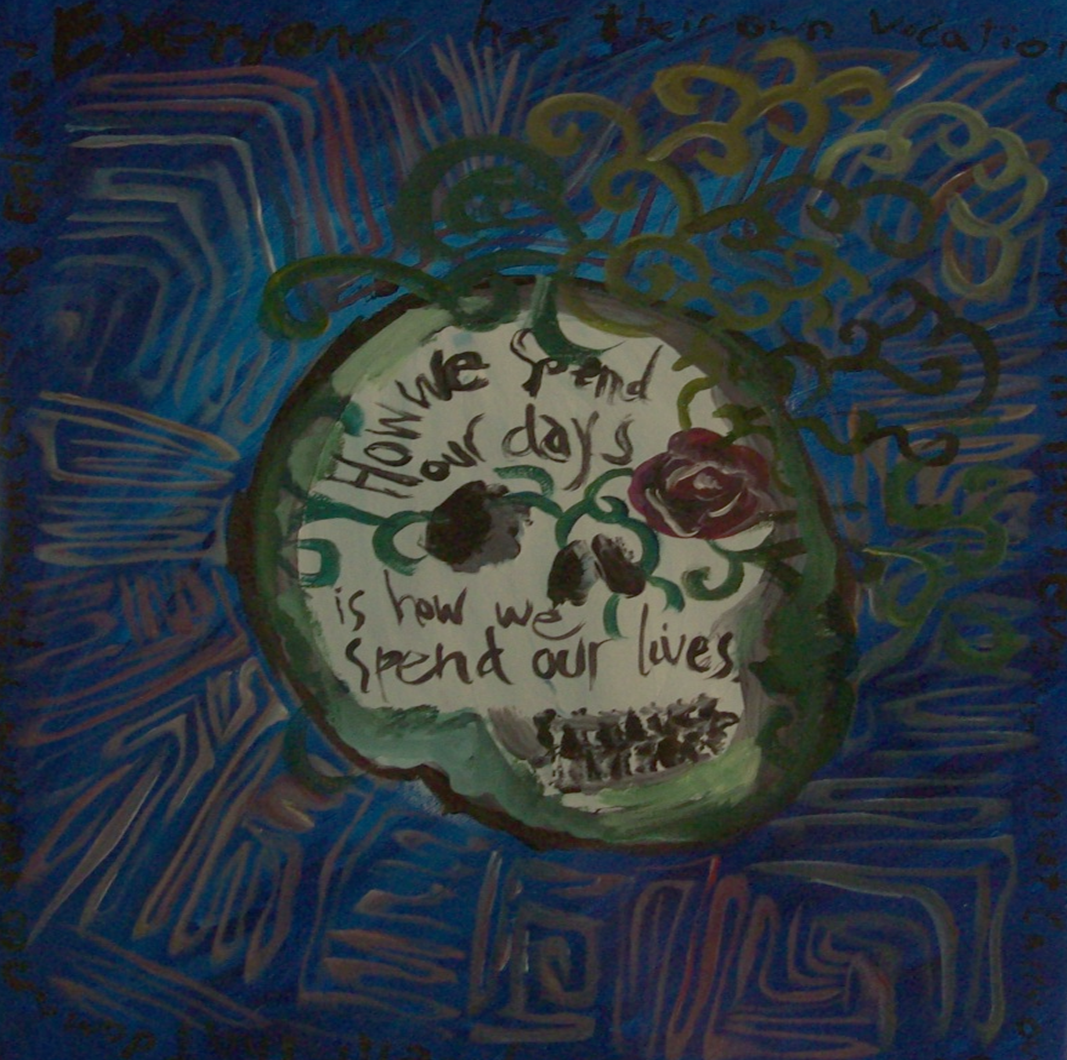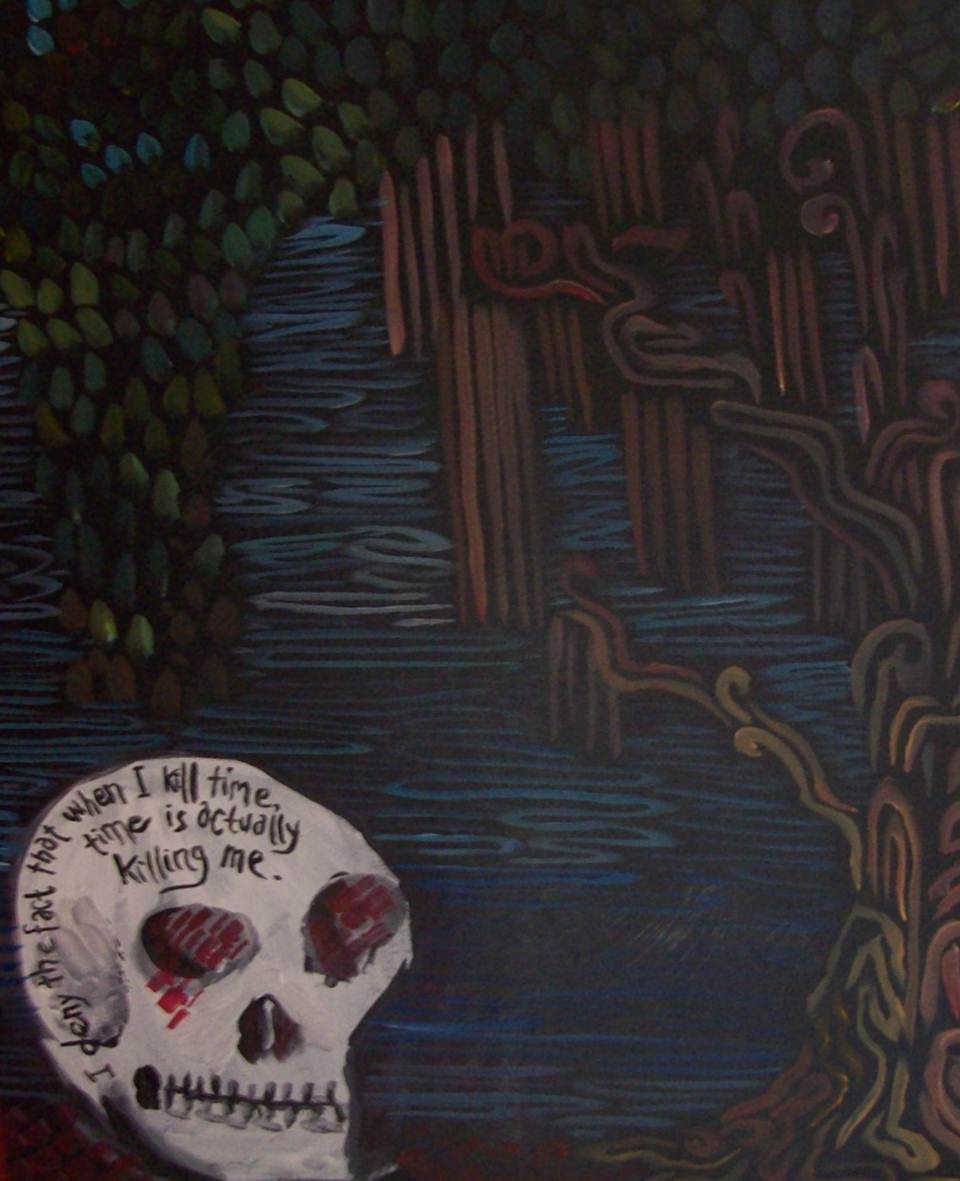
Matt painted this skull, too. The style was a little less sharp. Call it artistic flair, call it messy. I call it relaxed. Quote by Annie Dillard. I like the sentiment about how this is now, these are our moments. Why think that your life hasn’t really taken off? It’s been happening for some time.
Kismet Arts Tangent
Art Collective
-

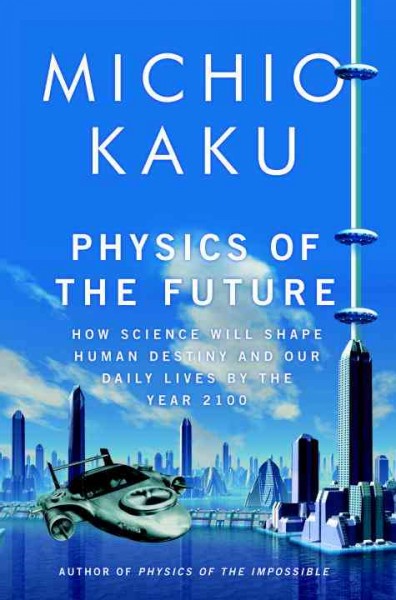
Physics of the Future: How Science Will Shape Human Destiny and Our Daily Lives by the Year 2100 by Kaku, Michio (Book – 2011)Summary: Kaku makes his predictions about the future. He talks about his experiences as the host of this science program or that television special. He uses his “insider” knowledge to describe the wonders of the future, if we can just leap over this little hurdle of what we call the energy crisis. Describing nanobots, starships, Mars outposts, the book is optimistic about the future and humanity’s role in it. “Empires of the future will be empires of the mind.” –Winston Churchill, the heading quote for the introduction of this book.
Review: He’s good. Kaku mixes pop culture to better relate to his reader, and it works. He refers to the Matrix, Surrogates, I, Robot, Flash Gordon, Star Trek, Star Wars, etc. to say that we have dreamt of a technological future and we were right (if we can get our act together and start supporting science and technology). As he shows from historical examples, science and technology are the engines of wealth. He often mentions after each chapter how our lexicon will change as technologies advance and eradicate things like tumors and paper. Kaku also emphasizes the importance of education (and how we Americans import our big thinkers from other countries, and that needs to change by revamping the system).
Rating: 7 claytronic atoms
Favorite part: “For countless eons were passive observers of the dance of nature. We only gazed in wonder and fear at comets, lightning bolts, volcanic eruptions, and plagues, assuming that they were beyond our comprehension. To the ancients, the forces of nature were an eternal mystery to be feared and worshipped, so they created the gods of mythology to makes sense of the world around them. The ancients hoped that by praying to these gods they would show mercy and grant them their dearest wishes.
Today, we have become the choreographers of the dance of nature, able to tweak the laws of nature here and there. But by 2100, we will make the transition to being masters of nature.” P.10
Wine-pairing: Collapse: How Societies Choose to Fail or Succeed is a 2005 book by Jared M. Diamond. Michio Kaku talks about how we need to get past our current obstacles of energy and politics and the future is ours (we will win the future) by developing into a Type 1 society, a planetary civilization that harnesses all the energy the sun so generously bestows upon us. Collapse is about mistakes in our past and present that can slow us down if not totally destroy our future possibilities.
-
-
Matt painted the skull. I really liked it. It has a feeling of Dia de los Muertos. From the last few paintings, it looks like I have a style, but I don’t. It’s all the Sigur Ros, I have been listening to while I paint. And the flickering of waves outside my window that inspires such fluidity. I am happy.
-
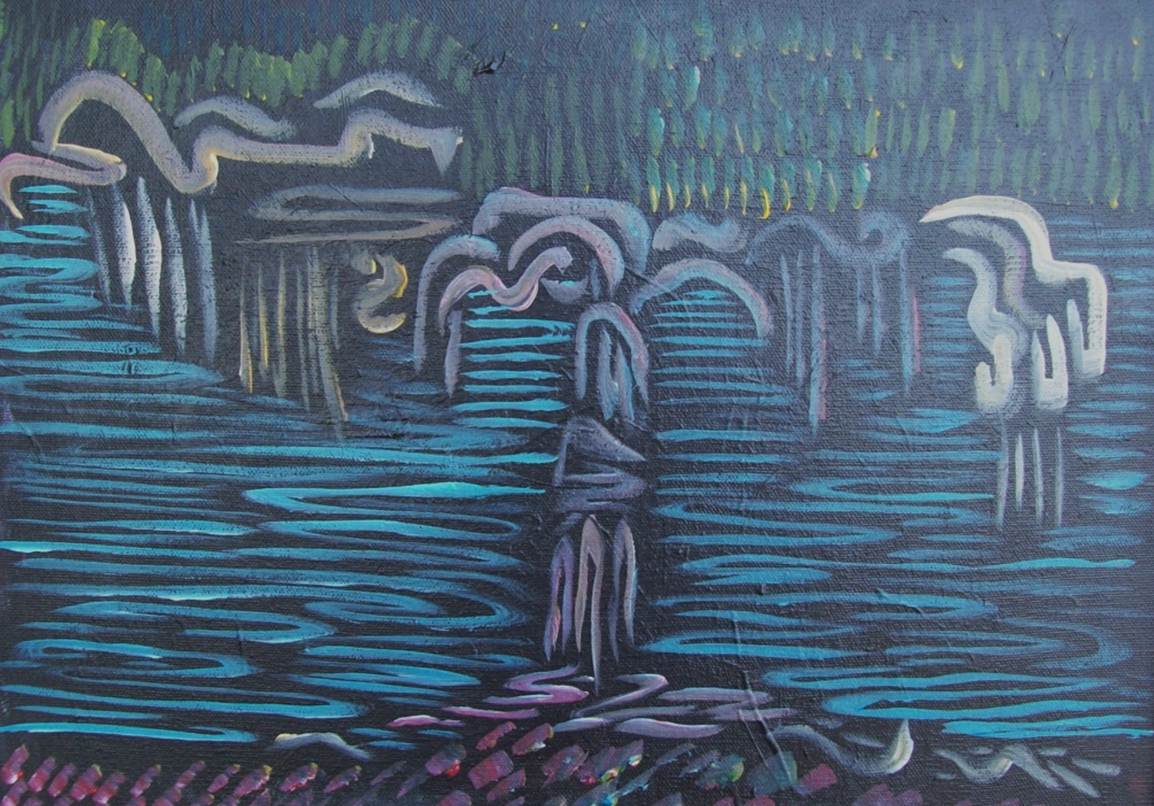
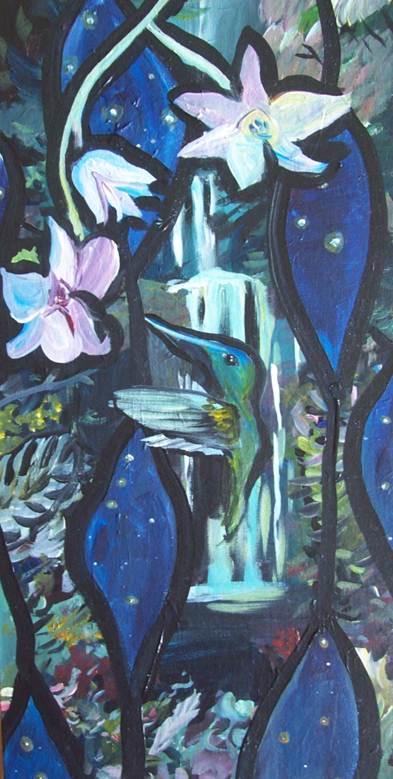
I wasn’t satisfied with a waterfall painting I painted last week. I’ve been recently inspired by Tessar Lo. I think a good painting feels like a visual poem.
-
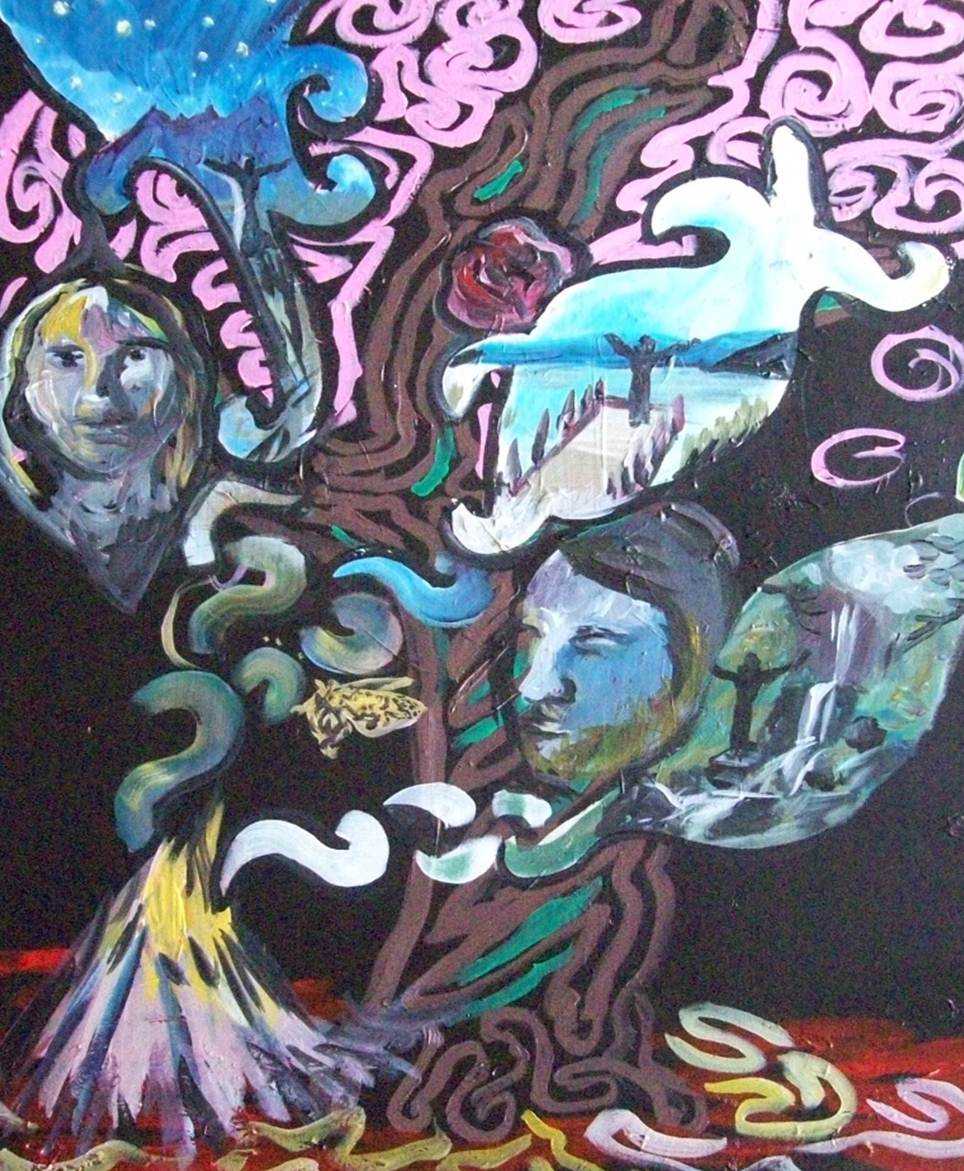
Painting with Matt. He painted the background and I added some elements, trying to match his style. It was a true collaboration. This is one of the few paintings that I actually wanted to have a title for. I believe people are inspiring. These people are shaman of our artistic lives, conjuring visions for us to depict in art. Shaman show the potential that lies within us.
-
The idea hunter: how to find the best ideas and make them happen / Andy Boynton and Bill Fischer with William Bole. San Francisco, CA : Jossey-Bass, c2011
Summary: The authors structure their take on creativity and how to cultivate better ideas through the acronym of IDEA (Interested, Diversity, Exercise and Agile). It’s about cross-training your mind and developing a natural curiosity.
Review: This is a fairly short contentless book. It cites textbook examples of the new millennium’s in vogue creative, from the people at Pixar to the person who invented the light-up toothbrush. The authors start with Walt Disney himself. Disney is portrayed as a copier/innovator of the people from Tivoli Gardens when designing Disneyland. This book is forward enough to say that small innovations are enough. They are for this capitalistic world where most people have resigned themselves to a non-creative life. At least from what I can see.
Rating: 4 atriums in Pixar Studios, where animators and sound techs can mix freely and fruitfully
Favorite part: “Accomplished people don’t bulk up their brains with intellectual calisthenics; they immerse themselves in their fields,” explains Steven Pinker. “Novelists read lots of novels, scientists read lots of science.” P.72
Wine-pairing: The creative habit: learn it and use it for life: a practical guide / Twyla Tharp, with Mark Reiter. By Tharp, Twyla. New York: Simon & Schuster, c2003. Twyla’s creative habit of “tech boxes” is interesting and useful for organizing ideas for one project. I think it’s important to keep track of your seed of inspiration and following where your muse takes you. “Tech boxes” are physical boxes containing scraps of inspiring materials that sit at your home or studio waiting for you to revisits’ them and become reinspired.
-
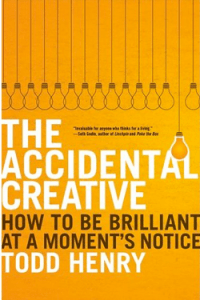
The Accidental Creative .How to Be Brilliant at A Moment’s Notice
By Henry, Todd (Book – 2011)
Summary: This book is written for all the creatives out there, the people who make value in their companies by their ideas. These people depend on a flow of inspiration. How does a person cultivate themselves, harvest their ideas, sew great works. Todd Henry writes about the importance of balance, priorities and friends to help you sharpen your skills at finding meaning, purpose, direction or whathaveyou to achieve your creative goals. He emphasizes structure. We have all found that limitations often make a product better, more direct and purposeful and we are able to send messages more succinctly when given less instead of more.
Review: I completely agree with this approach. I have often found when I look forward to a day off, free to do anything I want, I end up doing less. It’s when there is structure and limits, deadlines and people that are relying on me that I do my better works. I love reading the newer books, more recently published, they reflect changes and advantages to having a computer and the internet. The book has a website that seems helpful and addresses some of the points in a different way. I liked Todd Henry’s recommendation for watching TED talks. Courageous people tell their stories; it’s inspiring.
Rating: 7 life structures that limit you and engage you
Favorite part: “What work I have done I have done because it has been play…. Cursed is the man who has found some other man’s work and annot lose it. When we talk about the great workers of the world we really mean the great players of the world. The fellows who groan and sweat under the weary load of toil that they bear never can hope to do anything great. How can they when their souls are in a ferment of revolt against the employment of their hands and brains? The product of slaver, intellectual or physical, can never be great.” –Mark Twain
Wine-pairing: http://www.ted.com/talks/lang/eng/stefan_sagmeister_the_power_of_time_off.html This TED talk by designer Stefan Sagmeister talks about how to use your time off to rejuvenate your outlook, freshen up some old ideas and generate new ones.
Excerpt from the TED talk transcript:
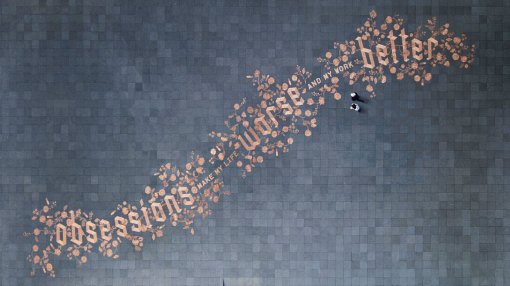
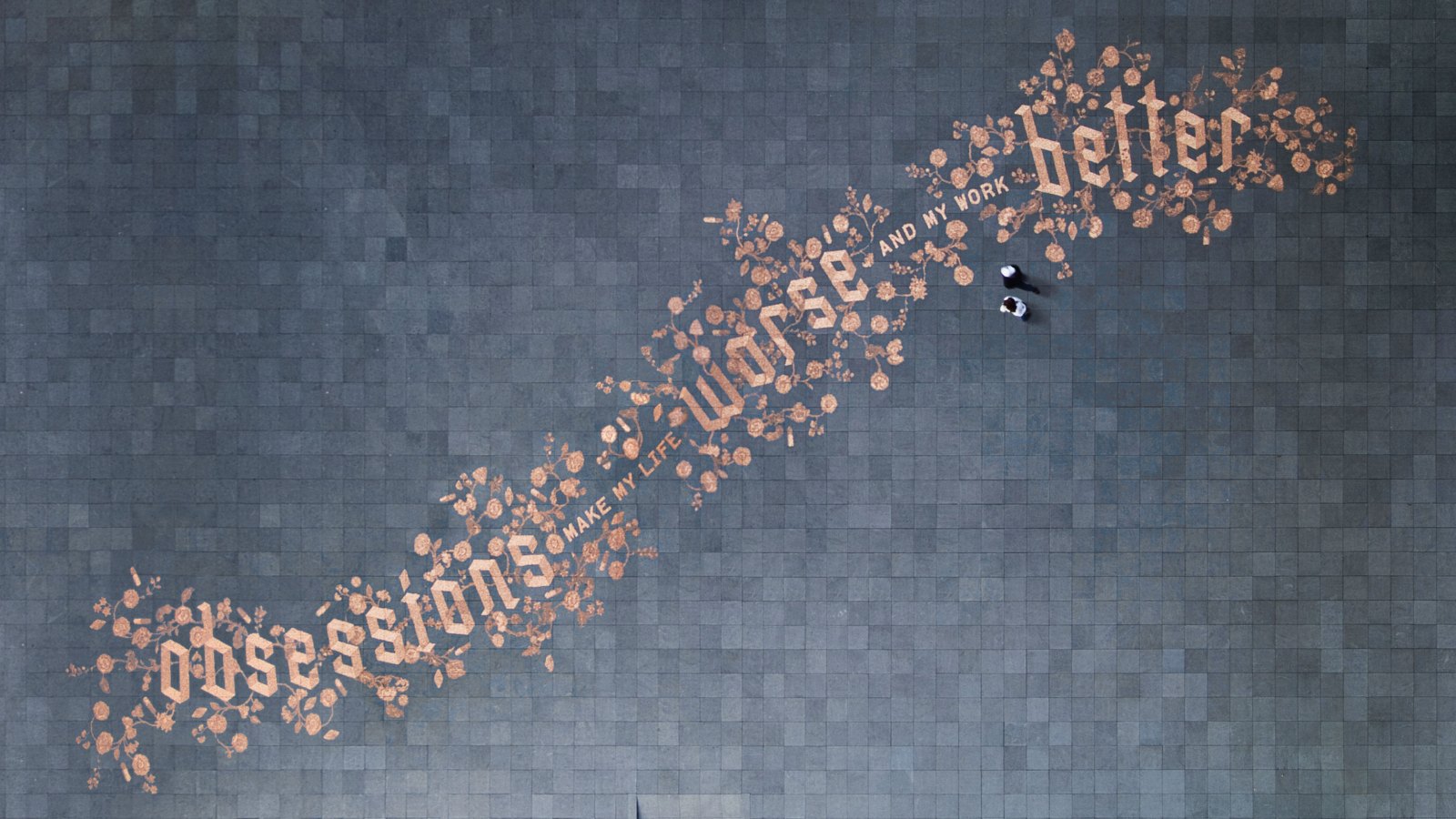
And I very quickly made a list of the things I was interested in, put them in a hierarchy, divided them into chunks of time and then made a plan, very much like in grade school. What does it say here? Monday eight to nine: story writing. Nine to ten: future thinking. Was not very successful. And so on and so forth. And that actually, specifically as a starting point of the first sabbatical, worked really well for me. What came out of it? I really got close to design again. I had fun. Financially, seen over the long term, it was actually successful. Because of the improved quality, we could ask for higher prices.“Obsessions make my life worse and my work better.” Design in pennies by Stefan Sagmeister