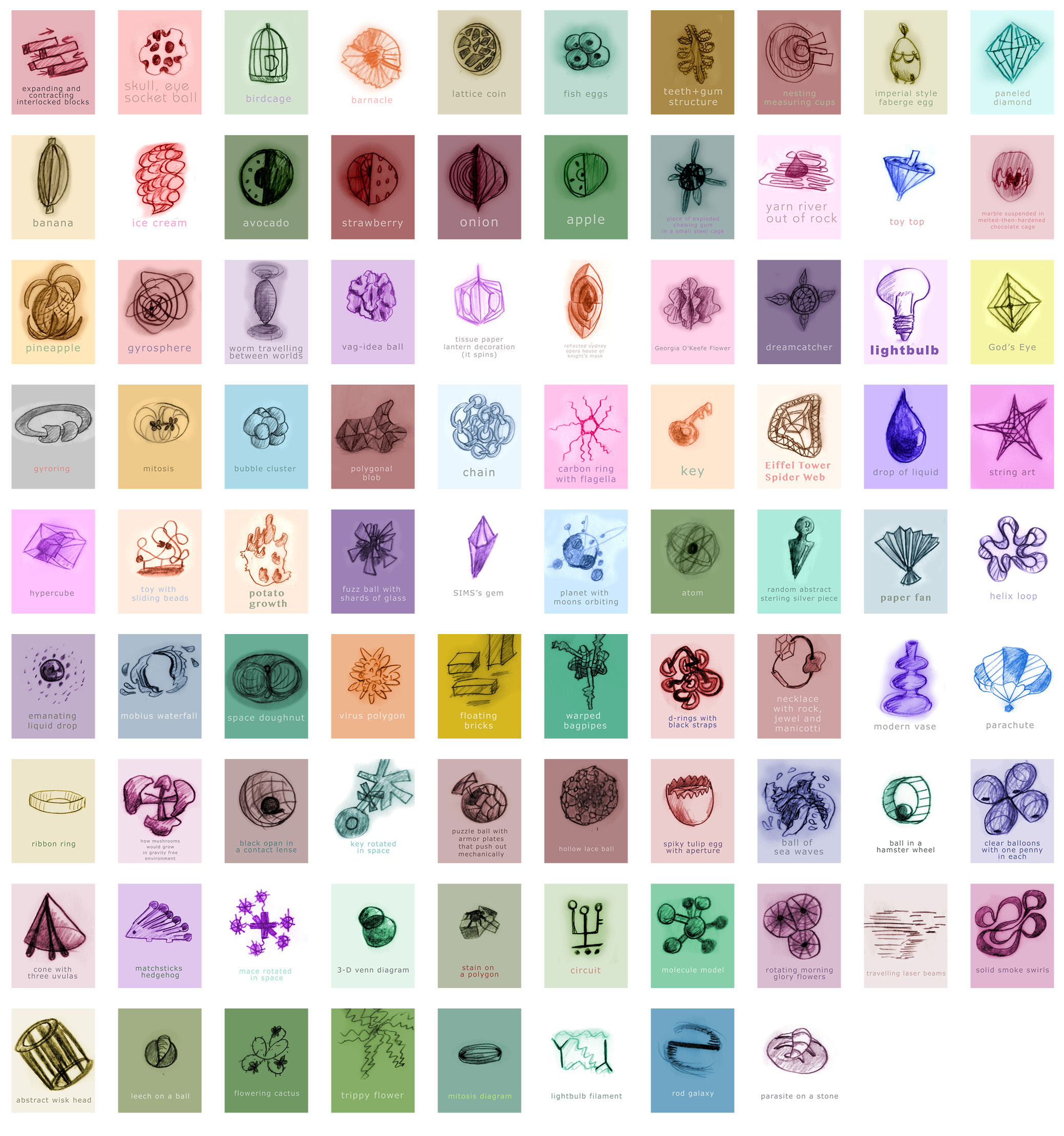
 I have been posting these things daily at 2pm for over a month. I had over 72 posts lined up, but at this point, it doesn’t seem necessary. It was an excellent experiment in scheduled posts. I should have been more meticulous in numbering them or should not have tried. It was fun to see these daily, but they also kind of clogged up my blog, when I wanted to find something chronologically. I think there should be a limit to how long series are. Is it like a bad joke where the longer it is something strange happens and it becomes funnier? Ah, well. I enjoyed making these and I like seeing them as a collection.
Kismet Arts Tangent
Art Collective
-
-
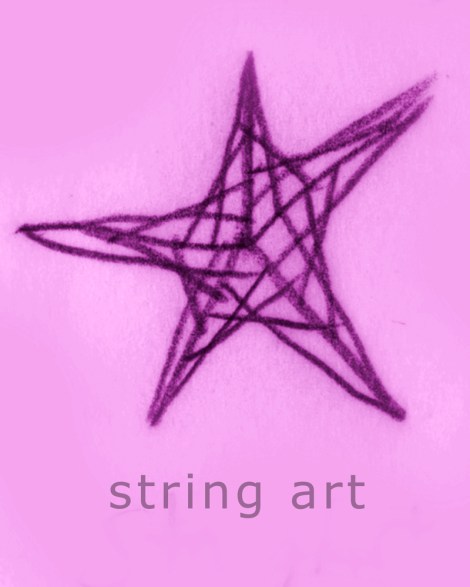
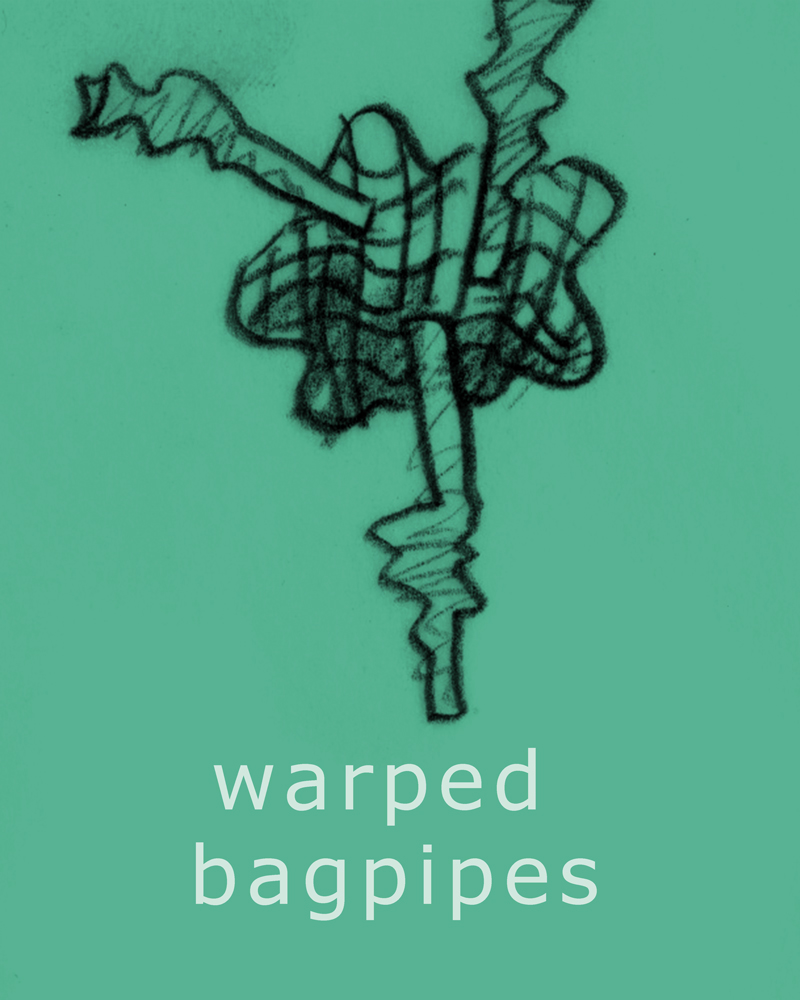
This is a part of the Object Poster Series.
-
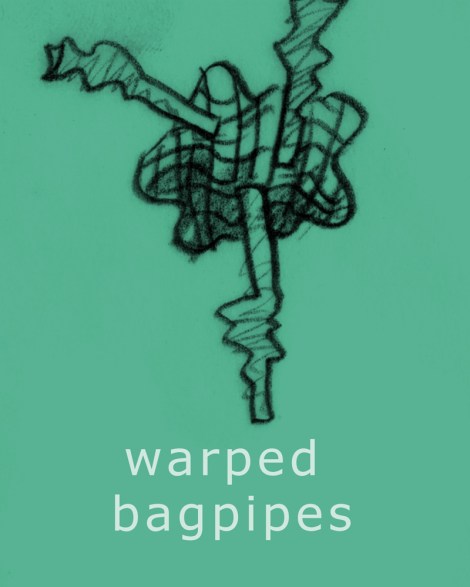
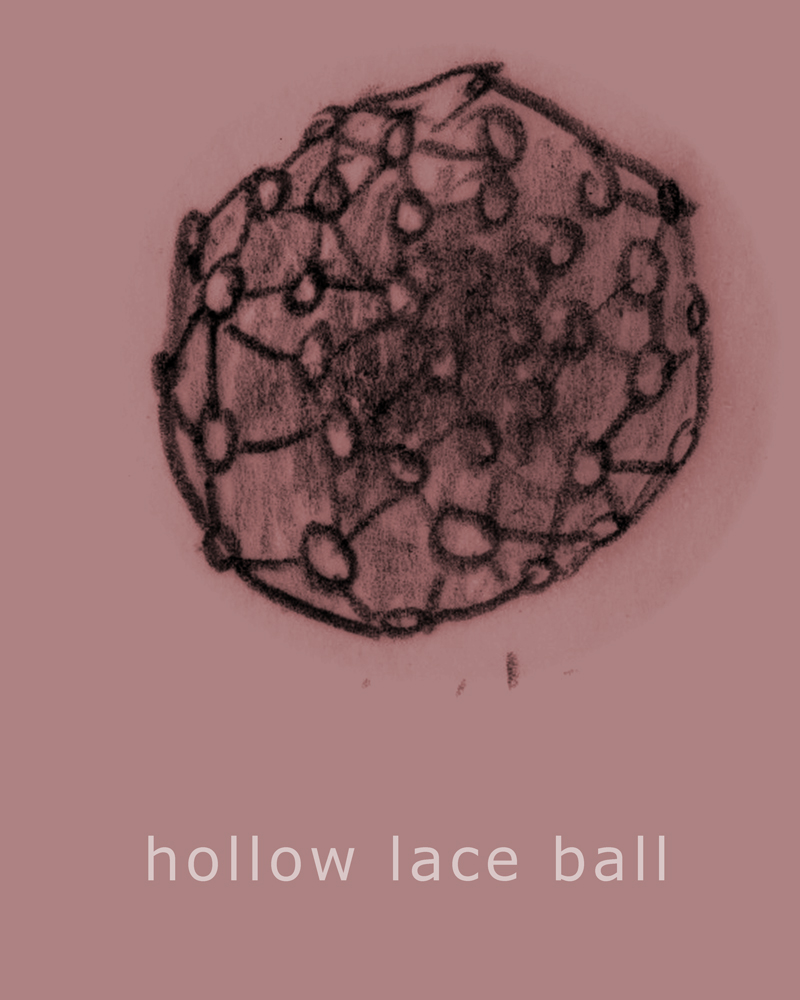
This is a part of the Object Poster Series.
-
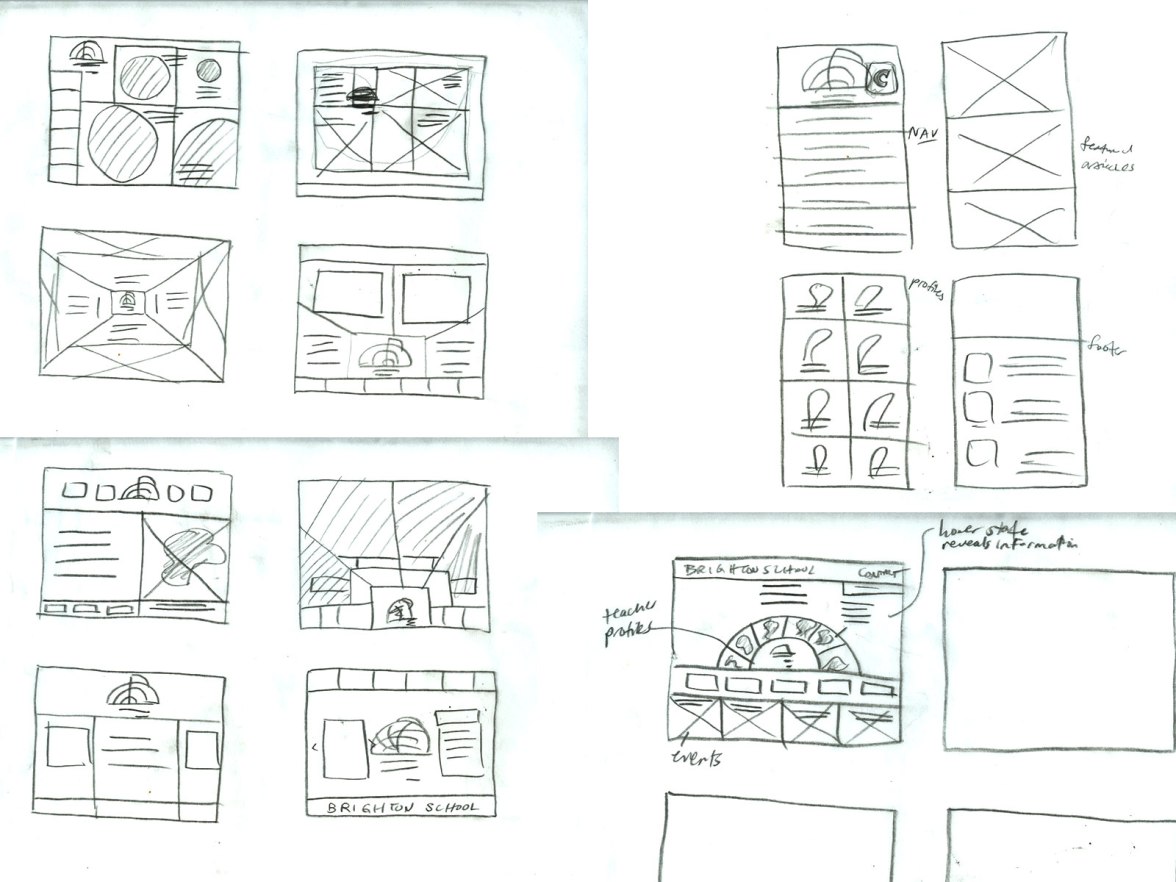
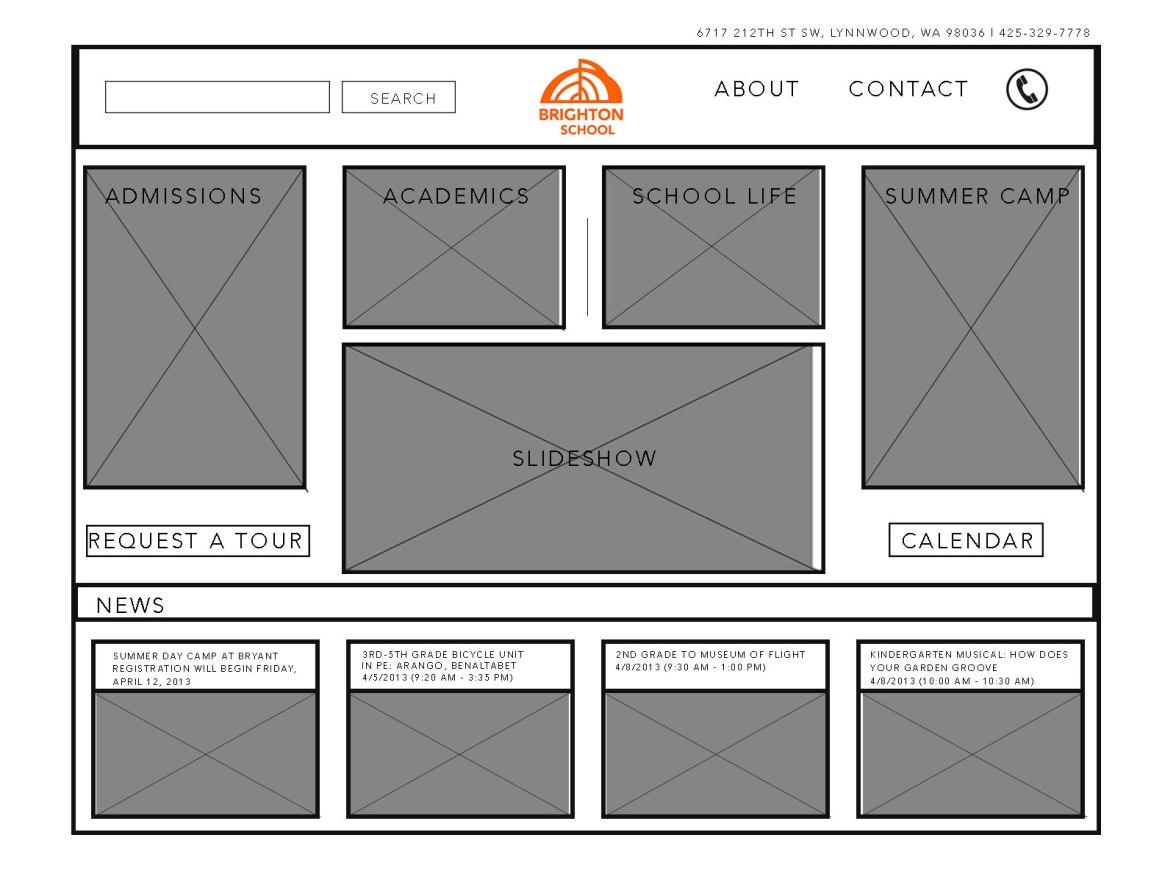
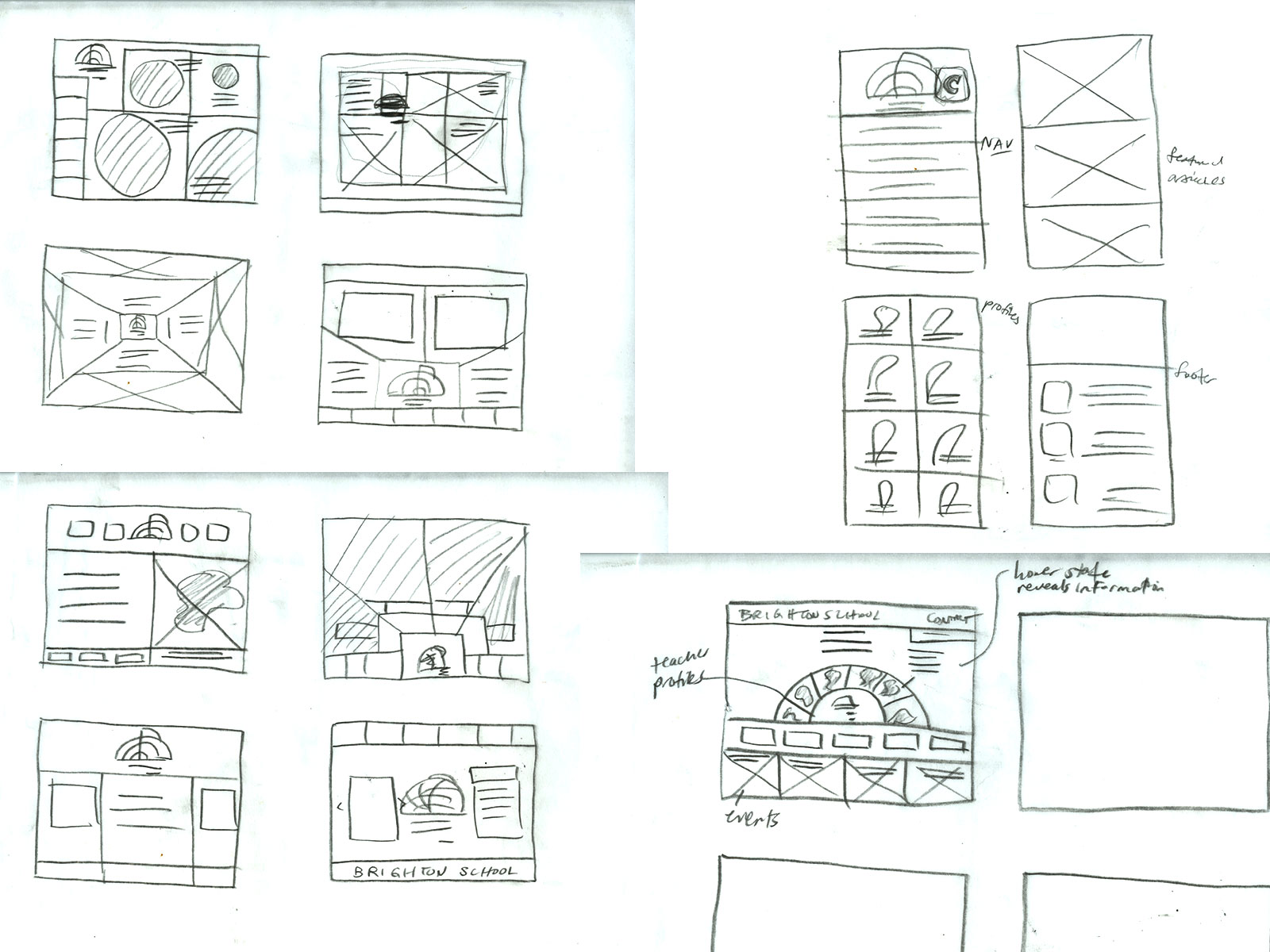
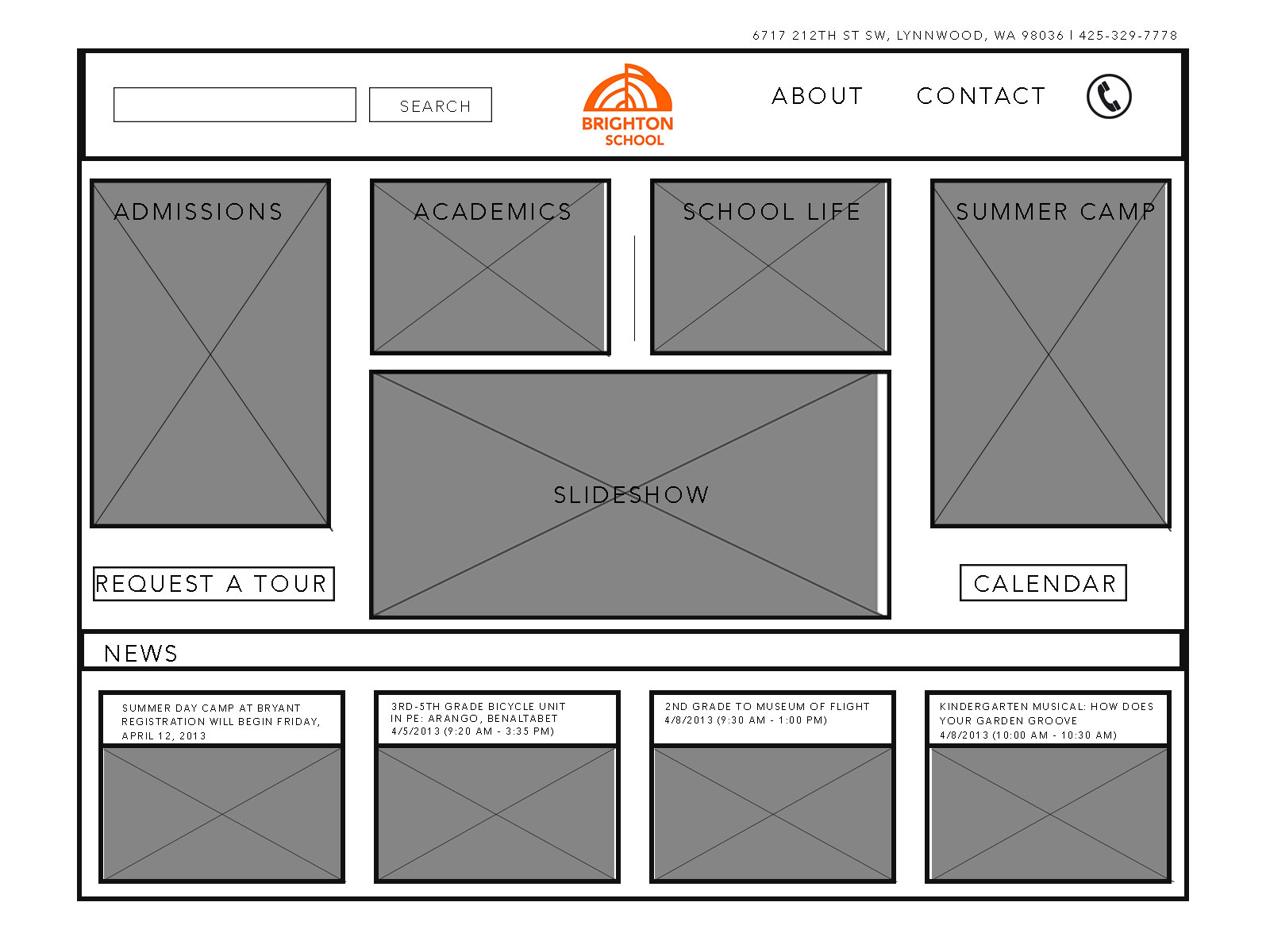
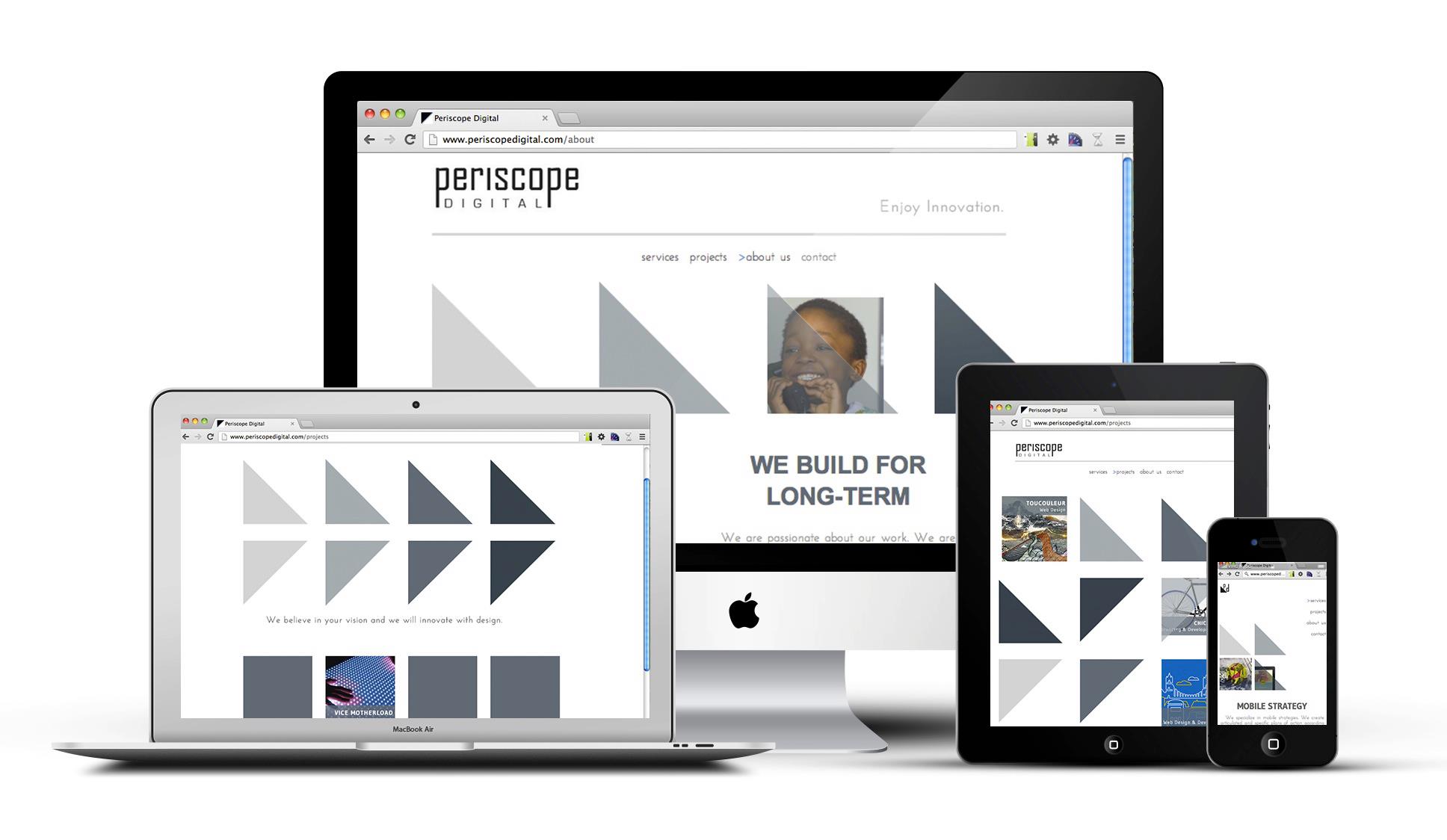
I wanted to improve the quality of my web design by implementing the strategies that work in other disciplines I feel more comfortable. I wanted to think of the web page like a poster or a logo where there was something integrated and fun. I started by making thumbnails. In the end, I was thinking about the client and how they would prefer something functional vs something that was unconventional. Users have come to expect certain things. I’m not sure if I’ll ever escape this box stuff that seems to be a necessary component of website design.
 Update 4-10-12: The critique
”
I think your design will work great for a brochure. I assume the the tiles on the homepage act as the navigation to the different informational sections of the site?Here are some thoughts/notes:i. you may want to consider keeping the admissions/summer camp tiles the same size as academics and school life. That way there isn’t image cropping happening when its shrunk down to mobile. This could free up some real estate to expand the slideshow perhaps?ii. when you move to PSD’s, think about interesting ways of hiding/showing the search bar.iii. I think its a great start! Everything is modular and works well folding down to mobile. Looking forward to seeing more progress next week.” -
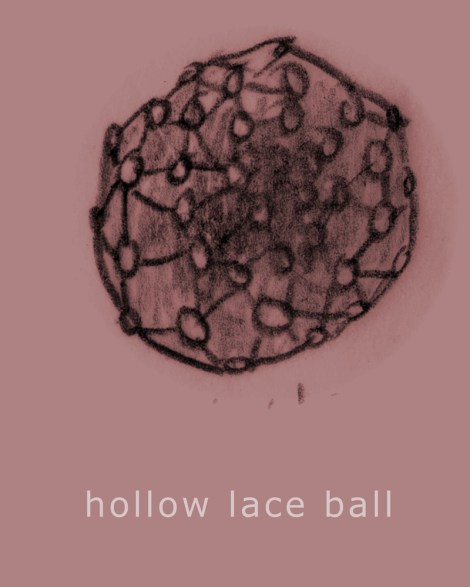
This is a part of the Object Poster Series.
-
“You are cordially invited to a lecture/presentation by UW Interaction Design faculty member Tad Hirsch. This public lecture is part of the UW faculty reappointment process. The event is free and open to the general public.
Tad Hirsch’s research focuses on interaction design in urban environments with a strong emphasis on advocacy and civic engagement, and often involves collaboration with NGO’s and community based organizations. His work is strongly influenced by public and critical art practice, and has engaged with issues such as human rights, environmental justice and community empowerment.
Prior to joining UW, Tad was a Senior Research Scientist and Manager with Intel Labs. Tad was a member of the Rhode Island School of Design’s Digital Media faculty from 2006-2008, and has taught courses in art, design, and engineering at Carnegie Mellon, MIT and the University of Oregon. Tad earned his PhD from the Media Lab at MIT; an MDes in Interaction Design from Carnegie Mellon; a MSc in Media Arts andSciences from MIT; and a BA in Philosophy from Vassar College.” (from the facebook event description)
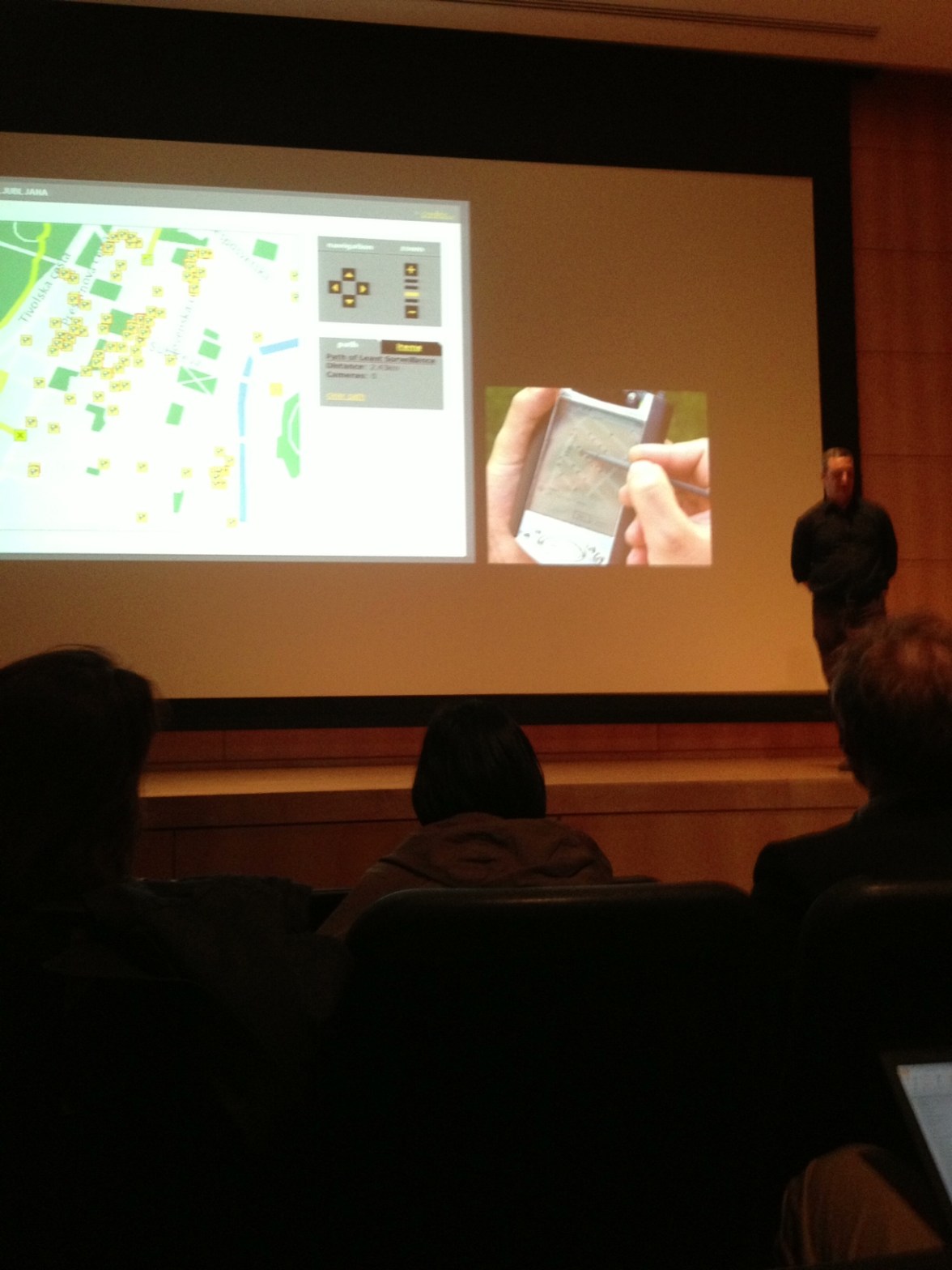
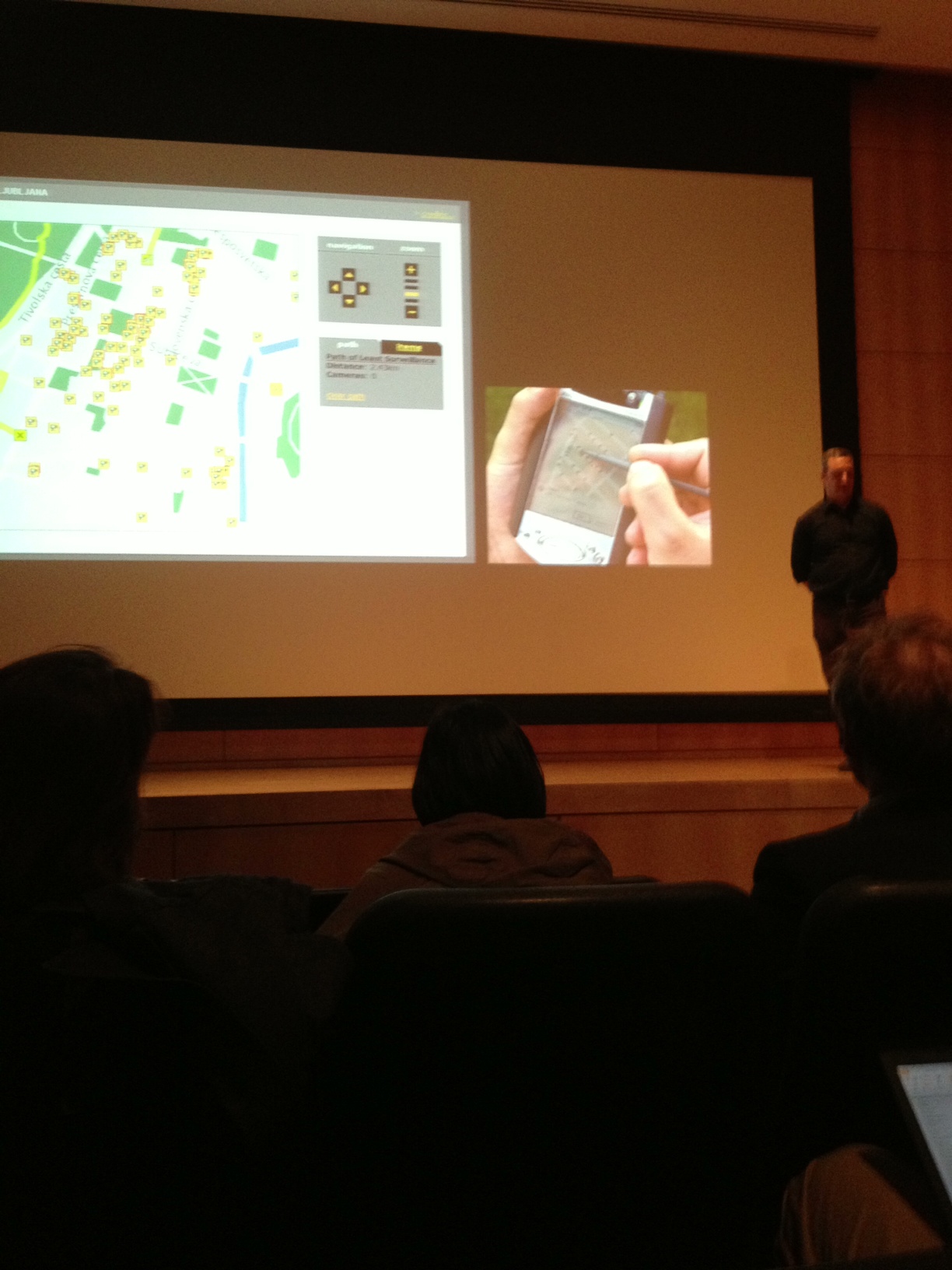
I went to this event last night and he talked about his design projects.
Tad Hirsch is one of the main guys behind Institute for Applied Autonomy.
Their projects include:
- an application to track surveillance cameras in urban areas (and with that knowledge avoid them)
- devices that listen for low flying aircraft and automatically call (and complain to) the airline companies (that look like coconuts)
- a pamphleteering robot whose cute and machine qualities help engage the public
- a street graffiti machine that’s kind of like a Mars Rover with a row of spray cans attached to its caboose, its operators are emboldened to make graffiti, the machine mediates the experience so it feels less like an illegal act of vandalism (in the video that Tad showed, there were a group of girl scouts cheering “girl scouts rule” as they were using the device)
- a proto-twitter called TXT mob making mobs easier by allowing users to communicate about location moves, undercover cops and coordinate swarming tactics
Tad Hirsch is one of the main guys behind Public Practice Studio.
Tad Hirsch emphasized engaging in a place in a multi-layered way. He talked about his collaboration with the Frye Art Museum. The Frye wanted to relate to their geographic community, Yesler Terrace. Through the project Intangible Effects, Tad Hirsch celebrates Yesler Terrace through sound. The local high school students were involved in interviewing the residents of this neighborhood. The sounds of ambient noise such as the nearby highway, performances of the community members and clips from the interviews create an ephemeral and authentic view of Yesler Terrace, destined for destruction (read The Twilight of Yesler Terrace by Charles Mudede).
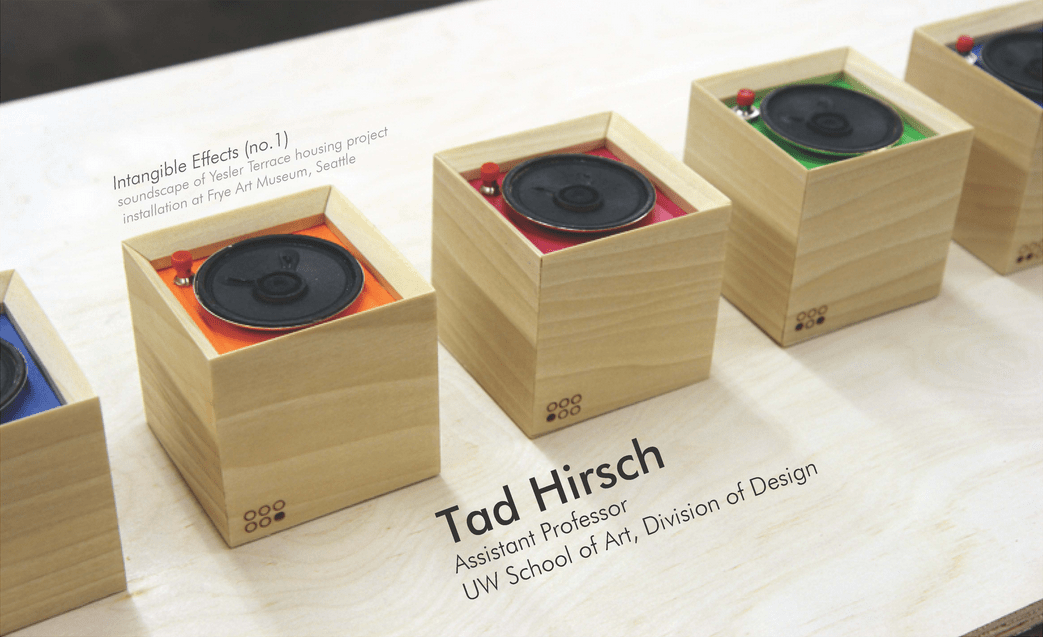 Other projects Tad talked about: Monologger: Visualizing Medical Conversation, Pivot: A Tool to Empower Human Trafficking Victims, Interactive Media Installations at Twisp Works
Questions
Tad took some questions after his lecture:Tad explained about how the students used the architecture production labs at UW to create their works then drove it over to the location of Twisp Works to install the pieces. He emphasized how important design is and one of his goals is to take design to rurual communities.
One audience member (my webdesign teacher, actually) asked about measuring the success of the pamphlet-inserts from the Pivot project and about the distributing locations. Tad answered that distribution was more of his collaborator’s choice. And that they haven’t invested in a separate number other than the national hotline because of budgeting. That was interesting. That was a hint to me about how design isn’t just presenting a solution but then measuring the effectiveness of that solution.
One question was about how we can better support community engagement as teachers for our design students. Tad answered that 10 weeks isn’t enough time to go out into the real world and make connections. By stringing together courses, students have more time to really get to understand a project and the people involved. By getting organizations involved in the classes, what he called “sponsored classes,” connections are made where the people are brought to the students instead of the other way around.
Someone asked about what Tad sees for his students once they get out of the UW design program. What is the trajectory? Tad talked about how some of them will go into design consultancy, others product companies and a few will go some place unexpected or unrelated. These students are just getting to know themselves and a huge part of the program is to undersand your values and skills and chart a career that is right for you.
As an artist and a professor, has there been a time when your ethical code was conflicted? Tad has been involved in NGOs and sometimes very political situations. He’s walked away from proejcts that have taken directions that differ from his goals. He emphasizes that it’s important to have core values as a designer to which that you can stay true vs. an ideology that limits your world view.
My Response
I love these kinds of talks where someone talks in front of a large audience and talks about their projects. There’s passion, cleverness and utility with these projects that’s very inspiring. As a graphic design student (who’s just in her second year of design), I am realizing that the world is such a big place and that design is problem solving. It isn’t just logos and advertising, but it’s a conversation starter, a device, a mechanism, a system. I’ve been trying to draw the line between design and art as a way to understand design better, but they also have a lot of similar goals of reaching people on a unique level to inspire and evoke reactions, interactions.
I haven’t been involved in social change. I haven’t found the tools, haven’t the skills, but it’s rapidly changing to a world where technology, design and communication (things I’m heavily interested in) are coming to be the most relevant and effective components in strategies for change. I attended this event with some people from my school, Seattle Central Creative Academy, and we’ve started to have a conversation about UX. What happens when you put an amazing socially-minded designer like Tad Hirsch in a room with UX designers and hardcore developers?
Maybe something like this? Jennifer Pahlka: Coding a better government – YouTube.
Design is powerful. The more thoughtful it is the more powerful it is. I have to remind myself that though I have only one more quarter of design school, it’s not the end. It’s the middle of the beginning.
-
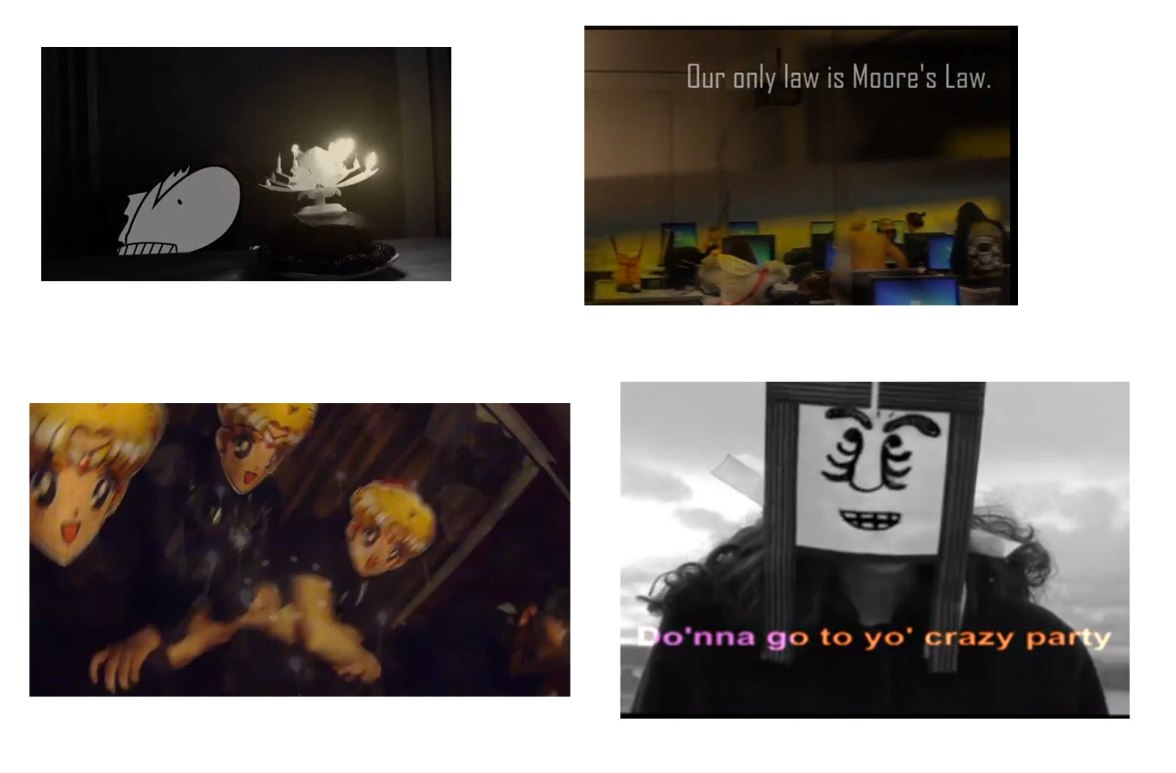
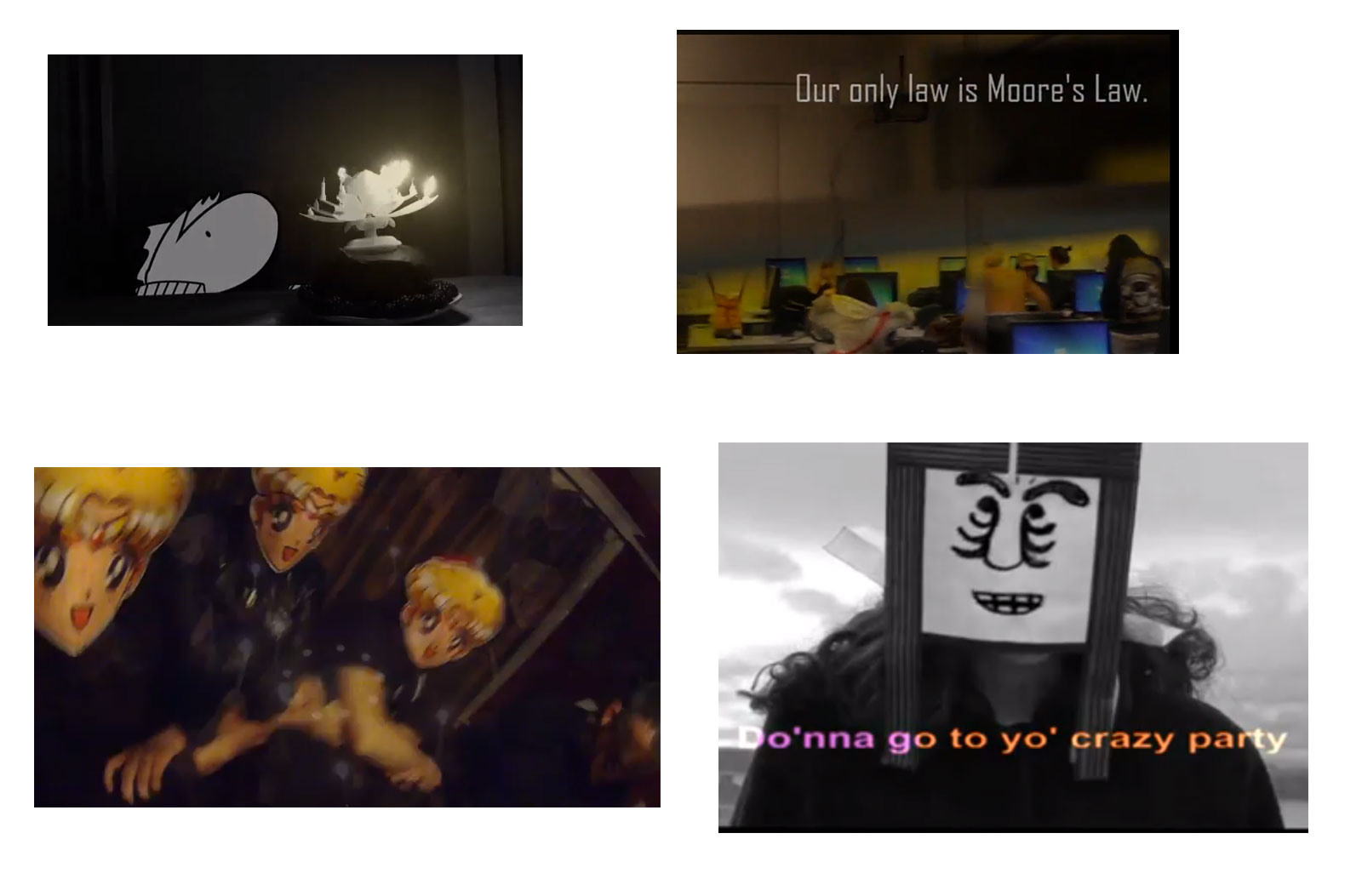
screenshots from videos 
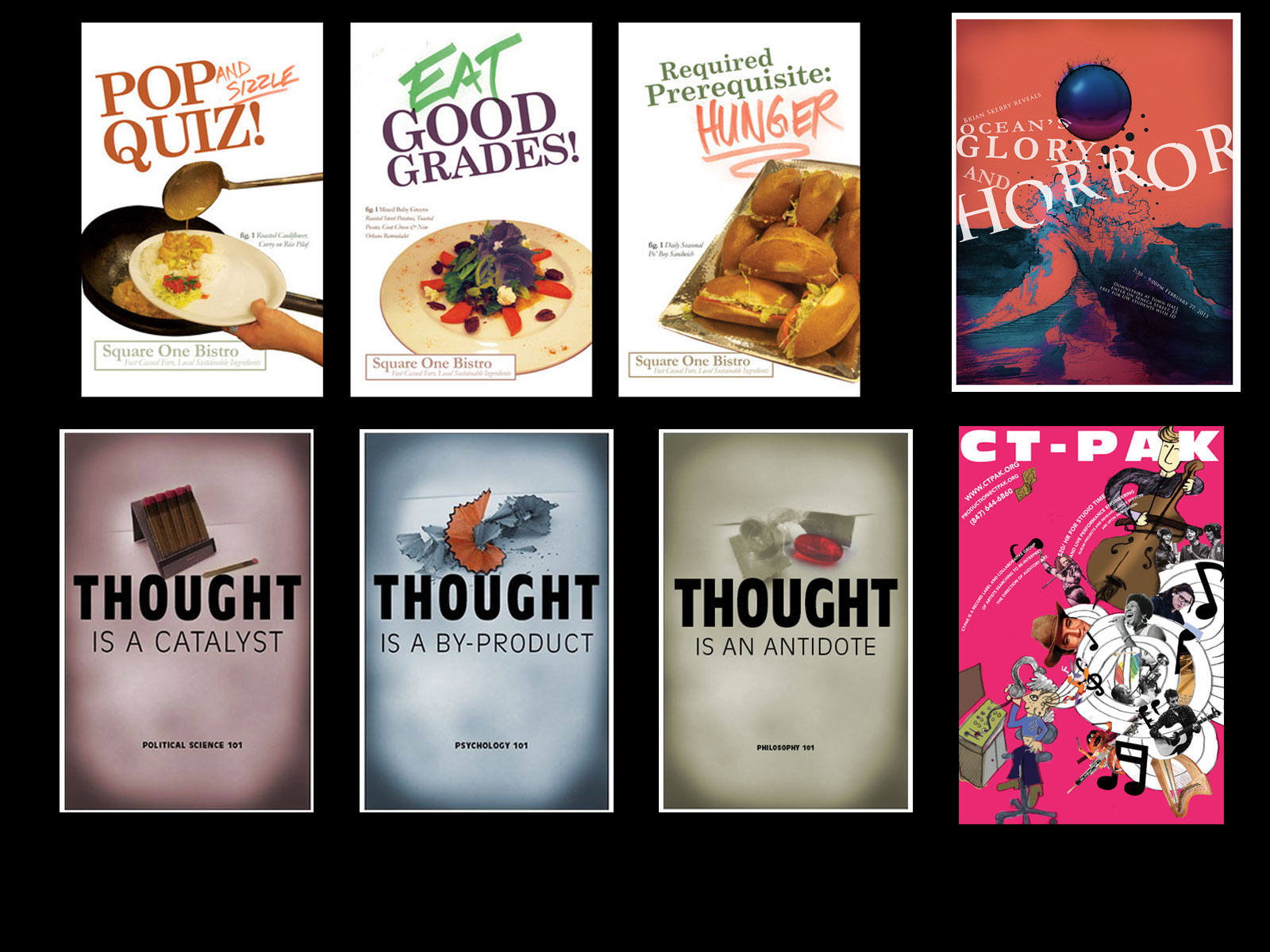
logo designs 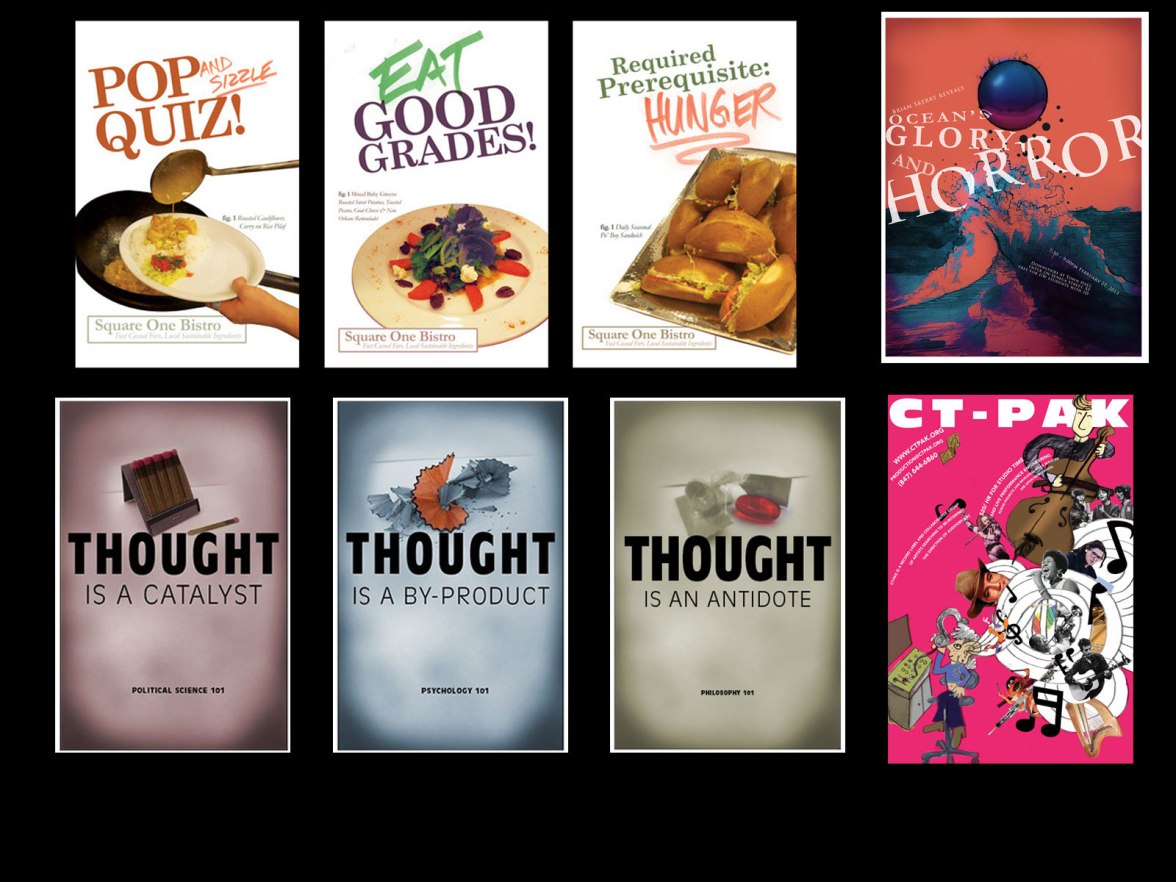 poster design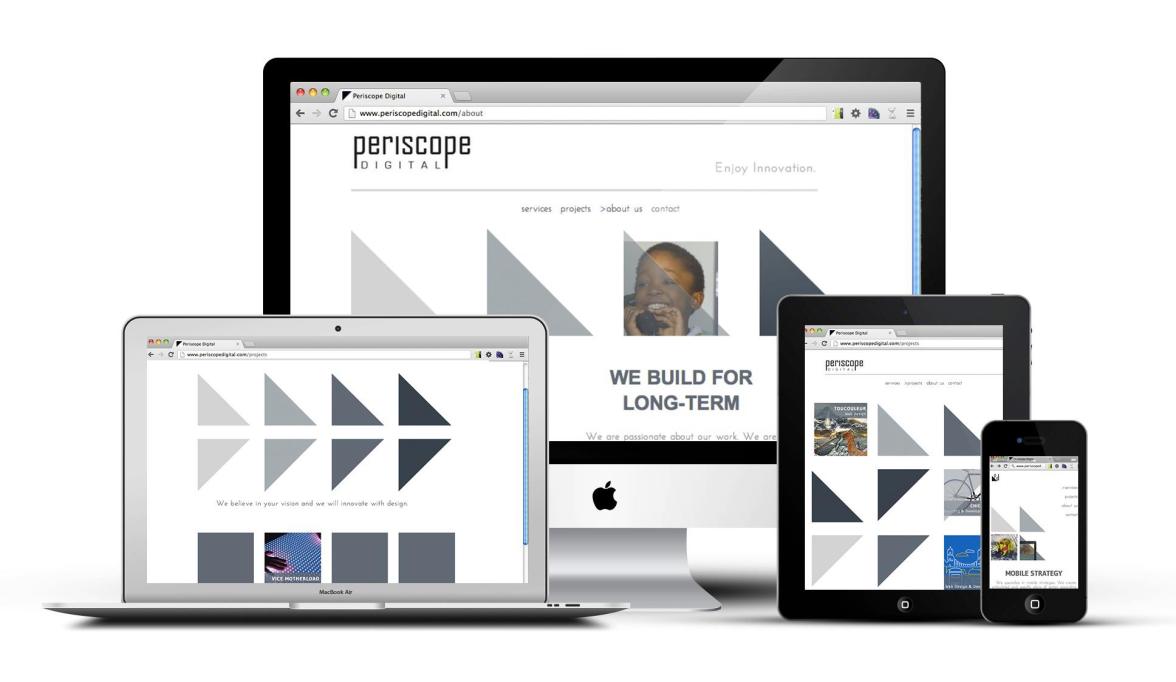
Here are some things I’m looking to possibly include in my graphic design portfolio. Something that shows that I can do a variety of graphic styles. I want to show things that will get me an advertising job. How can I show more concept heavy stuff? Also, I’m really interested in showing videos, but I am worried that my work isn’t polished enough.
-
DES 236
Name: Katarina Countiss
- What is your ideal job? My ideal job depends on who I am. I am planning on a series of career “upgrades” and explorations. One is “art director” at a design or advertising agency. Another is a designer in a tech incubator type situation. And another is User Interface designer.
- How will you judge your success in one year? Five years? Ten years? One year from now, success looks like a long-term relationship (like five years) with an advertising or design agency. Five years from now, success looks like being a team leader, having opportunities to art direct and hire freelancers for special projects. Ten years from now, success looks like giving talks at conferences and lecture halls about something I am passionate about.
- Write your own “bio”? I am Katarina Countiss, a graphic designer. I am passionate about creativity. I believe in finding your strengths and being able to summon them for projects you want to complete. I am interested in finding new and interesting design solutions to make a product more memorable, beautiful and relevant.
- As a visual problem solver what are your strengths? I’m a very curious person and I want to explore lots of options and find something novel and meaningful.
- As a graphic designer what are your weaknesses? Typography. My background in fine art has led me to emphasize the image in a project. So, I am working on getting type to the same level of awesome. (Feedback from Teachers | Katablog.)
- How do you define success? “Practical and innovative efforts resulting in appreciated and tangible results.”
- What kind of work do you enjoy, but feel lacking in skills? I really like video, but my camerawork is shoddy at times.
- If you could re-do one project here at SCCA what would it be and why? The one project that I feel like I could have redone was the boxed tee-shirt project where I was in charge of production and I was a terrible project manager and I produced a lousy (structurally speaking) box.
- What was the hardest part of the last two years doing the design program? That same project where I felt I let my team down.
- What was the most rewarding part of the last two years during the design program? I tell this story to my friends all the time. So, it was New Media class last year when we presented our BeeHive Blender Video Projects to the class after having only a week to make the video and we play the video on the projector in the lecture hall with the publishing arts, photography and the two sections of graphic design students. After the two minute video ended, there was a brief silence before someone whispers loudly “That was awesome!” and the audience applauses.
- Do you plan to find work in the Seattle area? Yes
- Are you or have you done an internship? If so, with whom? Yes, Pivot and Levy.
- How would you describe your internship experience? I learned a lot.
- Other than graphic design, what other professional skills do you have? I’m interested in public speaking, though I’m not actually skilled at it, I would argue that interest can sometimes make up the difference.
- Do you want to have your own design business? If so what is your timeline. No
- How much do you expect to make next year as a graphic designer? Expect and hope are two different things. I hope to make around $50K yearly salary and I expect to make 60-120% of that amount.
Marc really likes questionnaires. Here’s the one I made in Fall for the special topics project.



 Kismet Arts Tangent